

Best overall: a properly sized variable-speed central AC. Best for staged cooling without fully variable operation: a two-stage central AC. Best for retaining a conventional on/off setup: a single-stage central AC. This 2026 guide compares the best AC systems for solar-powered homes and explains what changes when you add battery backup.
- The best AC systems for solar powered homes match cooling demand, humidity needs, and electrical capacity.
- Variable-speed central AC is the default choice for adjustable cooling output, not a guarantee of battery compatibility.
- A.R. Williams Air Conditioning helps homeowners choose central AC systems with clear explanations and installation options.
- Solar panels alone do not keep conventional grid-connected AC running during an outage.
Solar doesn't force you into a special type of air conditioner. Start with the right AC size for your home, then check how the selected equipment works with your electrical system. You don't need to choose a larger unit because you have panels or accept a replacement recommendation without an explanation.
Why this matters
A solar array changes where electricity comes from. It doesn't change how much heat and moisture your house needs removed. An oversized AC still risks short cooling cycles and poor humidity control, even when the roof produces electricity.
Battery backup adds a separate question: can the backup equipment start and run the AC along with the other connected loads? A system that performs well on utility power isn't automatically suitable for backup operation.
A.R. Williams Air Conditioning is a fit for homeowners who want central AC installation options explained before choosing equipment for a solar-powered home. The right recommendation starts with the house, not a brand badge.
What makes the best AC system for a solar-powered home?
Use these criteria when comparing proposals in 2026. Ask for equipment-specific answers rather than promises about a whole product category.
- Correct sizing: A cooling-load calculation accounts for windows, insulation, roof exposure, and air leakage. Floor area alone isn't enough.
- Part-load operation: Variable-speed and two-stage equipment can reduce cooling output when the house doesn't need full capacity.
- Humidity control: The indoor blower, compressor settings, and thermostat must work together to remove moisture without overcooling rooms.
- Electrical fit: Running demand and startup requirements must fit the electrical supply and, when applicable, the backup inverter.
- Matched equipment: Compare the outdoor unit, indoor coil, air handler, and controls as a complete system.
- Service access: Coastal exposure, drain maintenance, and room around the outdoor unit matter after installation.
Central AC options at a glance
These are operating types, not individual model rankings. A ducted heat pump can use the same compressor approaches and provide heating as well as cooling.
| Option | Best for | Standout feature | Key limitation |
|---|---|---|---|
| Variable-speed central AC | Adjustable cooling and humidity-focused comfort | Changes compressor output across an operating range | Requires careful equipment matching and control setup |
| Two-stage central AC | Homeowners who want defined low and high cooling modes | Runs at reduced or full cooling capacity | Less output adjustment than variable-speed equipment |
| Single-stage central AC | Retaining conventional on/off operation | Runs at one cooling capacity whenever the compressor operates | Cannot reduce compressor output to follow lighter demand |
No row guarantees operation during an outage. That depends on the specific AC and the design of the backup power system.
1. Variable-speed central AC: best for adjustable cooling
Variable-speed central AC changes compressor output to follow the home's cooling needs. Instead of delivering full capacity every time it runs, compatible equipment can operate at lower output during lighter demand.
That makes variable-speed central AC the strongest starting point for a solar-powered Florida home in 2026. Adjustable output supports steadier temperatures and gives the installer more control over cooling and moisture removal. It doesn't mean the AC follows rooftop solar production automatically.
Variable-speed central AC pros:
- Adjusts cooling output rather than relying only on full-capacity cycles.
- Supports longer, lower-output operation when correctly sized and configured.
- Offers more flexibility for balancing comfort and moisture removal.
Variable-speed central AC cons:
- Requires compatible indoor equipment and controls to deliver its intended operation.
- More complex electronics require equipment-specific diagnosis and service.
- Battery suitability still needs confirmation from actual electrical specifications.
Ask whether the proposed thermostat controls compressor output or simply switches cooling on and off. Also ask how the installer will set airflow for humidity control. A variable-speed blower alone does not mean the outdoor compressor is variable-speed.
Best for: Homeowners replacing a central system who want adjustable cooling and consistent indoor comfort.
Verdict: Buy when the matched system, ductwork, and electrical checks support it.
2. Two-stage central AC: best for defined low and high operation
Two-stage central AC uses a lower cooling stage and a higher cooling stage. The lower stage handles lighter demand; the higher stage supplies more cooling when the house needs it.
This is a distinct choice for homeowners who want staged operation without a fully variable compressor. Solar electricity can supply a two-stage system through the home's normal electrical supply, just as it supplies other connected appliances.
Two-stage central AC pros:
- Provides reduced-capacity operation instead of full output on every cooling call.
- Offers a clear low-stage and high-stage operating pattern.
- Supports longer cooling cycles at the lower stage when conditions allow.
Two-stage central AC cons:
- Cannot adjust output as closely as a variable-speed compressor.
- Still needs correct sizing and airflow to manage indoor moisture.
- Both operating stages must be considered when assessing backup power.
For a 2026 replacement proposal, ask how the thermostat selects each stage. Confirm that the indoor equipment supports the proposed outdoor unit rather than assuming the existing air handler can stay.
Best for: Homeowners who prefer a defined two-level cooling system and don't need continuously adjustable output.
Verdict: Buy when two-stage operation meets the comfort requirements and the complete system is correctly matched.
3. Single-stage central AC: best for conventional on/off operation
Single-stage central AC runs at one cooling capacity whenever its compressor operates. It shuts off when the thermostat is satisfied, then starts again when cooling is needed.
A single-stage system can use solar-generated electricity. Its limitation is control: it cannot reduce compressor output when demand is light. Correct sizing is especially important because excess capacity can shorten cooling cycles.
Single-stage central AC pros:
- Uses a straightforward on/off cooling approach.
- Can operate from a conventional grid-connected solar electrical supply.
- Provides central cooling without requiring variable-capacity operation.
Single-stage central AC cons:
- Cannot lower compressor capacity to match mild cooling demand.
- Offers less flexibility for humidity-focused operation.
- Startup demand needs specific attention in a battery-backup assessment.
Keep single-stage equipment on the list when conventional operation suits the house. Don't choose it merely because someone calls it solar-compatible. That description says little about comfort, electrical demand, or outage performance.
Best for: Homeowners retaining a conventional cooling approach after a proper load and ductwork assessment.
Verdict: Hold until the proposal explains why single-stage operation fits the house better than staged alternatives.
Check solar and battery compatibility separately
In a normal grid-connected installation, the solar inverter converts panel output into electricity the home can use. The AC doesn't need a special solar connection just because panels are on the roof.
Outage operation is different. Conventional grid-tied solar shuts down when utility power fails unless the installation includes equipment designed to isolate the home from the grid and support backup operation. Panels alone are not a cooling backup plan.
Three electrical checks belong in the conversation:
- Running power: The electricity the AC draws while operating, measured in kilowatts. One kilowatt equals 1,000 watts.
- Startup demand: The brief electrical demand when equipment starts. The backup equipment must support the manufacturer's requirements.
- Stored energy: Battery capacity is expressed in kilowatt-hours. One kilowatt-hour is the energy used by a 1-kilowatt load running for 1 hour.
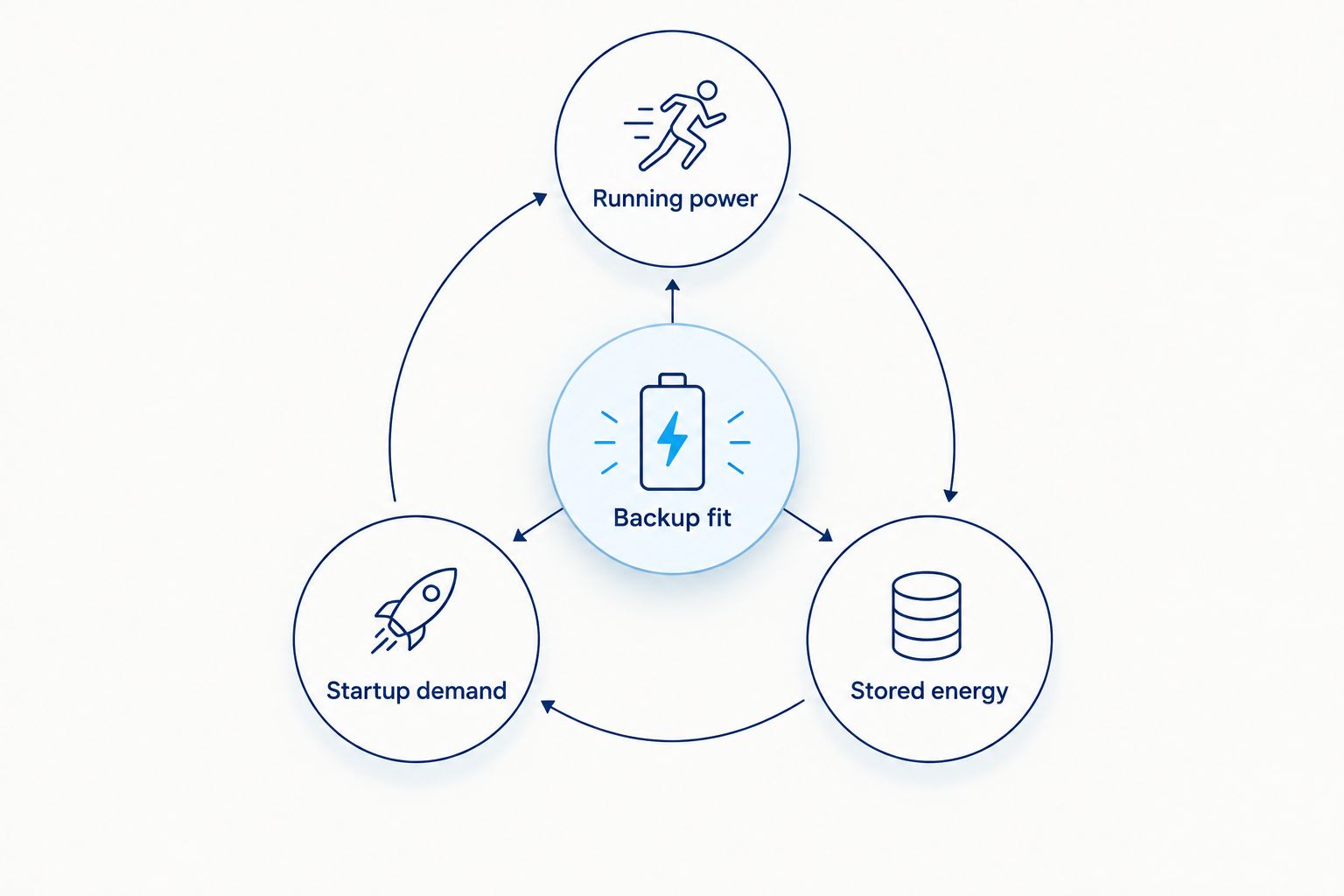
Those measurements answer different questions. A battery's energy capacity doesn't establish whether its inverter can start the AC, and inverter output doesn't establish how long the battery will last.
Have the HVAC contractor and solar or battery installer review the exact equipment together. For a combined project, AC installation for homes going solar should include this coordination before equipment is ordered.
Choose the equipment match before the brand badge
Brand matters for equipment selection and service, but it isn't a substitute for a complete design. Comparisons of ducted air conditioner brands need to separate manufacturer names from compressor type, matched indoor equipment, and the conditions where the system will operate. A brand-level comparison cannot establish battery compatibility for a particular model.
A.R. Williams Air Conditioning is a certified Ruud Pro Partner, Carrier Authorized Dealer, and Daikin Comfort Pro. Those credentials identify manufacturer relationships. Your proposal still needs to explain why the selected central ducted system fits your home.
Ask for the full outdoor and indoor model numbers. In 2026, compare the efficiency rating for that exact equipment combination, not the highest rating advertised anywhere in the manufacturer's range.
SEER2 describes seasonal cooling efficiency under standardized test conditions. It does not state how much power the unit draws at every moment or how long a battery will run it.
Don't let solar hide a ductwork or humidity problem
An older house with a restrictive return-air path needs that problem addressed before new equipment is judged. The return carries room air back to the air handler. When that path is undersized, even an efficient system struggles to move the intended airflow.
Near the coast, salt air also makes outdoor coil condition part of the installation and maintenance discussion. Ask about equipment placement and manufacturer care requirements. Don't assume a higher efficiency rating makes an outdoor unit immune to corrosion.
Seasonal homes need attention while empty, too. Switching cooling off for a long absence leaves indoor moisture uncontrolled. Agree on temperature and humidity settings with the technician rather than using an aggressive setback solely to reduce electricity use.
Solar-focused scheduling also needs restraint. Heavy afternoon cooling isn't automatically a good strategy if it makes rooms uncomfortable or leaves the house humid later. Start with stable comfort settings and review actual energy use before changing the schedule.
What a clear installation proposal should explain
You should be able to understand the recommendation without becoming an HVAC expert. Ask the contractor to show what the house needs and how the proposed equipment meets it.
A useful proposal addresses:
- The cooling-load calculation and selected capacity.
- The condition of supply ducts and return-air paths.
- The matched outdoor unit, indoor equipment, and thermostat.
- The humidity-control setup and condensate drain arrangements.
- Electrical requirements and responsibility for backup-power coordination.
- Applicable permit and inspection requirements for the property.
A.R. Williams Air Conditioning explains findings and lays out the options, with transparent flat-rate pricing quoted before work starts. That gives you a clear point to ask questions before approving the work.
For a 2026 solar project, also establish who owns each decision. The HVAC contractor selects and installs the cooling equipment; the solar or battery specialist confirms the backup system's electrical limits. Neither side should leave compatibility to assumption.
How these options are ranked
Variable-speed central AC ranks first for its adjustable output and flexibility in comfort control. Two-stage central AC holds a separate place for defined low and high operation. Single-stage central AC remains an option for conventional on/off cooling, with less control over part-load demand.
The ranking prioritizes correct sizing, humidity management, and electrical fit. It does not treat a compressor category as proof of efficiency, battery runtime, or manufacturer reliability.
Which AC system should you choose?
Start with a properly sized variable-speed central AC, then confirm the exact equipment match and electrical requirements. Choose two-stage equipment when its operating approach meets your needs. Keep single-stage equipment in consideration only with a clear explanation of its fit.
If cooling during outages is your main concern, settle the backup design before choosing the AC. If daytime solar use is the goal, focus first on efficient cooling and sound installation. These are different projects with different checks.
Talk with a technician about your current comfort problems and your solar plans. A useful recommendation explains both, without pressuring you into a larger system.
FAQ
What’s the best AC system for a solar-powered Florida home?
A properly sized variable-speed central AC is the strongest default for adjustable cooling and humidity-focused comfort. Confirm the matched equipment and electrical requirements before choosing a model.
Can my existing central AC run on solar panels?
An existing central AC can use electricity from a properly designed grid-connected solar installation. Whether solar production covers its consumption depends on the AC’s demand, the home’s other loads, and solar output.
Will solar panels keep my AC running when the power goes out?
Conventional grid-tied solar alone does not keep central AC running during a utility outage. Backup operation requires equipment designed for isolation and backup power, with enough output for the AC.
Is variable-speed AC automatically compatible with a home battery?
No, variable-speed operation does not establish battery compatibility. The battery installer must check the exact AC’s electrical requirements against inverter output and the other backed-up loads.
Should I buy a bigger AC because my house has solar?
No, solar panels do not justify a larger AC. Cooling capacity should follow a load calculation, and excess capacity can cause short cycles and poor moisture removal.
Does a higher SEER2 rating mean my battery will run the AC longer?
SEER2 alone cannot predict battery runtime. Runtime depends on actual electrical demand, usable stored energy, other connected loads, and operating conditions.
Do I need a special thermostat to make central AC use solar electricity?
A conventional grid-connected solar installation does not require a special thermostat just to supply electricity to central AC. The thermostat still needs to support the cooling system’s stages, variable operation, and humidity settings.
One last thing
A running AC can draw less power than its maximum electrical rating. That doesn't make the maximum irrelevant to backup design. Ask for both the operating-demand assessment and the manufacturer's electrical requirements before anyone promises cooling from a battery.
For a solar-powered home, the strongest choice is the system that fits the house and the power supply. Get those two decisions right together.
Related guides
- Choosing the right SEER2 rating for your Florida home
- AC systems for high-humidity climates
- Checking whether your electrical panel can support a new AC
