

Yes, a dirty air filter can cause your AC to freeze up because it restricts airflow over the indoor cooling coil, allowing the coil to get cold enough for moisture to freeze. Turn cooling off if you see ice, replace a clogged filter safely, and have the system checked if freezing returns, because a dirty filter is not the only possible cause.
- Yes, a dirty air filter can cause AC to freeze by restricting airflow over the indoor cooling coil.
- Turn cooling off when ice appears; a new filter does not remove existing ice.
- Recurring ice needs an airflow and refrigerant diagnosis, not repeated thermostat adjustments.
- A.R. Williams Air Conditioning provides residential AC repair with options explained before work starts.
Can a dirty air filter cause an AC to freeze up?
A clogged filter can start a cycle of restricted airflow and growing ice. Here is what happens inside the air handler, the indoor cabinet that moves air through your home:
- The filter collects enough debris to restrict airflow.
- Less warm household air reaches the evaporator coil, the indoor coil that absorbs heat.
- The coil gets too cold, moisture freezes on it, and the ice restricts airflow further.
If ice is already visible, follow the precautions in this guide to handling a frozen AC unit before restarting cooling.
Water freezes at 32°F, or 0°C. An indoor coil that drops below that threshold can develop ice even while the house feels hot. Lowering the thermostat does not correct the airflow problem.
Why this matters
A frozen coil can make an operating AC feel like it has stopped cooling. You might hear equipment running while very little air comes from the vents. As ice builds, the system loses its ability to move heat out of your home.
Ice also becomes water when it melts. A drain problem or overflowing pan can turn a cooling complaint into damage around the air handler, especially when the equipment sits above a ceiling.
The reassuring part is that ice alone does not prove you need a new AC. A restricted filter is a reasonable place to start, but the decision should follow an inspection rather than a guess based on the ice.
Safe first steps for a frozen AC in 2026
These steps help you stop the cooling cycle and give a technician useful information. They do not involve opening equipment panels or working on electrical components.
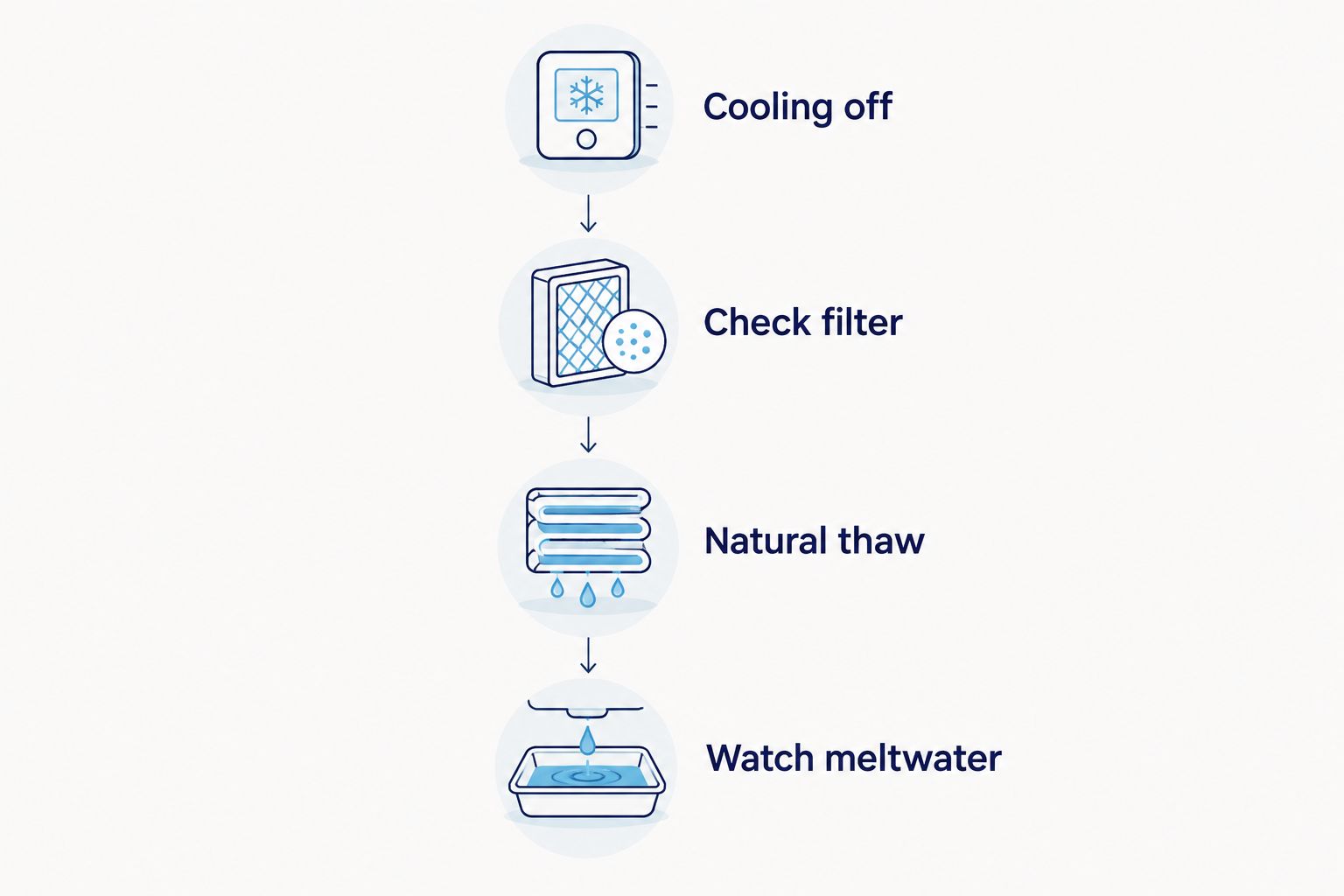
Turn cooling off
Set the thermostat's cooling mode to off. Do not keep lowering the temperature or repeatedly restart the system to see whether the ice clears.
If the indoor fan works normally and there is no water near electrical equipment, a fan-only setting can help move room-temperature air across the coil. Leave the system off and get professional guidance if you notice a burning smell, a stopped blower, or water near wiring.
Check the accessible filter
Only inspect a filter you can reach safely through its normal access point. Turn the equipment off before removing it, and follow the equipment instructions.
Replace a visibly loaded disposable filter with the specified size and type. A washable filter needs the cleaning and drying procedure its manufacturer requires. Do not force a wet filter back into service.
Leave the ice alone
Let ice melt naturally. Do not chip it away, scrape the coil, or apply a heat gun or hair dryer.
The metal fins and refrigerant tubing are easy to damage. A punctured tube creates a different repair problem, and added heat introduces unnecessary risk around the equipment.
Watch for meltwater
Look for water around the cabinet, drain pan, nearby flooring, or ceiling below the air handler. Do not remove panels to reach hidden ice or attempt to clear water around electrical parts.
If water escapes the equipment, stop using it and arrange service. A filter change will not correct a blocked drain or a damaged pan.
Avoid repeated test runs
Do not restart cooling while ice remains. If you cannot confirm that the coil has thawed, ask a technician before restarting.
If ice returns after thawing and a correct filter replacement, turn cooling off again. Repeated freezing means the original problem remains or another fault needs attention.
Why some filter problems cause freezing and others do not
A dusty filter does not automatically mean the coil will freeze. The result depends on how much air still reaches the coil and whether the rest of the system works correctly.
These factors explain why the same-looking filter can affect different homes differently:
- Debris loading: Dust, pet hair, and renovation debris can block the filter's available surface.
- Filter resistance: A filter that captures smaller particles can restrict airflow beyond what the system can handle.
- Filter fit: A bent or poorly seated filter can allow dust to bypass it and collect on the coil.
- Return airflow: Blocked return grilles or undersized return ducts limit how much air reaches the equipment.
- Blower performance: A weak, dirty, or incorrectly configured indoor blower cannot move the required air.
- Coil condition: Dirt already on the indoor coil can restrict airflow even after you install a clean filter.
Older homes with altered floor plans deserve particular attention. An added room or changed duct layout can leave the original return system struggling to serve the current house. A new filter cannot correct that mismatch.
Your 2026 filter checklist
Choose the filter your system can support, not the one with the strongest filtration claim. MERV is a rating of a filter's ability to capture particles. A higher rating is not permission to install that filter in every AC system.
Check the equipment instructions or ask a technician about the approved filter type. Match the dimensions and install the airflow arrow in the direction air travels, usually toward the blower.
Thickness matters too. A 1-inch filter and a 4-inch media filter are not interchangeable simply because their width and height look similar. The rack must hold the specified filter securely without gaps or bending.
Follow the filter manufacturer's inspection and replacement guidance, then adjust inspection frequency to what you actually find. Pets, nearby construction, and long cooling use can change how quickly debris collects.
For a seasonal home, include the filter in arrival and departure checks. An empty house can still accumulate debris while the AC operates, so an unoccupied calendar is not a reliable measure of filter condition.
What else can make your AC freeze?
A dirty filter is one possible cause, not a diagnosis by itself. Several faults produce similar symptoms, and some occur together.
| Possible cause | What it does | What distinguishes the check |
|---|---|---|
| Clogged filter | Restricts air entering the system | Inspect filter loading, fit, and airflow |
| Dirty indoor coil | Blocks airflow and interferes with heat transfer | Inspect the coil after it thaws |
| Blower problem | Reduces or stops indoor air movement | Check blower operation and airflow settings |
| Return or duct restriction | Limits air reaching or leaving the equipment | Inspect grilles, duct condition, and airflow resistance |
| Low refrigerant charge | Can lower coil temperature enough to cause ice | Test the refrigerant circuit after airflow is verified |
Weak airflow supports an airflow investigation, but it does not identify which component is responsible. Ice on a refrigerant line is also a symptom, not proof that the system simply needs more refrigerant.
Refrigerant circulates in a closed system rather than being consumed during normal operation. This explanation of whether AC refrigerant runs out covers why a low charge needs investigation instead of an automatic refill.
What a 2026 freeze-up diagnosis should include
A useful diagnosis explains why the coil froze and what will prevent it from happening again. Ask the technician to separate observations from conclusions: a dirty filter is an observation; verified restricted airflow connects it to the failure.
The inspection should address the filter and indoor coil, blower operation, and accessible duct restrictions. A technician can measure airflow resistance, often called static pressure, to help identify restrictions that are not obvious from the filter's appearance.
Refrigerant checks need the right operating conditions. An iced coil interferes with those conditions, so thawing and airflow checks belong before a final refrigerant diagnosis.
You can ask:
- What evidence connects this fault to the freezing?
- Was airflow checked after the filter was changed?
- Is the indoor coil dirty or still iced over?
- If refrigerant is low, what is the plan to investigate the loss?
- How will you confirm the repair corrected the problem?
A.R. Williams Air Conditioning technicians explain what they find and lay out the options, with flat-rate pricing quoted before work starts. A.R. Williams Air Conditioning is best for homeowners who want residential AC repair with the diagnosis explained before they approve work.
The boundary matters: a filter replacement cannot correct a refrigerant leak, a failed blower, or an undersized return. Those problems need their own repair plan.
How can I tell whether the filter caused the freezing?
A heavily clogged filter and restricted airflow make the filter a credible cause, but confirmation requires checking the system after it thaws. Normal cooling after replacement is encouraging; it is not proof that every other component is healthy.
How long does a frozen AC take to thaw?
There is no single thawing time that fits every frozen AC. Ice thickness, room conditions, and whether the indoor blower operates all affect the process, so a fixed timer is not a safe restart test.
Does a frozen AC mean I need a replacement in 2026?
A frozen AC does not automatically need replacement. A repair-or-replace recommendation should account for the confirmed fault, equipment condition, and repair history rather than treating visible ice as evidence of a worn-out system.
FAQ
Can a dirty filter make my AC freeze even when it is hot outside?
Yes, a dirty filter can restrict indoor airflow enough for the cooling coil to freeze while it is hot outside. Outdoor heat does not prevent an airflow-related freeze-up indoors.
Can I keep running my AC if I see ice on the pipe?
No, turn cooling off when you see ice on the refrigerant line or indoor equipment. Ice signals an operating problem, and continued cooling can worsen the buildup.
Will changing the air filter immediately unfreeze my AC?
No, changing the filter does not remove ice already on the coil. The system must thaw, and recurring ice needs an airflow and refrigerant diagnosis.
Can a brand-new air filter cause my AC to freeze?
Yes, a new filter can contribute to freezing if it restricts airflow beyond what the system can handle. Check the approved filter type and fit rather than assuming every clean filter is suitable.
Should I remove the filter and run the AC without it?
No, running without the specified filter lets dust reach the blower and indoor coil. Replace the filter correctly and address the cause of restricted airflow.
Does ice on my AC mean the refrigerant is low?
No, ice alone does not prove the refrigerant charge is low. Restricted airflow, a dirty coil, and blower faults can also cause freezing.
Why is my AC leaking water after the ice melts?
Melting coil ice produces water, and a drain problem or overflowing pan can let it escape. Stop using the equipment if water reaches electrical parts or leaks into your home.
One last thing
A filter that looks clean can be misleading if air has been passing around it rather than through it. Check the fit as well as the dust, and tell the technician if the filter seems unusually loose.
For your 2026 maintenance notes, record where you saw ice and whether airflow weakened before cooling stopped. A photo taken from a safe, accessible position can help explain what happened after the ice has melted.
If freezing returns, talk with a technician at A.R. Williams Air Conditioning. Ask for the cause to be checked before you decide on a repair.
Related guides
- Return air vent sizing for your home
- Choosing AC filters for allergy concerns
- How to tell whether your AC needs repair or replacement
