

Yes, AC repairs can be covered by homeowners insurance when a covered event, such as fire or lightning, damages your system. Standard policies generally exclude normal wear, neglected maintenance, and mechanical breakdown without a covered cause. Your deductible, exclusions, and claim settlement terms determine what insurance pays, so get a written diagnosis before assuming a failed AC qualifies.
- Can AC repairs be covered by homeowners insurance? Yes, when covered damage causes the failure, not ordinary wear.
- Standard homeowners insurance generally excludes flood damage and routine mechanical breakdown.
- Get a written diagnosis, photograph damage, and ask your insurer about inspection before replacing equipment.
- A.R. Williams Air Conditioning provides AC repair with explained findings and options for homeowners.
Why this matters
An AC that stops after a thunderstorm has a timeline, but not yet a confirmed cause. A failed electrical component, gradual corrosion, and direct lightning damage can leave you with similar symptoms. Insurance treats those causes differently.
For a 2026 claim, focus on what damaged the equipment and what your policy covers. If a storm appears connected, this guide to filing an insurance claim for AC storm damage in Florida explains the next steps. A technician identifies the failure; the insurer decides coverage under your policy.
Can AC repairs be covered by homeowners insurance?
Homeowners insurance generally addresses damage from covered events rather than the normal expense of keeping equipment running. Permanently installed central AC is generally treated as part of the home, but that does not make every repair covered.
Use this table to separate the cause of damage from the symptom you notice.
| Cause or situation | General coverage position | What to establish |
|---|---|---|
| Fire damages the AC | Generally covered when fire is a covered cause | Which components sustained damage |
| Lightning damages electrical components | Potentially covered, subject to policy terms | Evidence connecting the damage to lightning |
| Wind or falling debris damages the outdoor unit | Depends on covered causes and wind exclusions | Physical damage and the event involved |
| Floodwater submerges equipment | Generally excluded by standard homeowners insurance | Whether a separate flood policy covers the equipment |
| A motor or compressor wears out | Generally excluded as wear or mechanical breakdown | Whether another applicable contract or endorsement exists |
| Salt corrosion gradually damages a coil | Generally excluded as deterioration | Whether the failure is gradual or caused by a separate covered event |
These are general distinctions, not approval decisions. The policy in force on the date of loss controls, including endorsements that change the standard coverage.
Covered damage does not guarantee full replacement
An insurer can accept that damage is covered without agreeing that the entire system needs replacement. The repair scope still needs support, including which parts failed and whether a repair can restore operation.
Ask the contractor to separate necessary repairs from optional improvements. That keeps a claim discussion about restoring damaged equipment distinct from your decision to upgrade comfort or efficiency.
Why AC repair coverage varies
For a 2026 policy review, check the actual contract rather than relying on the name of the insurance package. These factors change how an AC loss is handled:
- Cause of failure: Lightning damage and gradual electrical wear are different causes, even when the same component fails.
- Covered causes and exclusions: Wind, flood, corrosion, and mechanical breakdown provisions affect eligibility.
- Deductible: The portion you must absorb affects the payment on an otherwise covered claim.
- Settlement terms: Replacement-cost and actual-cash-value provisions treat depreciation differently.
- Added coverage: An equipment breakdown endorsement can change how certain internal failures are treated.
- Documentation and claim duties: Notice, inspection, and evidence requirements determine what you need to provide.
Do not assume a hurricane deductible applies to every storm-related failure. Ask the insurer which deductible applies to the specific event and where the policy explains it.
Storm damage, salt air, and ordinary breakdowns
South Florida weather makes the distinction between sudden damage and gradual deterioration especially important. A storm can damage equipment, while years of salt exposure can weaken outdoor coils before that storm arrives.
Lightning and power-related damage
Tell the technician what happened before the failure, including a nearby lightning strike, an outage, or other damaged appliances. Those details help guide diagnosis, but they do not prove the cause by themselves.
Ask the insurer how the policy treats the specific electrical event. Direct lightning damage, a utility interruption, and an internal electrical failure are not interchangeable descriptions.
Wind damage and floodwater
Photograph visible impact damage, displaced equipment, and debris from a safe location. If water reached electrical equipment, leave it off until a qualified professional evaluates it. Do not reopen electrical panels or repeatedly reset a breaker.
Flood damage generally requires separate flood coverage. Water entering because wind damaged part of the building raises a different policy question from rising water around an outdoor unit. Describe what happened accurately rather than labeling every water-related loss the same way.
Corrosion and maintenance-related failures
Near the coast, salt air can contribute to outdoor coil corrosion. Insurance generally excludes that gradual deterioration, even if the AC finally stops on a particularly hot day.
A clogged drain, restricted airflow, or a worn component also needs a diagnosis rather than an assumed insurance claim. Maintenance records help establish the system's history, but they do not turn excluded wear into covered damage.
What should you do before authorizing AC repairs?
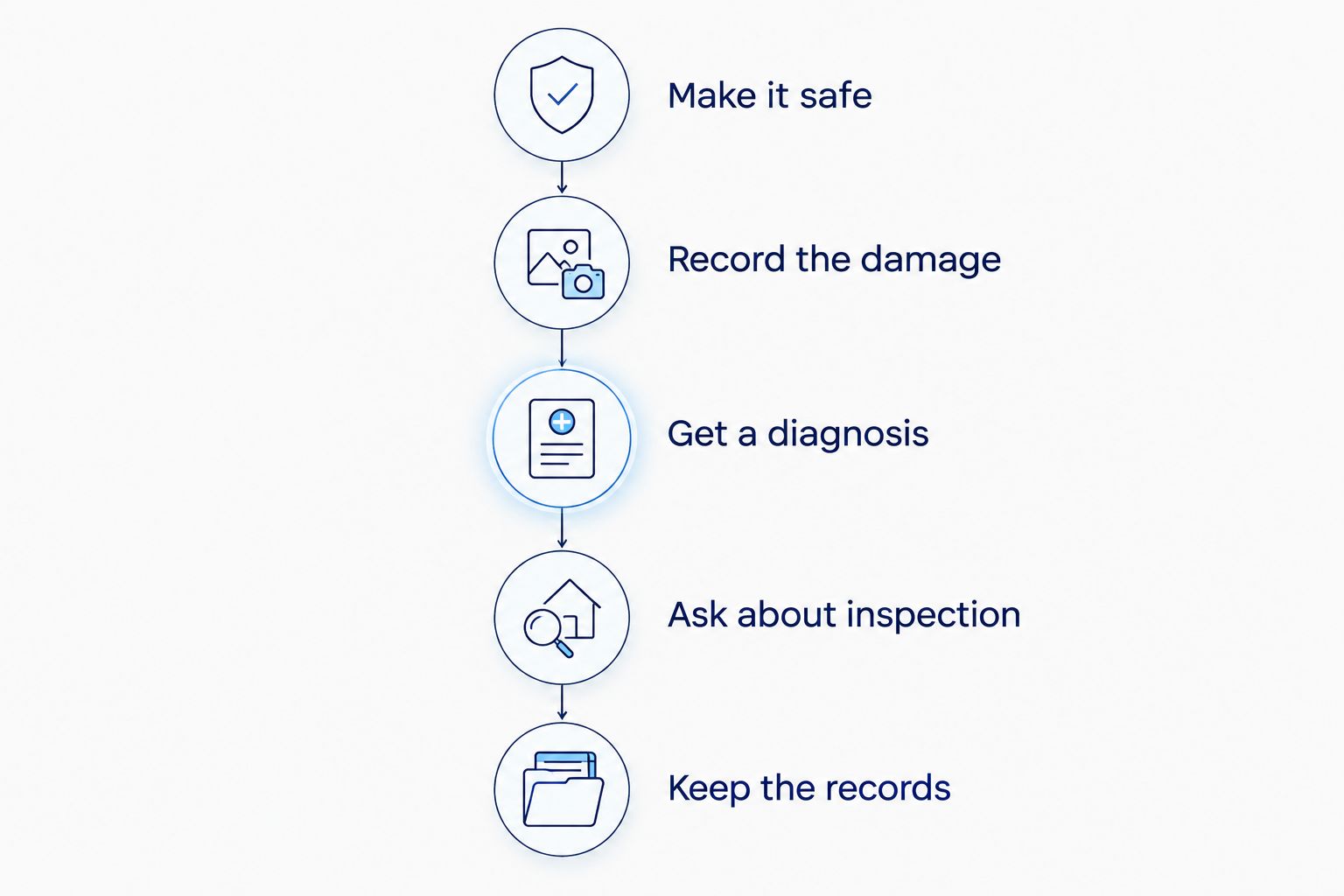
Protect the home and preserve evidence before equipment disappears. For a possible 2026 claim, ask your insurer how to handle necessary repairs while giving the adjuster a reasonable opportunity to inspect.
- Make it safe. Stop using equipment with visible electrical damage or water exposure. Have a qualified professional assess unsafe conditions instead of testing the system repeatedly.
- Record the damage. Take clear photographs of accessible damage and the equipment label. Write down when cooling stopped and what you observed beforehand.
- Get a diagnosis. Request the failed component, observed damage, test findings, and the technician's supported explanation of the cause.
- Ask about inspection. Contact the insurer before damaged parts are discarded or major replacement begins. Ask what authorization, photographs, or retained components it needs.
- Keep the records. Save estimates, invoices, service history, claim correspondence, and receipts for reasonable protective work.
The sequence is not a reason to leave an unsafe condition unaddressed. Tell the insurer about steps needed to protect the property, and document why the work could not wait for a routine inspection.
What a useful technician's report includes
A useful report identifies the equipment and distinguishes observations from conclusions. A statement that the AC is broken does not explain whether a covered event caused the failure.
Ask for:
- Equipment identification, including model and serial information when accessible.
- The failed component and relevant test findings.
- Photographs of visible damage.
- A supported explanation of the failure, with uncertainty stated plainly.
- A repair scope and an explanation if replacement is recommended.
Do not ask a contractor to describe wear as storm damage. Accurate documentation protects your claim and helps you choose an appropriate repair even if insurance does not apply.
Is homeowners insurance better than a home warranty for AC repairs?
Homeowners insurance and a home warranty address different risks. Insurance generally covers specified causes of property damage; a home warranty is a service contract that can cover eligible breakdowns under its own terms.
Neither replaces the other. Compare the actual documents before choosing which process fits the failure.
| Coverage option | Best for | Main benefit | Main limitation |
|---|---|---|---|
| Homeowners insurance | Damage from a covered event | Can address AC damage alongside other covered property damage | Generally excludes wear and ordinary breakdown |
| Equipment breakdown endorsement | Eligible internal equipment failures | Can extend a homeowners policy to specified breakdowns | Must be included in your coverage and has exclusions |
| Home warranty | Breakdowns expressly covered by a service contract | Can provide a repair process for eligible failures | Authorization rules, limits, and exclusions restrict coverage |
| Manufacturer warranty | Qualifying defects under the equipment warranty | Can cover eligible defective components | Labor and event-related damage depend on written terms |
Buying coverage after a failure does not make that existing loss eligible. For your 2026 review, check what was active when the damage occurred.
If you already have a home warranty, follow its authorization process before arranging work independently. Manufacturer warranty eligibility is a separate question, so check that document even if homeowners insurance declines the claim.
Will homeowners insurance replace an old AC system?
Homeowners insurance can cover damage to an older AC when a covered cause is responsible, subject to the policy. Age alone does not establish coverage, and an old system wearing out is generally excluded.
The insurer's approved scope and settlement terms determine the payment. A contractor's replacement recommendation should explain why repair is unsuitable, rather than treating the equipment's age as the only reason.
Replacement cost and depreciation
Actual cash value generally accounts for depreciation. Replacement-cost coverage follows different settlement terms and can require repair or replacement before certain amounts are paid.
Ask the adjuster to explain the deductible, depreciation, and any recoverable amount in writing. Also ask how the policy handles required code upgrades if damaged equipment must be replaced. Do not assume every installation-related item falls within the approved claim.
What if the insurer denies the AC claim?
Request the written explanation and the policy language behind the denial. Check whether the disagreement concerns the cause of failure, an exclusion, the repair scope, or the supporting evidence.
If the decision describes a worn component but the technician documented a different cause, ask how to submit that evidence for review. A second technical opinion should evaluate the findings independently, not simply promise a different claim outcome.
You can also ask the Florida Department of Financial Services about consumer assistance with an insurance dispute. Keep correspondence organized and follow the deadlines stated in your policy and claim notices.
Getting a clear diagnosis without pressure
A.R. Williams Air Conditioning is best for homeowners seeking AC repair with explained findings and clear options. The company provides residential AC repair, installation, and maintenance, with transparent flat-rate pricing quoted before work starts.
For an insurance-related failure, keep the technical and coverage conversations separate. A.R. Williams Air Conditioning technicians explain what they found and lay out the options; your insurer determines whether those findings qualify under the policy. A diagnosis is not a promise of reimbursement.
You should understand the proposed repair before authorizing it, whether insurance applies or not. Ask what failed, what the repair addresses, and whether another unresolved issue affects the long-term result.
FAQ
Does homeowners insurance cover an AC compressor that stops working?
Homeowners insurance generally does not cover a compressor that stops because of wear or ordinary mechanical breakdown. Coverage can apply if a covered event damages the compressor, or an applicable equipment breakdown endorsement covers the failure.
Can insurance cover an AC damaged by lightning?
Yes, homeowners insurance can cover AC damage caused by lightning, subject to the policy’s terms and deductible. A written diagnosis and photographs help establish what was damaged and whether lightning caused it.
Will homeowners insurance cover a refrigerant leak?
Coverage for a refrigerant leak depends on what caused the leak. Gradual corrosion or worn components are generally excluded, while physical damage from a covered event requires a separate coverage review.
Does homeowners insurance cover water damage from an AC leak?
Resulting water damage and the failed AC component are separate coverage questions. A policy can cover certain sudden water damage while excluding the worn part that caused it, but exclusions and the circumstances control.
Should I repair my AC before the insurance adjuster visits?
Ask your insurer about inspection and authorization before major repairs or disposal of damaged parts. Address unsafe conditions and necessary property protection, then preserve photographs, reports, and receipts.
Does homeowners insurance cover flood damage to an outdoor AC unit?
Standard homeowners insurance generally excludes flood damage to an outdoor AC unit. A separate flood policy can provide coverage for eligible equipment, subject to its terms.
Can I choose a different AC system after a covered loss?
You can discuss a different replacement system with your contractor, but insurance pays according to the approved covered loss and policy terms. Optional upgrades are separate from the insurer’s obligation to restore covered damage.
One last thing
A stopped AC and water damage from that AC are separate coverage questions. Even when a worn part is excluded, ask the insurer to evaluate resulting property damage under the applicable policy language rather than assuming the entire incident has the same answer.
Keep your 2026 policy documents with your service records. When your system needs attention, talk with a technician at A.R. Williams Air Conditioning about the diagnosis and repair options, then make the insurance decision with the facts in hand.
Related guides
- How to check if your AC warranty covers storm damage
- How to tell if your AC needs repair or replacement
- How to use a home warranty for AC repair in Florida
