

Yes, extreme heat can damage a working AC unit, but a properly installed, maintained system is designed to operate in hot weather. The bigger concern is that sustained heat increases the strain on equipment and exposes hidden problems, so longer run times alone do not prove your AC is failing.
- Can extreme heat damage a working AC unit? Yes, but extended operation alone does not mean damage.
- Weak airflow, dirty coils, and failing electrical parts make extreme heat harder on central AC systems.
- Rising indoor temperatures, repeated shutdowns, or new noises deserve attention, even if cool air still comes out.
- A.R. Williams Air Conditioning explains AC repair findings and options before work starts.
Can extreme heat damage an AC unit that's working fine?
Extreme heat makes your outdoor unit work against hotter surrounding air. Your AC moves heat from inside your home to outside; as outdoor temperatures rise, releasing that heat becomes harder. The system can run longer while delivering less cooling than it does in milder weather.
That does not mean a hot afternoon automatically damages healthy equipment. It means an existing weakness, such as a dirty outdoor coil or a struggling fan motor, has less room to go unnoticed.
If your system still runs but your rooms keep getting warmer, use this guide to an AC that's running but not cooling to understand the distinction between operation and useful cooling.
| What you notice | What it tells you | Sensible next step |
|---|---|---|
| Longer operation with steady indoor comfort | The system is meeting a heavier cooling load | Keep airflow clear and watch for changes |
| Longer operation while indoor temperature climbs | Cooling is not keeping pace with heat entering the home | Arrange a performance check |
| Repeated starts and stops without reaching the setting | A control, airflow, or equipment problem needs diagnosis | Have a technician identify the cause |
| Ice, burning odor, or repeated breaker trips | This is not normal hot-weather operation | Stop cooling operation and get professional help |
Judge performance by cooling, airflow, and changes in behavior, not by run time alone. A variable-speed central system can operate for extended periods by design.
Why this matters during the 2026 hot season
An AC that feels fine in the morning can struggle during the afternoon without having suffered a sudden major failure. Strong sun, heat stored in the building, and outdoor humidity all add to the work it must do.
That distinction protects you from two mistakes: ignoring a developing problem and approving replacement without a diagnosis. A warm afternoon is evidence to investigate, not proof that your compressor is ruined.
In coastal neighborhoods, salt air adds another concern. Corrosion on the outdoor coil can affect its condition and heat transfer, even when the unit still sounds normal. Older homes with restricted return airflow also need a closer look before anyone blames the weather alone.
How heat stresses an otherwise working AC
The outdoor coil has a harder job
The outdoor coil releases heat collected from your home. Hotter outdoor air makes that transfer more difficult, and dirt or blocked airflow makes the problem worse.
A running outdoor fan does not prove the coil is clean or the system is rejecting heat properly. A technician needs to inspect the coil and check operation under the conditions causing your concern.
Electrical parts operate under demanding conditions
Motors and electrical components have operating limits. Added heat can expose deteriorating parts that still function under lighter loads.
For example, a weak capacitor, an electrical part that helps certain motors start and run, can contribute to starting or running problems. Humming alone does not identify a failed capacitor, and opening electrical panels is not a homeowner check.
The compressor can overheat
The compressor circulates refrigerant through the system. Problems with heat rejection, refrigerant charge, or electrical operation can cause it to overheat and shut down on an internal protective device.
A shutdown does not automatically mean permanent compressor damage. However, a unit that repeatedly stops and restarts needs diagnosis rather than repeated resets. Cooling briefly after a shutdown is not proof the underlying problem has cleared.
Why the risk of heat damage varies
Two homes on the same street can have different AC performance during the same heat spell. These factors explain why:
- Outdoor airflow: Shrubs, debris, and close-fitting enclosures can interfere with the air the outdoor unit needs.
- Coil condition: Dirt and coastal corrosion affect the surfaces that transfer heat.
- Indoor airflow: A loaded filter, blocked return, or restrictive ductwork limits air moving through the system.
- Electrical condition: Worn connections and deteriorating motor components need testing, not assumptions based on age.
- Refrigerant condition: A leak or incorrect charge affects cooling and compressor operation.
- Home heat load: Sun-exposed glass, attic heat, and air leakage increase the amount of heat the system must remove.
These factors often overlap. Cleaning a dirty coil will not correct a refrigerant leak, and replacing an electrical part will not fix an undersized return duct.
A useful diagnosis separates the equipment problem from the conditions around it. That is how you get a lasting correction rather than a part replacement that leaves the original symptom unchanged.
What you can safely check during a hot spell
You do not need to open the equipment to give a technician useful information. These checks help you describe what changed without attempting a repair.
Check settings
Confirm that the thermostat is set to cooling and that its displayed room temperature is above the selected temperature. Note any schedule changes or thermostat alerts.
Lowering the setting further does not make the supply air colder on a conventional central system. Avoid chasing the room temperature with repeated adjustments; keep a clear record of whether the home is holding steady or warming up.
Check airflow
Look at the accessible filter and replace it if needed, using the size and type specified for your system. Keep return grilles and supply vents clear of furniture and other obstructions.
Do not remove the filter and continue operating without it. If airflow remains weak, leave the blower and duct diagnosis to a technician rather than assuming a different filter will solve it.
Look outside
From a safe distance, look for vegetation or loose debris crowding the outdoor unit. Follow the manufacturer's clearance requirements rather than a generic spacing rule.
Do not remove panels, reach through the fan guard, or spray electrical components. A dirty coil needs the appropriate cleaning method; aggressive washing can bend fins or damage equipment.
Record changes
Write down when the problem happens, whether airflow changes, and whether the outdoor unit keeps running. Photograph visible ice or water without touching the equipment.
Mention recent landscaping, construction dust, roof work, or thermostat changes. Those details help connect a new symptom to a possible cause.
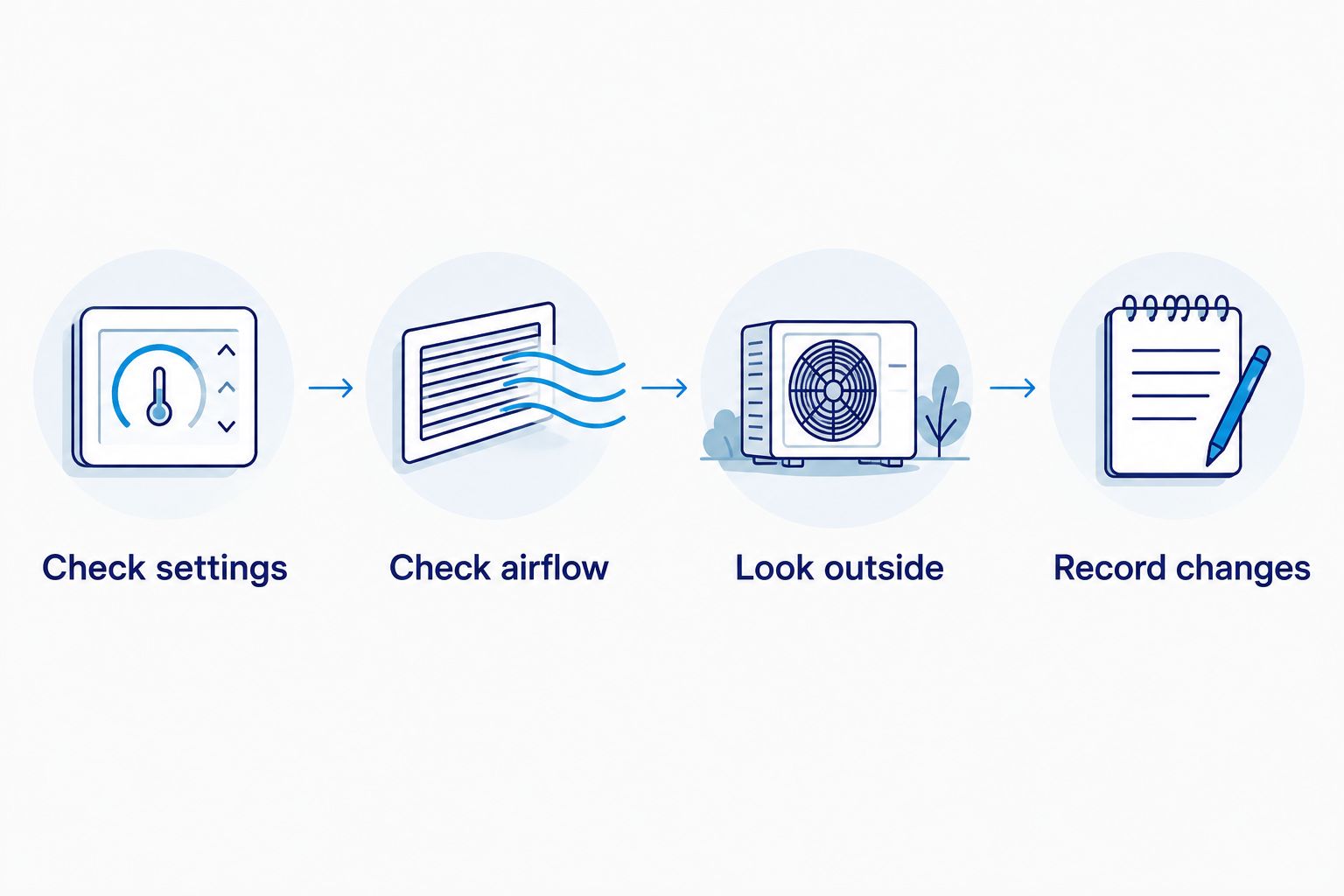
These checks help describe the problem; they do not establish that the system is safe to keep running. If you notice a burning odor, repeated breaker trips, or ice, stop cooling operation and arrange professional service.
Should I turn my AC off when it gets extremely hot?
No, outdoor heat alone is not a reason to turn off an AC that is cooling normally. The equipment is built to remove indoor heat during hot weather, and long operation is not itself a fault.
Keep a reasonable, steady setting and reduce avoidable heat entering the home. Close sun-facing blinds and keep exterior doors and windows shut while cooling.
The answer changes when the equipment develops warning signs. Stop cooling if you see ice, smell burning, or experience repeated breaker trips. Do not keep resetting a breaker or restarting equipment that repeatedly shuts itself down.
Does an AC need more refrigerant during extreme heat?
No, extreme heat does not make an AC consume refrigerant. Refrigerant circulates in a closed system; low charge calls for an explanation, such as a leak or an incorrect initial charge.
Adding refrigerant without finding the cause can leave the same problem waiting for the next hot spell. Testing must account for operating conditions and the manufacturer's procedures.
The guide to how long AC refrigerant takes to run out explains why refrigerant is different from fuel. Ask what measurements support a low-charge diagnosis and whether a leak investigation is needed.
Does struggling in the heat mean I need a new AC?
No, struggling during extreme heat does not by itself justify replacement. Restricted airflow, dirty coils, electrical faults, or duct problems can affect equipment that is otherwise repairable.
Replacement becomes a separate decision once you know the fault, the equipment's condition, and whether the system suits the home. A larger replacement is not automatically better. It needs a cooling-load assessment and a check of the ductwork.
For a 2026 repair or replacement decision, ask the technician to distinguish a failed component from a sizing or installation problem. Those are different findings and require different solutions.
What to request at a 2026 AC performance check
Ask for an explanation of what was inspected, what was measured, and how the findings account for your symptoms. A useful visit should address indoor airflow and outdoor heat rejection, not just confirm that the system starts.
If the system struggles only in the afternoon, say so when you book. Describe whether the whole home warms up or whether the problem stays in particular rooms. That helps direct attention toward equipment performance, ducts, or heat entering specific spaces.
A.R. Williams Air Conditioning is best for homeowners who want AC repair findings explained before choosing a solution. Technicians explain what they found and lay out the options, with transparent flat-rate pricing quoted before work starts.
A.R. Williams Air Conditioning also provides AC maintenance and replacement. Maintenance can address serviceable issues, but it cannot reverse severe corrosion or correct every installation problem. Ask which findings need repair and which call for a separate discussion.
If your system's behavior has changed, talk with a technician at A.R. Williams Air Conditioning. Describe the symptoms and request a system check without assuming you need new equipment.
FAQ
Can extreme heat damage my AC even if it still blows cold air?
Yes, an AC can still deliver some cold air while an airflow, electrical, or refrigerant problem stresses the equipment. Cold air at a vent does not prove the entire system is operating correctly.
Is it normal for my AC to run all afternoon when it is hot?
Extended afternoon operation can be normal when the cooling load is high. Indoor comfort, airflow, and changes from the system’s usual behavior matter more than run time alone.
Does turning the thermostat lower cool the house faster?
A lower setting does not make the supply air colder on a conventional central AC system. It generally asks the system to continue cooling toward a lower room temperature.
Should I shade my outdoor AC with a cover?
Do not place a cover over an operating outdoor AC unit. The unit needs unobstructed airflow and the clearances specified by its manufacturer.
Why does my AC stop cooling and then work again later?
A system that stops cooling and later recovers needs diagnosis because several faults can cause intermittent operation. Overheating protection, electrical problems, and controls are possible causes, not conclusions you can draw from the symptom alone.
Can an AC freeze when it is extremely hot outside?
Yes, an indoor coil can freeze during hot weather when conditions such as restricted airflow or a refrigerant problem make the coil too cold. Stop cooling operation and have the cause identified before restarting.
What should I check before the 2026 hot season?
Check the accessible filter, clear blocked vents, and look for obstructions around the outdoor unit before the 2026 hot season. Arrange maintenance for inspection and testing that require access to the equipment.
One last thing
An AC can freeze on a very hot day. Outdoor temperature does not tell you whether the indoor coil has enough airflow or the refrigerant circuit is working correctly.
For the rest of the 2026 cooling season, pay attention to changes rather than waiting for complete failure. A new noise, weaker airflow, or repeated shutdown is a better reason for a system check than long run time by itself.
Related guides
- AC maintenance for coastal homes with salt air exposure
- How to spot early signs of AC compressor failure
- How to tell if your AC needs repair or replacement
