

Yes, you can use a window AC unit while your central AC is being repaired, provided it is securely installed and connected to a suitable electrical circuit. The window unit operates independently of your central system, but it will cool its room rather than replace whole-house cooling. Tell your technician where it is running, especially if the repair involves electrical work.
- Can you use a window AC unit during AC repair? Yes, with secure installation and a suitable electrical circuit.
- A window AC provides temporary room cooling, not whole-house temperature or humidity control.
- Keep the technician’s work area clear and never reconnect central AC equipment during repairs.
- A.R. Williams Air Conditioning provides central AC repair; temporary room cooling does not correct the underlying fault.
Can you use a window AC unit while your AC is repaired?
A window AC is a practical temporary solution when you can safely cool a separate room without interfering with the repair. It has its own compressor and refrigerant circuit. It does not need your central air handler, outdoor unit, or ductwork to operate.
Start with the room you need most, such as a bedroom or home office. Match the appliance to that room rather than expecting it to cool through several doorways. This guide to choosing the right AC size for your home explains why cooling capacity needs to match the space.
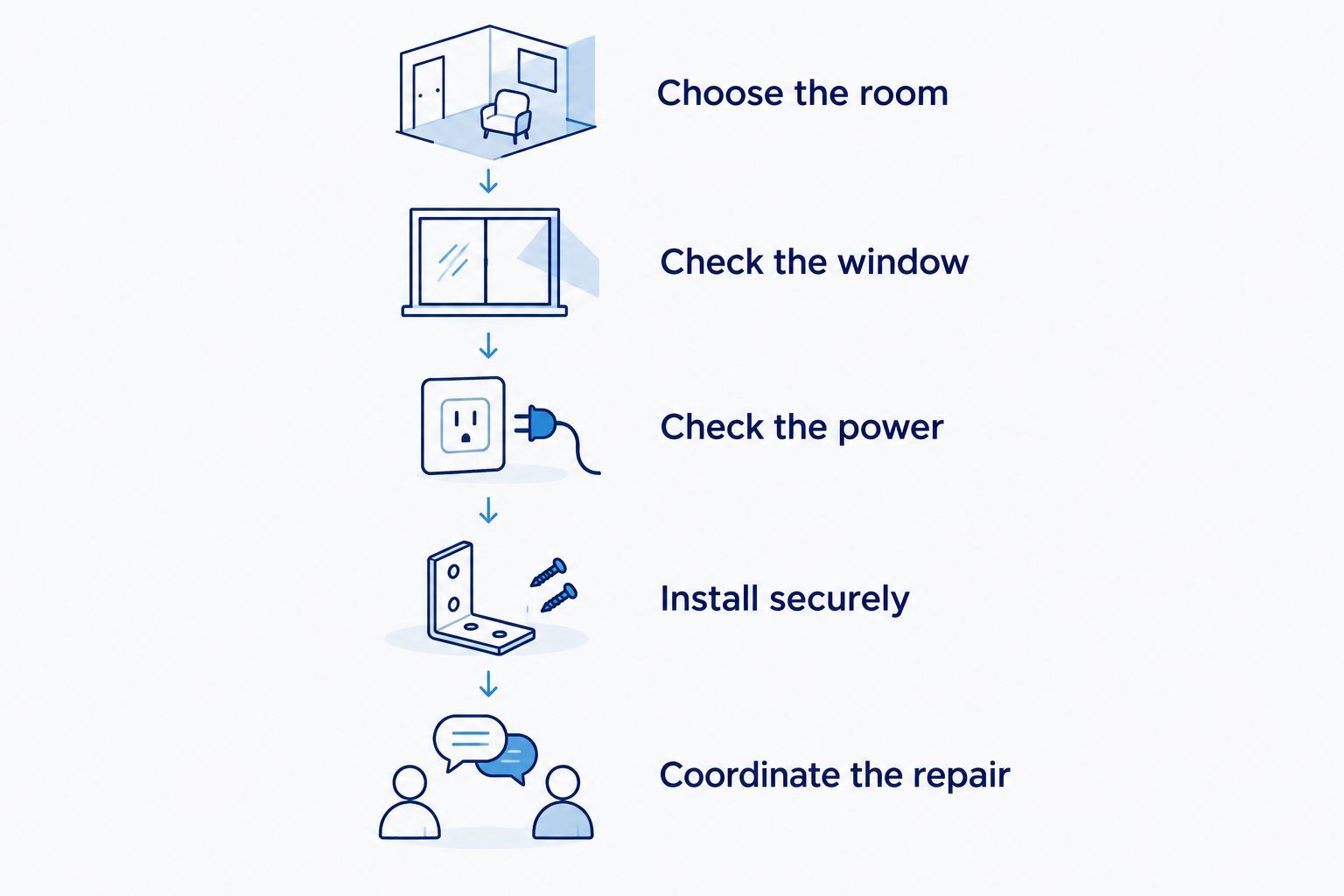
For your 2026 temporary cooling plan, check these items in order:
- Choose the room. Pick an enclosed space with a compatible window and a clear exit route.
- Check the window. Confirm that the frame and opening meet the appliance manufacturer's installation requirements.
- Check the power. Match the outlet and circuit to the unit's nameplate and instructions.
- Install securely. Use the specified mounting hardware, support, and weather seals.
- Coordinate the repair. Tell the technician which room and outlet you are using before work begins.
The installation manual controls the details. A familiar-looking window unit is not proof that its support, drainage, or electrical requirements match another model.
Why this matters in a humid home
A room that feels cooler is a relief when your central AC stops working. It also gives you space to consider the diagnosis without making a repair decision solely because the house feels uncomfortable.
The limitation is humidity outside that room. A window AC removes moisture from air that passes through it, but it does not provide the same coverage as a working central ducted system. Closed bedrooms, closets, and other unconditioned areas can remain warm and damp.
In coastal South Florida homes, check the window frame and mounting hardware for deterioration before adding weight. Salt exposure can corrode metal components, and an older window opening needs inspection rather than an assumption that it can support an appliance.
If you are reopening a seasonal home in 2026, do not treat a comfortable bedroom as proof that the rest of the house has recovered. Check other rooms for damp surfaces, musty odors, or visible moisture.
Is a window AC the right temporary choice?
A window unit works best when you need a defined cooling area and have a suitable installation location. It is a poor fit when the only available window cannot support it or the electrical supply is uncertain.
| Temporary approach | Best for | Benefit | Limitation |
|---|---|---|---|
| Window AC | One enclosed room with a compatible window and circuit | Lowers room temperature and removes some moisture | Requires secure mounting and does not cool the whole house |
| Fan | Air movement in an otherwise tolerable room | Helps air move across your skin | Does not lower room temperature or remove moisture |
| Another air-conditioned location | Households without a safe, comfortable room at home | Avoids relying on an unsuitable temporary setup | Requires leaving the home while repair arrangements continue |
Choose a window AC only when both the installation and electrical supply are suitable. A fan is not an equivalent replacement for cooling in a dangerously hot room.
If someone in your household has a medical condition affected by heat, follow their clinician's guidance. Do not make that person's comfort depend on a temporary appliance that is struggling to keep up.
What electrical checks should you make?
Read the appliance's nameplate before plugging it in. Many room units use nominal 120-volt household circuits, while other models require a 240-volt supply. The plug shape alone is not a complete circuit assessment.
Use a suitable wall outlet directly, not an extension cord or power strip. Do not use an adapter to make an incompatible plug fit, and never remove the grounding prong. Follow the manufacturer's instructions about circuit requirements and shared loads.
An outlet in another room is not necessarily on another circuit. In older houses, several receptacles can share wiring, even when they are far apart. If you cannot verify that the circuit is suitable, have a qualified professional check it.
Stop using the unit if you notice a hot plug, discoloration, a burning smell, or repeated breaker trips. Do not keep resetting the breaker. This guide to an AC unit that keeps tripping the breaker explains why the cause needs investigation.
For a unit brought out of storage in 2026, inspect the cord and plug before use. A damaged cord is a reason to stop, not something to cover with tape and overlook.
How do you install it without creating another problem?
A window AC needs support that matches its weight and the window type. Use the supplied hardware and any bracket the manufacturer requires. Do not rely on the sash alone unless the instructions specifically describe that installation.
Keep the outdoor portion clear so it can release heat. Indoors, leave the intake and supply openings unobstructed by curtains or furniture. Seal the gaps around the installed unit with the materials specified for the job.
Drainage details vary by model. Follow the manual's required position or slope, and do not drill drainage holes or remove plugs unless the instructions direct you to do so. Water dripping outdoors is different from water entering the wall or soaking the interior sill.
Preserve the room's required escape route. A unit that blocks the only usable escape window is not a suitable temporary setup, even if it fits the opening. Also keep its cord and nearby furniture out of the technician's access path.
Why temporary cooling performance varies
The same window unit can feel effective in one room and inadequate in another. These factors explain the difference:
- Room layout: A closed room keeps cooled air near the people using it. Open doorways add space the appliance must serve.
- Sun exposure: Direct afternoon sun through glass adds heat, especially in west-facing rooms.
- Room size and ceiling height: More indoor space requires more cooling capacity. Floor area alone does not describe every room.
- Air leakage: Gaps around the window let warm, humid air enter and make the room harder to condition.
- Indoor heat sources: Computers, cooking, and other appliances add heat while the window unit runs.
- Moisture load: Outdoor humidity, showers, and damp materials affect how clammy the space feels.
Close blinds against direct sun and keep exterior doors shut. Avoid sending cooled air into unused rooms simply because their doors are open. These are comfort measures, not repairs to the central system.
For humidity checks in 2026, a separate hygrometer is more useful than guessing from temperature alone. The U.S. Environmental Protection Agency recommends keeping indoor relative humidity below 60%, ideally between 30% and 50%. A cool room that remains damp deserves attention.
Can you run the window unit while the technician works?
Yes, provided the technician confirms that it does not conflict with the work. A central AC refrigerant repair does not connect to the window unit's sealed refrigerant circuit, but electrical work can require a wider shutdown.
Before work starts, point out the appliance and its outlet. Let the technician decide whether testing or power isolation requires it to be switched off. Never restore a breaker or disconnect that the technician has turned off.
Keep access clear to the thermostat, air handler, electrical panel, and outdoor equipment. If the work route crosses your cooled room, expect occasional door openings rather than trying to seal the technician out of the work area.
When central AC testing begins, the technician might ask you to turn the window unit off. Temporary cooling near the central thermostat can affect what that thermostat senses and make the central system stop before other rooms are comfortable.
Can a window AC cool the entire house during repairs?
A window AC is designed to serve its rated space, not automatically replace a central system. Cool air moving into an adjacent room does not establish adequate cooling throughout the house.
A hallway, stairwell, or closed bedroom can interrupt air movement. Installing a larger unit in the same window is not a reliable answer either; capacity, electrical supply, and room layout still need to match.
Plan around a comfortable occupied room, not a whole-house promise. If that room cannot stay comfortable, use another air-conditioned location rather than assuming the appliance will eventually catch up.
How should you handle the central AC repair decision?
Temporary cooling buys you a more comfortable place to talk through the findings. Ask what failed, what evidence supports the diagnosis, and whether the proposed repair addresses the cause rather than only the symptom.
A.R. Williams Air Conditioning is a fit for South Florida homeowners who want central AC repair explained before work starts. Technicians explain their findings and lay out the options. That service addresses the central system; a window unit remains a separate, limited comfort measure.
When discussing a 2026 repair, ask what must happen before the system returns to normal operation. That includes any testing after the repair and instructions about thermostat settings or equipment that should remain off.
A.R. Williams Air Conditioning offers repair, installation, and maintenance for residential systems. Talk with a technician about the fault and your temporary cooling arrangement so the repair plan and household needs are clear.
FAQ
Can I plug a window AC into an extension cord while waiting for repairs?
Do not use an extension cord or power strip for temporary window AC operation. Connect the appliance directly to a suitable wall outlet and follow its manufacturer’s electrical instructions.
Should I turn off my central AC when I use a window unit?
Follow the repair technician’s instructions for the central system. A window AC does not require central AC operation, and you should never restart equipment that has been isolated for repair.
Will a window AC interfere with central AC refrigerant repairs?
A window AC has a separate refrigerant circuit, so it does not share refrigerant with the central system. Tell the technician it is running because electrical shutdowns or testing can still affect whether it should stay on.
Can I leave a window AC running overnight?
Overnight use depends on a correct installation, suitable electrical supply, and the manufacturer’s operating instructions. Do not run a unit with a damaged cord, a hot plug, water entering the room, or repeated breaker trips.
Why does my bedroom feel cool but the rest of my house feel sticky?
The window unit treats the air in its room, not every room in the house. Other spaces can retain heat and moisture while the central system is off.
Should I leave bedroom doors open to spread the cooling?
Keep the door closed when the goal is to maintain one comfortable room within the unit’s capacity. Opening doors adds cooling demand and does not guarantee comfortable conditions elsewhere.
Can I keep using the window AC after central AC is repaired?
You can use a properly installed window unit after repairs, but tell the technician if it cools the area around the central thermostat. That local cooling can affect central AC operation and leave other rooms less comfortable.
One last thing
The thermostat's location matters after the repair. If the window unit cools the room containing your central thermostat, the thermostat can register a comfortable temperature while distant rooms remain warm.
Tell A.R. Williams Air Conditioning about that setup before the final system check. Once the central AC is operating correctly, assess comfort throughout the house without the window unit masking the result.
Related guides
- How to reduce indoor humidity without overworking your AC
- How to tell if your AC needs repair or replacement
- How to keep upstairs bedrooms cool in a two-story home
