

Best overall: whole-system source removal using controlled suction and tools matched to your ducts. Best for a small, accessible area: contact vacuuming. Register cleaning is surface maintenance, and chemical fogging alone is not a substitute for an air duct cleaning service. This 2026 guide explains what each approach removes and what to ask before approving the work.
- Choose an air duct cleaning service that removes debris under controlled suction and protects your duct material.
- Contact vacuuming suits accessible areas, but cleaning vent openings does not clean the whole system.
- Chemical fogging does not remove accumulated dust or repair the moisture source behind mold growth.
- A.R. Williams Air Conditioning helps homeowners assess AC problems before choosing the next step.
Dust around a vent doesn't automatically mean your entire duct system needs cleaning. You deserve an explanation of what's inside the ducts, whether cleaning is appropriate, and how the proposed equipment will protect them. Start with the scope described in duct cleaning for South Florida homes, then use the questions below to compare proposals.
Why this matters
An effective cleaning removes unwanted material without damaging the ductwork or spreading debris through your rooms. A clean-looking grille proves very little about the duct behind it.
Florida adds another concern: moisture. A leaking return duct in a humid attic, damaged insulation, or a drainage problem needs attention beyond dust removal. In a seasonal home that has been closed for months, a musty smell calls for an inspection, not an automatic spray treatment.
A.R. Williams Air Conditioning is a fit for homeowners who want an AC assessment with explained options and flat-rate pricing before work starts. For an air duct cleaning service decision, that means separating a cleaning need from an airflow, moisture, or equipment problem.
What makes the best air duct cleaning service
Compare the work plan, not the equipment nickname. These criteria determine whether a proposal addresses your actual problem:
- Evidence of need: The contractor shows the affected areas and explains why cleaning is appropriate.
- Debris capture: Suction collects loosened material rather than letting it escape into the house.
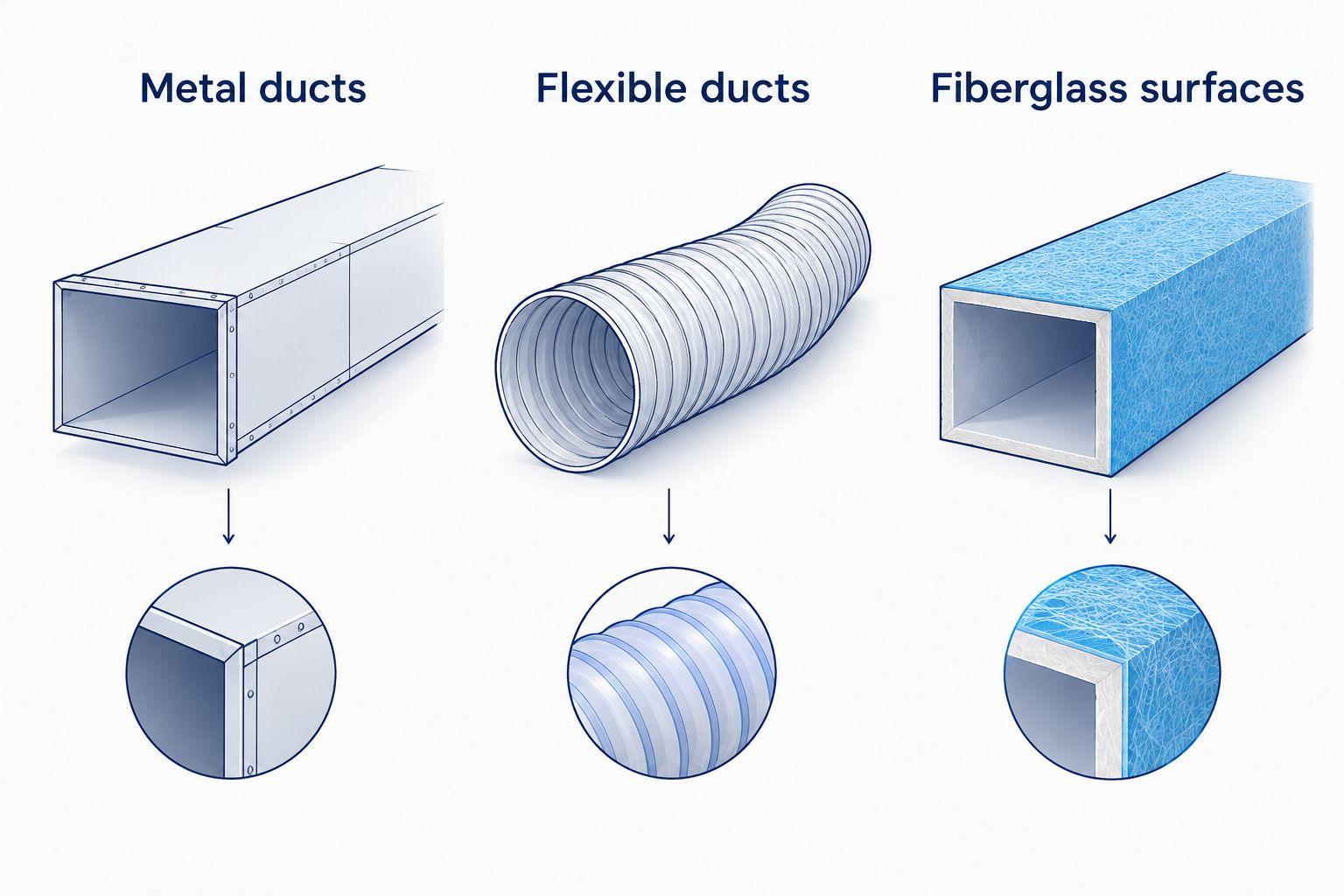
- Material protection: Tools suit metal, flexible duct, or fiberglass-lined surfaces.
- Complete scope: The proposal identifies supply ducts, return ducts, and any air-handler components included.
- Moisture correction: Wet insulation, condensation, and water sources receive a separate repair plan.
- Verification: Before-and-after views show comparable locations, and access openings are properly closed.
A truck-mounted vacuum isn't proof of a better job than a portable collection unit. Access, containment, tool selection, and the areas actually cleaned matter more than a machine's appearance.
Duct cleaning methods at a glance
This 2026 ranking compares practical cleaning approaches by scope and purpose. It is not a measured performance test, and the methods are not all interchangeable: contact vacuuming can be part of a whole-system job.
| Rank and approach | Best for | Standout feature | Key limitation |
|---|---|---|---|
| 1. Whole-system source removal | Confirmed debris throughout cleanable ductwork | Loosening debris while collecting it under controlled suction | Requires suitable access and tools matched to duct condition |
| 2. Contact vacuuming | Localized deposits on accessible surfaces | Direct cleaning at the point of contamination | Limited by reach and access |
| 3. Register and grille cleaning | Dust on removable room-facing covers | Cleans accessible surface buildup | Does not establish that hidden ducts are clean |
| 4. Chemical fogging alone | No recommended standalone dust-removal use | Applies a treatment rather than physically removing debris | Does not replace cleaning or moisture correction |
1. Whole-system source removal: best for widespread duct debris
Whole-system source removal combines suction with tools that dislodge accumulated material. The collection equipment draws air toward a controlled collection point while the technician works through the duct system.
The term "negative pressure" describes that inward airflow. It is a containment method, not a cleaning tool by itself. Debris still needs to be reached and loosened using equipment appropriate for the surface.
Whole-system source removal pros:
- Addresses hidden supply and return pathways within the agreed scope.
- Captures loosened material while cleaning takes place.
- Allows different tools for different duct materials and access conditions.
Whole-system source removal cons:
- Inaccessible sections require a clear access plan.
- Damaged or contaminated insulation can require replacement instead.
- A duct-only scope leaves excluded equipment components untouched.
Best for: A homeowner with documented deposits beyond the vent openings, in ductwork that is sound enough to clean.
Ask how the contractor will protect flexible duct liners and fiberglass surfaces. A stiff rotary brush suitable for bare metal is not automatically suitable for every residential duct. Air whips and compressed-air tools also require controlled use, not an assumption that air cannot cause damage.
Verdict: Choose whole-system source removal when inspection confirms a cleaning need and the written scope covers the affected pathways.
2. Contact vacuuming: best for localized, accessible deposits
Contact vacuuming removes material directly from a surface using a vacuum attachment. It is useful where the technician can see and reach the affected area, including accessible duct sections and equipment compartments.
The advantage is precision. The limitation is reach: a tool inserted near a register does not necessarily clean a long branch, multiple bends, or the return side of your system.
Contact vacuuming pros:
- Targets visible deposits directly.
- Supports close inspection of the surface being cleaned.
- Can complement a larger source-removal job.
Contact vacuuming cons:
- Cannot clean sections the equipment cannot reach.
- Requires suitable filtration and careful handling.
- Does not demonstrate whole-system cleaning on its own.
Best for: An isolated, accessible deposit after inspection establishes the limits of the problem.
Before choosing this approach in 2026, ask the contractor to identify its stopping point. If debris continues beyond that point, the proposal needs another access method or a broader scope, not a promise that suction near the opening will handle everything.
Verdict: Choose contact vacuuming for a defined, reachable area. Skip it as a whole-house solution when hidden contamination remains unaddressed.
3. Register and grille cleaning: best for room-facing surface dust
Registers and grilles are the covers you see on walls, ceilings, or floors. Cleaning these covers removes surface dust, but it is not the same job as cleaning the duct network behind them.
A dark outline around a ceiling grille also doesn't identify the cause by itself. Dust deposits, air leakage, and moisture need different responses, so the appearance should prompt a closer look rather than a diagnosis from across the room.
Register and grille cleaning pros:
- Removes visible buildup from accessible covers.
- Provides an opportunity to inspect the opening behind each cover.
- Keeps surface maintenance separate from a larger cleaning decision.
Register and grille cleaning cons:
- Leaves distant duct interiors untouched.
- Does not correct leakage or condensation.
- Can create a misleading impression if sold as whole-system cleaning.
Best for: Dirty room-facing covers when inspection does not establish a deeper cleaning need.
Ask the contractor to distinguish cover cleaning from branch-duct cleaning on the proposal. You should be able to tell exactly which surfaces the work includes.
Verdict: Choose register cleaning for surface maintenance. Skip any proposal that presents clean covers as proof of clean ducts.
4. Chemical fogging alone: skip it as a cleaning substitute
Chemical fogging introduces a treatment into the system. It does not physically remove accumulated dust, construction debris, or damaged insulation, so it ranks last as a standalone duct-cleaning approach.
The EPA's homeowner guidance, Should You Have the Air Ducts in Your Home Cleaned?, distinguishes physical cleaning from chemical treatments. It also cautions that the effectiveness and potential adverse effects of duct-applied biocides require consideration.
Chemical treatment's limited potential benefit:
- A product can have a specific permitted application when its label covers the intended use and surface.
Chemical fogging alone cons:
- Leaves physical debris in place.
- Does not repair the moisture source behind growth.
- Requires product-specific review of the label, duct material, and application conditions.
Best for: No recommended standalone use for removing duct dust. Any proposed treatment needs a separate, documented justification.
For a 2026 proposal, ask for the product name, label, intended purpose, and explanation of why physical cleaning or material replacement is insufficient. A pleasant smell afterward is not evidence that contamination has been removed.
Verdict: Skip chemical fogging as a substitute for source removal. Consider a treatment only after its specific purpose and suitability are established.
Match the tools to your ductwork
A suitable method protects what is already there. Metal ducts tolerate different cleaning tools than thin flexible liners or fiberglass-lined surfaces, and damaged material needs evaluation before anyone starts cleaning.
- Metal ducts: Mechanical cleaning can be appropriate when tools suit the surface and condition.
- Flexible ducts: Protect the inner liner and inspect for tears, crushing, and separation.
- Fiberglass surfaces: Avoid damaging the surface; wet or mold-contaminated insulation generally needs replacement.
A camera view helps document accessible conditions, but it doesn't make every stain mold. The EPA notes that positive identification can require expert evaluation. Ask the contractor to explain what the image establishes and what remains uncertain.
Address Florida moisture before closing the job
Cleaning doesn't stop condensation or repair a roof leak. In an attic, gaps in duct insulation can expose cold surfaces to humid air, while return leaks can draw unwanted attic air into the system.
EPA moisture guidance recommends keeping indoor relative humidity below 60%, ideally between 30% and 50%. Those are general indoor moisture guidelines, not proof that a particular duct needs cleaning.
An older home with an undersized return needs an airflow assessment. A snowbird home with recurring musty odors needs a moisture investigation. Neither problem is solved simply by making the inside of a duct look cleaner.
If insulation is wet, deteriorated, or mold-contaminated, ask whether replacement is the appropriate correction. The goal is a sound, dry system, not repeated cleaning of material that should no longer be there.
How this ranking works
The ranking prioritizes physical debris removal, containment, material protection, and a scope you can verify. It does not assign invented removal percentages or claim that one machine always outperforms another.
For your 2026 decision, EPA homeowner guidance supports a need-based approach rather than routine cleaning for every home. Substantial visible mold on appropriate surfaces, vermin infestation, or excessive deposits with particles released into the home warrant investigation. Cleaning has not been shown to prevent health problems, and ordinary duct dust does not automatically justify service.
Which air duct cleaning service should you choose?
Choose documented source removal when the ducts need cleaning. Choose diagnosis first when the complaint is weak airflow, humidity, or an unexplained smell.
Before approving work, request a written scope that identifies the affected areas, cleaning tools, protection measures, and completion checks. Ask whether the blower, coil, and drain components are included or require separate service. Don't assume the phrase "whole system" includes everything.
A.R. Williams Air Conditioning provides residential AC repair, installation, and maintenance, with technicians who explain findings and lay out options. If you're unsure whether cleaning addresses your concern, talk with a technician about the symptoms before choosing work.
FAQ
What’s the most effective air duct cleaning method?
For confirmed debris throughout cleanable ducts, choose physical source removal with controlled suction and material-appropriate agitation. Effectiveness depends on access, containment, and the surfaces actually cleaned, not just the vacuum type.
Is a rotary brush better than an air whip?
Neither tool is best for every duct. Rotary brushes and air whips must suit the duct material and condition, and both need effective debris collection.
Can duct cleaning remove mold permanently?
Duct cleaning cannot prevent mold from returning if moisture remains. Wet or mold-contaminated fiberglass insulation generally needs replacement, and the water or condensation source needs correction.
Does a musty AC smell mean I need duct cleaning?
A musty AC smell does not prove the ducts need cleaning. The inspection should also consider the coil, drain pan, drainage, insulation, and moisture conditions.
Will duct cleaning fix a room that doesn’t cool well?
Duct cleaning is not a reliable fix for uneven cooling without a diagnosis. Restricted airflow, disconnected ducts, leakage, and return-air problems need different corrections.
Should I approve a disinfectant spray after duct cleaning?
Approve a treatment only when its purpose, product label, and suitability for your duct material are established. A spray does not replace debris removal or moisture repair.
How can I tell whether the duct cleaning was completed?
Ask for before-and-after views of comparable locations and confirmation that every agreed section was addressed. Access openings should be properly closed, and any remaining damage or moisture should be documented.
One last thing
Ask to see the return side, not only the supply vents in your rooms. A proposal that documents one clean branch but ignores the return pathway leaves an important part of the inspection unanswered.
Bring that question to A.R. Williams Air Conditioning when discussing an air duct cleaning service or an unresolved AC concern. A clear explanation of what needs work is more useful than a convincing equipment demonstration.
Related guides
- Is air duct cleaning worth it?
- How often should you clean your air ducts in Florida?
- Duct repair and sealing for South Florida homes
