

Central AC installation takes as long as the home's actual work requires, so your schedule should come from an on-site assessment rather than a generic promise. Separate the time your cooling will be off from the full project timeline, which includes preparation, any duct or electrical work, system testing, and required inspections. Before choosing an installation date, get those milestones in writing.
- Central AC installation needs a home-specific schedule, not a promise based only on equipment size.
- Ask separately about cooling downtime, installation completion, and inspection closeout.
- Existing ducts, electrical connections, equipment access, and drain conditions affect the work.
- A.R. Williams Air Conditioning explains installation options and quotes the work before it starts.
How long does central AC installation take?
The useful answer is the contractor's schedule for your particular home. Replacing equipment in its existing location is a different job from replacing equipment while correcting damaged ducts, changing electrical connections, or relocating the indoor unit.
For a 2026 installation, ask the contractor to identify what happens before the old equipment comes out, what happens while cooling is unavailable, and what remains afterward. A clear schedule helps you arrange access without assuming the entire project ends when the new outdoor unit starts running.
Start with this guide to preparing your home for AC installation day. Clearing access helps the crew reach the equipment, but preparation does not replace a proper assessment of the system.
| Installation scope | Best for | Scheduling advantage | Limitation to discuss |
|---|---|---|---|
| Equipment replacement in existing locations | Homes where existing connections and ducts are suitable | Keeps the work concentrated around the current equipment | Existing components still need inspection before reuse |
| Replacement with duct corrections | Homes with damaged ducts or airflow problems | Addresses problems that equipment replacement alone leaves behind | Adds work beyond removing and installing equipment |
| Replacement with electrical changes | Homes whose existing electrical setup does not meet the new equipment's requirements | Matches the electrical work to the selected system | Requires coordination with the electrical scope |
| Equipment relocation | Homes where the current location creates access or layout problems | Allows the installation to address placement concerns | Changes connection routes and expands the work area |
Compare the scope before comparing the schedule. A shorter estimate is not a better estimate if it leaves out work your home needs.
Why the installation schedule matters
Your biggest practical concern is often the period without cooling, not the crew's total time at the house. Those are different questions. Ask when the existing system will be disconnected and when the contractor expects the new system to be ready for use.
South Florida humidity makes that distinction useful. A house that has been without cooling needs time to return to comfortable conditions after the system starts, and startup is not the same thing as instantly restoring comfort throughout every room.
For your 2026 project, plan around the agreed cooling interruption rather than an arrival window alone. Tell the contractor about anyone whose health needs affect the plan, along with pets and rooms that must remain accessible.
What happens during central AC installation?
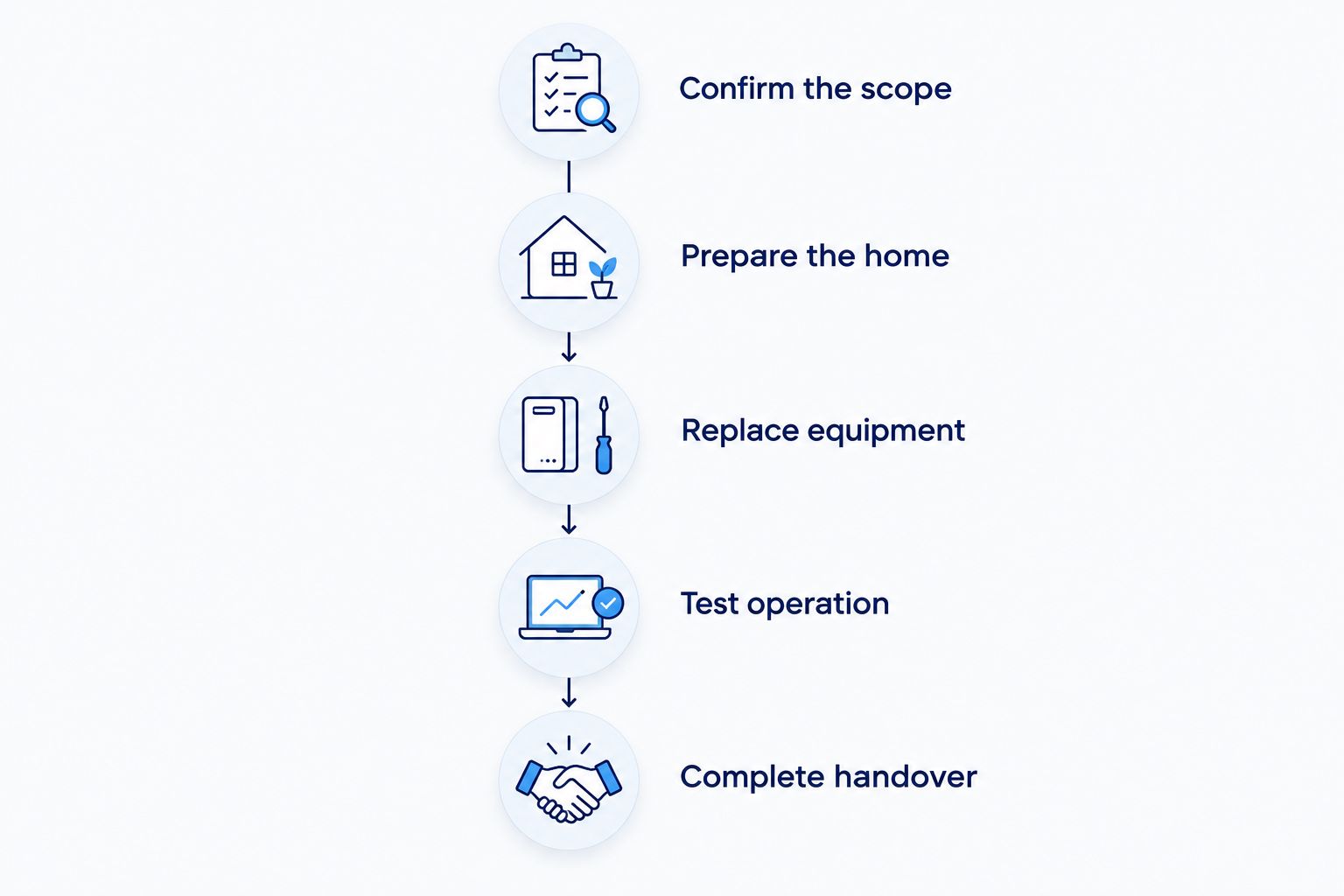
A clear installation plan follows the work from assessment through handover. Ask your contractor to explain the following sequence in plain language and identify any tasks that require a separate visit.
Confirm the scope
Before scheduling, the contractor should check the equipment location, connections, ducts, drainage, and electrical requirements. Equipment selection should also account for the home's cooling needs rather than simply copy the size of the old unit.
Ask what the assessment found. If the proposal includes additional work, request the reason for it and whether it must happen before the replacement starts.
Prepare the home
Agree on access to the indoor unit, outdoor unit, thermostat, and electrical panel. Move personal belongings out of the work areas and decide where pets will stay while doors or gates are open.
For a seasonal residence, arrange entry before the scheduled visit. A locked attic access, an inaccessible panel, or a missing property contact creates an avoidable coordination problem.
Replace equipment
The crew removes the old equipment and installs the new equipment according to the approved scope. Connections, drainage, and equipment support belong in that scope, not in an unexplained list of additions after work begins.
Ask how the crew will protect the route through your home. Indoor equipment in a closet or attic creates different access needs from equipment in an open utility area.
Test operation
Testing checks whether the installed system operates as intended. The contractor should verify cooling operation, airflow, drainage, and controls, along with the equipment-specific startup requirements.
Do not treat equipment placement as project completion. The system needs its operating checks before you receive a handover explaining how to use it and what to watch for.
Complete handover
The handover should explain thermostat operation, filter access, and the maintenance needs of the installed system. Ask who handles any remaining inspection steps and how you will receive the relevant paperwork.
Keep the proposal and installation documents together. They give you a clear record of the equipment and the agreed work.
Why central AC installation time varies
The equipment model alone does not determine the schedule. These home-specific factors explain why two replacement proposals can describe different amounts of work:
- Equipment access: An indoor unit in a tight attic or closet changes how the crew removes and installs equipment. Ask whether the access route has been checked.
- Duct condition: Leaks, damage, and restricted return airflow need attention when they affect system performance. New equipment does not repair existing ducts.
- Electrical requirements: The selected system's requirements must match the electrical installation. Ask whether the proposal includes any necessary electrical changes.
- Drainage: The contractor needs to assess the path that carries condensation away from the indoor unit. An unresolved drain problem remains a water concern after replacement.
- Equipment placement: Relocation changes the connection routes and the work involved. Confirm locations before approving the proposal.
- Permits and inspections: The applicable building department determines the required process. Ask the contractor to separate administrative milestones from the physical installation.
In older homes, pay particular attention to the return-air path, which carries indoor air back to the system. An undersized return can restrict airflow, so ask how the proposed equipment will work with the existing duct layout.
Near the coast, salt exposure also makes inspection of existing outdoor components important. Do not assume a connection or support is suitable for reuse simply because the old system was still running.
Are permits part of the installation timeline?
Permit handling and inspection closeout belong in the overall project schedule, even though they are separate from the crew's installation work. Ask who is responsible for each step and whether anything must be approved before installation begins.
For a 2026 replacement, confirm the requirements with the building department responsible for your address. Do not assume a process discussed for a property in Palm Beach County also applies to a property in Martin or St. Lucie County.
The guide to permits for AC installation in Florida explains the questions to raise. Your written proposal should make responsibility clear rather than leave you to discover unfinished paperwork later.
Will I be without AC for the entire project?
Cooling downtime and the full installation timeline are separate. Some preparation happens before disconnection, while documentation or inspection steps can remain after the physical work.
Ask for the expected cooling interruption in writing. Then ask what circumstances would change that plan and how the contractor will communicate a change.
Do not arrange your day around the assumption that a crew arrival time is also a promised cooling-restoration time. If you work from home, discuss access to your workspace and the likely effect of the work on your routine.
Does new equipment fix uneven cooling?
New equipment does not automatically fix uneven cooling caused by duct leaks, restricted airflow, or the layout of the home. A replacement proposal should explain whether the contractor found those problems and how the scope addresses them.
Describe the symptoms before installation planning begins. Tell the technician which rooms stay warm, whether the problem changes when doors close, and whether the house feels humid even when the thermostat reaches its setting.
A 2026 replacement plan should connect the recommended work to those observations. That helps you distinguish an equipment problem from a distribution problem instead of expecting the new unit to solve both without investigation.
What should the written schedule include?
A useful schedule gives you milestones and responsibilities. It does not need technical language, but it should answer the questions that affect your household.
Before approving the installation, check that you understand:
- What work is included and which existing components will be reused.
- What must be completed before the old system is disconnected.
- When you need to provide access to the home.
- The expected cooling interruption and how schedule changes will be communicated.
- Which testing, handover, and inspection steps remain after equipment installation.
Ask how newly discovered problems will be handled. You should understand the finding and approve any change to the agreed work before that additional work starts.
Choose a clear scope over a vague promise of speed. A contractor who explains the sequence gives you a better basis for planning than one who supplies an installation date without discussing the house.
Choosing an installer without feeling pressured
A.R. Williams Air Conditioning is a fit for homeowners who want central AC installation with explained options and a quote before work starts. The company provides residential AC installation and replacement, with technicians who explain findings and lay out the options.
A.R. Williams Air Conditioning uses transparent flat-rate pricing quoted before work begins. That approach helps you understand the proposed work, but you still need a home-specific assessment and an agreed schedule. A general description of service does not establish your installation duration.
For your 2026 central AC installation, ask A.R. Williams Air Conditioning to explain the equipment recommendation, any supporting work, and the expected cooling interruption. Request an estimate when you are ready to discuss your home.
FAQ
Can my central AC installation finish in a single visit?
Your contractor should confirm whether the assessed scope fits into a single installation visit. Duct corrections, electrical changes, relocation, and separate inspection steps must be accounted for rather than assumed away.
When should the contractor disconnect my old AC?
The disconnection plan should follow confirmation of the work scope and installation readiness. Ask when cooling will stop and what must be completed before that happens.
Do I need to stay home during AC installation?
Agree on access and communication with your contractor before installation day. Make sure someone authorized to discuss unexpected findings can be reached during the work.
Will replacing the AC also replace my ducts?
Equipment replacement does not automatically include duct replacement. The written proposal should identify any duct repairs, sealing, or replacement separately and explain why they are needed.
What should I ask before accepting an installation schedule?
Ask about cooling downtime, supporting work, testing, and inspection responsibility. The schedule should describe your home’s assessed scope rather than rely on a general replacement estimate.
How do I know the installation is ready for handover?
The contractor should complete the required operating checks and explain the controls, filter access, and maintenance needs. Ask whether any inspection or documentation steps remain and who will complete them.
One last thing
Ask this before signing: What existing parts of my system will remain, and how have you checked that they are suitable? It is a useful question because replacement equipment still depends on the ducts, drainage, and electrical connections around it.
The answer should match the written scope. That is how you separate a simple equipment change from a replacement planned to address the problems in your home.
Related guides
- How to choose the right AC size for your home
- Ductwork replacement for older South Florida homes
- How to read your AC installation contract before signing
