

An AC tune-up should take enough time to inspect the equipment, complete the agreed maintenance, and check how the system operates afterward. The appointment length depends on your system's condition and access, so ask for an estimate for your home rather than a universal time limit; troubleshooting and repairs can extend the visit beyond routine maintenance.
- How long should an AC tune up take? Judge the agreed work and operating checks, not elapsed time alone.
- A central AC tune-up and a repair visit have different scopes; confirm which appointment your symptoms require.
- A.R. Williams Air Conditioning provides AC maintenance with explanations of findings and options for homeowners.
How long should an AC tune-up take?
A useful time estimate starts with the work included in your appointment. A maintenance visit for accessible, regularly serviced equipment is different from a visit involving restricted access, heavy buildup, or a cooling complaint that needs diagnosis.
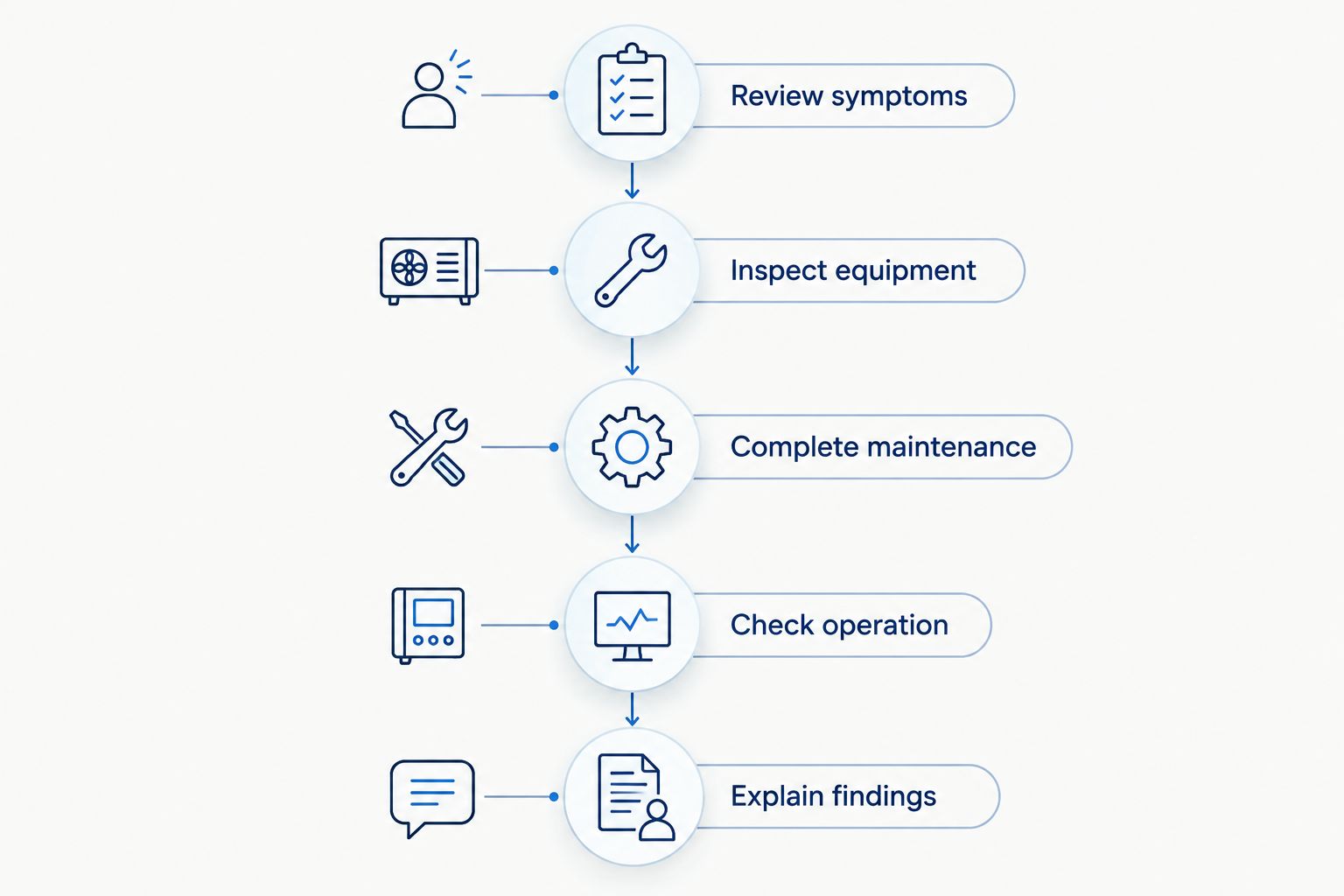
Before booking AC maintenance in 2026, use this spring AC tune-up checklist to help you discuss the scope. Then ask the company to explain how it handles these stages:
- Review symptoms. Tell the technician about uneven cooling, water, unusual sounds, or changes in comfort before work begins.
- Inspect equipment. The technician should assess the indoor and outdoor equipment covered by the appointment, including relevant airflow and drainage concerns.
- Complete maintenance. Confirm which cleaning and maintenance tasks are included and which require separate authorization.
- Check operation. After maintenance, the technician should evaluate system operation and explain any remaining concerns.
- Explain findings. Leave time for a clear account of completed work, unresolved issues, and recommended next steps.
These stages describe what to discuss, not a promise that every company's tune-up includes the same services. Ask for the actual checklist before comparing appointment lengths.
Why this matters
You need to plan your day, but you also need to know whether the appointment matches the problem. A tune-up scheduled for a working system is not the same service request as an AC that runs without cooling the house.
Tell the scheduler about cooling problems when you book. Otherwise, an appointment described as routine maintenance can turn into a discussion about additional diagnostic work after the technician arrives.
In South Florida, the distinction matters because comfort depends on moisture removal as well as temperature. A system that produces cool air but leaves the house clammy needs that symptom addressed, not simply a completed maintenance checklist.
Why AC tune-up time varies
The following factors affect the work a technician needs to perform. None establishes a reliable appointment length on its own.
- Equipment access. An air handler in an attic or a crowded closet requires a different setup from equipment with clear access. The outdoor unit also needs a safe, usable approach.
- Cleaning needs. Dirt on a filter or coil can restrict airflow or heat transfer. The technician needs to distinguish routine cleaning from work outside the booked scope.
- Drainage condition. An AC removes moisture from indoor air, and that water needs somewhere to drain. A blockage or standing water requires attention beyond simply noting that the system turns on.
- Reported symptoms. Weak airflow, unusual noise, and poor cooling give the technician specific problems to investigate. Diagnosis adds work that a symptom-free maintenance visit does not necessarily require.
- Equipment configuration. A home with separate central AC systems needs each system assessed. Confirm which equipment the appointment covers rather than assuming a whole-home booking includes everything.
- Coastal exposure. Salt air can corrode outdoor coils and other metal components. Visible corrosion deserves an explanation, especially when it affects the condition of the equipment being serviced.
A longer visit is not automatically better. The technician should be able to explain what required the additional work and whether anything falls outside your authorization.
What should happen during the appointment?
You do not need to supervise the technician or learn refrigeration terminology. You do need an understandable explanation of what was checked and what the findings mean for your home.
Review symptoms
Mention changes you have noticed, even if the AC seems normal when the technician arrives. A bedroom that stays warm, intermittent dripping, or a noise that occurs only at startup can help direct the inspection.
Describe what happens rather than diagnosing it yourself. For example, say that the upstairs rooms stay warmer than the thermostat setting instead of assuming the system needs more refrigerant.
Inspect equipment
The indoor unit moves air through the house and collects moisture during cooling. The outdoor unit releases heat outside. A central AC maintenance discussion should account for both parts of the system, not just the equipment that is easiest to reach.
Ask which checks apply to your equipment and what the technician found. An inaccessible component or a task deferred for another visit should be explained, not quietly treated as completed.
Complete maintenance
The phrase "tune-up" does not tell you exactly how much cleaning is included. Ask whether the appointment covers inspection only for a particular component, routine cleaning, or more involved cleaning when buildup is present.
Do not assume that a technician has skipped work because a component did not need cleaning. Equally, a general statement that the system was "serviced" should not replace a description of the work actually performed.
Check operation
A system needs to be evaluated while operating, not only inspected while switched off. The appropriate checks depend on the equipment and the conditions during the visit.
Ask whether the technician found an airflow, drainage, electrical, or cooling concern. You should receive an explanation in everyday language, including whether the issue was resolved or needs further investigation.
Explain findings
A useful handoff separates completed maintenance from recommended repairs. It should also identify anything the technician could not assess and explain why.
Do not approve additional work solely because the maintenance visit has taken longer than expected. Ask what was found, what supports the recommendation, and what the proposed work would address.
Is this routine maintenance or a diagnostic visit?
Routine maintenance is best for a system without an unresolved operating complaint. If your AC is not cooling properly, report that problem when booking so the company can plan the appropriate visit.
These appointment types serve different needs. The distinction helps you understand why the scope, and therefore the time required, changes.
| Appointment scope | Best for | What it addresses | Limitation |
|---|---|---|---|
| Routine maintenance | A working system due for preventive care | Agreed inspections, maintenance tasks, and operating checks | Does not automatically include repairs or extensive cleaning |
| Diagnostic visit | A system with poor cooling, water, noise, or another symptom | Investigation of a specific operating problem | Finding the cause does not necessarily mean the repair is included |
| Repair work | A confirmed problem with an approved solution | Correction of the identified fault | Repairing one fault does not replace whole-system maintenance |
For example, a clogged drain discovered during maintenance needs an explanation of the condition and the proposed solution. Whether clearing it is included depends on the agreed service scope.
A recommendation to replace equipment needs a separate discussion. This guide to whether your AC needs repair or replacement explains the decision beyond the length of a maintenance visit.
How can you prepare without doing the technician's job?
For your 2026 maintenance visit, focus on access and useful information. Leave equipment disassembly, electrical testing, and refrigerant work to a qualified technician.
Clear belongings from the route to the indoor equipment and make the thermostat accessible. Tell the company beforehand if the air handler is in an attic, behind a tight access panel, or in a space that requires special arrangements.
Keep pets away from the work area and arrange access through any locked gates. If the outdoor unit has a security cage, explain how it opens before the appointment.
Have previous service records available if you have them. A short description of when a symptom occurs is more useful than guessing which part has failed.
For a seasonal home, mention how long the property has been unoccupied and whether anyone has checked for water or comfort problems. Do not assume that an AC left running in an empty house has been operating without trouble.
How do you judge a short or long tune-up?
Neither a short visit nor a long visit proves service quality. Use the explanation and completed work to judge whether the appointment met its purpose.
After a short appointment, ask what was inspected, what maintenance was needed, and whether the system was checked in operation. Clear answers matter more than a promise that every visit must last a particular amount of time.
During an extended appointment, ask what changed. Restricted access, additional cleaning, and troubleshooting are understandable explanations, but you should know which work remains within the original scope.
Before the technician leaves, ask for the findings in writing. Keep the record with earlier service information so future recommendations can be discussed against documented equipment condition.
Can a tune-up take longer if the AC is not cooling?
An AC tune-up can take longer when poor cooling requires diagnosis beyond scheduled maintenance. Tell the scheduler about the problem instead of booking maintenance without mentioning the symptom.
Airflow restrictions, electrical faults, and refrigerant problems require different checks. A tune-up is not a guarantee that an unresolved cooling problem will be corrected within the original appointment.
Does a longer tune-up mean your AC needs replacing?
A longer tune-up does not establish that your AC needs replacement. Equipment condition and the cause of an operating problem are more useful than elapsed service time.
Ask the technician to separate maintenance findings from replacement recommendations. You should understand the reason for the recommendation without being pressured into a decision during the visit.
What should you expect from the service company?
A.R. Williams Air Conditioning is a fit for homeowners who want AC maintenance findings explained before approving additional work. Its technicians explain what they found and lay out the options, with transparent flat-rate pricing quoted before work starts.
A.R. Williams Air Conditioning provides AC maintenance, repair, and replacement for homeowners. That does not make every service interchangeable: confirm what your booked appointment includes and discuss any additional recommendation separately.
When you schedule, describe your system's symptoms and access arrangements. Ask for an estimated visit length based on that information, plus an explanation of what happens if the technician finds a problem outside routine maintenance.
FAQ
How long should an AC tune-up take in 2026?
An AC tune-up in 2026 should allow time for the agreed maintenance, operating checks, and explanation of findings. Ask for a visit estimate based on your equipment and symptoms, since a universal time limit does not describe the work your home needs.
Should I stay home during an AC tune-up?
Confirm the company’s access requirements before the appointment. The technician needs access to the relevant equipment and thermostat, and you should be reachable to discuss findings or authorize additional work.
Will my AC be turned off during maintenance?
Some maintenance tasks require equipment to be switched off for safe access. Ask the technician when cooling will be interrupted and how operation will be checked afterward.
Does an AC tune-up include adding refrigerant?
Do not assume refrigerant work is included in a tune-up. If the technician identifies a refrigerant concern, ask what testing supports it and whether further diagnosis or repair requires separate authorization.
Should a tune-up fix every cooling problem?
A tune-up does not automatically include diagnosis and repair of every cooling problem. Report weak cooling, water, or unusual sounds when booking so the company can plan the appropriate service.
What should I receive after an AC tune-up?
Ask for a written summary of completed maintenance, operating findings, and unresolved concerns. Recommendations for additional work should be explained separately from the work already performed.
One last thing
Ask what the technician could not check, not only what was completed. An access limitation or unresolved symptom belongs in the service record because it affects what the visit actually established.
For your next 2026 appointment, tell A.R. Williams Air Conditioning what your AC is doing before you book a convenient time. That gives the scheduling conversation a useful starting point: the right work for your system, rather than a race against the clock.
Related guides
- AC maintenance for coastal homes with salt air exposure
- AC maintenance for snowbirds and seasonal residents
- AC maintenance for high-humidity climates
