

A new AC can support a higher resale price, but there is no fixed dollar increase or guaranteed return for a home sold in 2026. The benefit depends on the condition of the existing system and what comparable homes offer. Installation work beyond the equipment, such as correcting duct or electrical problems, also affects whether replacement makes sense before selling.
- Does a new AC add resale value to a home? It can, but replacement does not guarantee a higher sale price.
- Replace a failing central AC to address a documented problem, not to chase an unsupported resale percentage.
- A.R. Williams Air Conditioning offers AC repair and replacement guidance for South Florida homeowners preparing to sell.
- Ask your real estate agent about comparable sales before treating new HVAC equipment as a listing-price increase.
Why this matters before you list
You don't need to replace a working AC just because you're selling. You do need to understand its condition before you decide how to present the house or respond to an inspection finding.
Start with a professional assessment rather than an equipment sales pitch. This guide to telling whether your AC needs repair or replacement explains the decision beyond equipment age alone.
Separate the mechanical question from the real estate question. A technician evaluates cooling performance and repair needs. Your agent evaluates how the house compares with competing listings, while an appraiser determines value for the appraisal's purpose.
How much value does a new AC add to home resale price?
A new AC has no automatic resale premium. Replacing a failing system addresses a different problem from replacing one that already cools the house reliably.
For a 2026 sale, compare these choices against the actual condition of your central AC. These are decision paths, not promises about buyer behavior or sale proceeds.
| Choice | Best for | Main benefit | Main limitation |
|---|---|---|---|
| Maintain the existing AC | A working system without a diagnosed major defect | Keeps functioning equipment in service | Does not resolve worn equipment or a known failure |
| Repair the existing AC | A specific, repairable problem in an otherwise serviceable system | Addresses the diagnosed fault | Does not renew unrelated components |
| Replace the central AC | A failed system or documented replacement need | Provides new equipment and an opportunity to correct installation problems | Does not guarantee repayment through the sale |
| Discuss a negotiated credit | A transaction where both parties prefer the buyer to arrange the work | Leaves equipment selection to the buyer | Depends on the contract, financing requirements, and agreement between parties |
A higher asking price is not proof of added value. Neither is the installation invoice. To support a resale estimate, ask your agent for relevant comparable sales and an explanation of how HVAC condition fits into the comparison.
Also distinguish a higher sale price from fewer unresolved repair questions. Both matter to a seller, but they are different outcomes. Don't count a possible reduction in concessions as a guaranteed increase in appraised value.
When replacing the AC makes sense before selling
Replacement deserves consideration when a technician documents a substantial problem and explains why repair is not the appropriate long-term fix. Ask for the diagnosis in writing, including which components were tested and what the recommended work addresses.
If the house is uncomfortable during normal operation, investigate the cause before choosing equipment. Weak airflow, leaking ducts, and drainage problems need their own attention. A new outdoor unit alone does not correct every cooling problem.
Near the coast, salt exposure can corrode outdoor coils and metal components. Have the technician assess the condition rather than treating surface appearance as a complete diagnosis. The important question is whether corrosion affects operation or the proposed repair.
Best for: Sellers with a documented replacement need who want the work completed before listing or closing. The limitation is straightforward: the installation is a home expense, not a guaranteed resale investment.
Ask the installer to distinguish necessary work from optional features. Your decision should address the house's cooling needs without assuming that every added feature will receive separate recognition in the sale price.
When keeping the existing AC makes sense
A working system with a sound assessment does not become unsuitable simply because newer equipment exists. If the AC cools properly and has no unresolved diagnosed defect, maintenance and clear records are reasonable starting points.
Be specific about what "working" means. Tell the technician about rooms that stay warm, unusual noise, water near the air handler, or repeated service visits. A brief period of cool air at a supply vent does not answer every question about system condition.
Best for: Sellers whose existing central AC remains serviceable after assessment. The benefit is avoiding an unnecessary equipment change; the limitation is that maintenance does not make older components new.
Keep the maintenance invoice and any repair recommendations together. If the technician identifies work you decline, discuss the finding with your agent rather than presenting the system as newly restored.
Why the resale effect varies
The same equipment purchase does not have the same meaning in every home sale. These factors belong in your decision:
- Existing condition: Replacing a failed AC addresses a known defect. Replacing a functioning AC is an elective improvement.
- Comparable properties: Your agent needs to assess what similar homes offer, not apply an HVAC percentage to every listing.
- Installation quality: Equipment selection, airflow, drainage, and duct condition affect whether the new system performs as intended.
- Local exposure: Coastal salt air can affect outdoor equipment condition. An inland home's equipment needs its own assessment rather than the same assumptions.
- Documentation: An invoice, equipment details, and applicable permit records explain what was completed. A listing description alone does not.
- Transaction terms: A completed replacement and a negotiated repair credit are different arrangements. Your contract and professional advisers determine what fits the sale.
Ask your agent to identify which of these factors actually affects your listing. A general statement that buyers like new equipment is not a property-specific valuation.
How to make the decision without replacing equipment unnecessarily
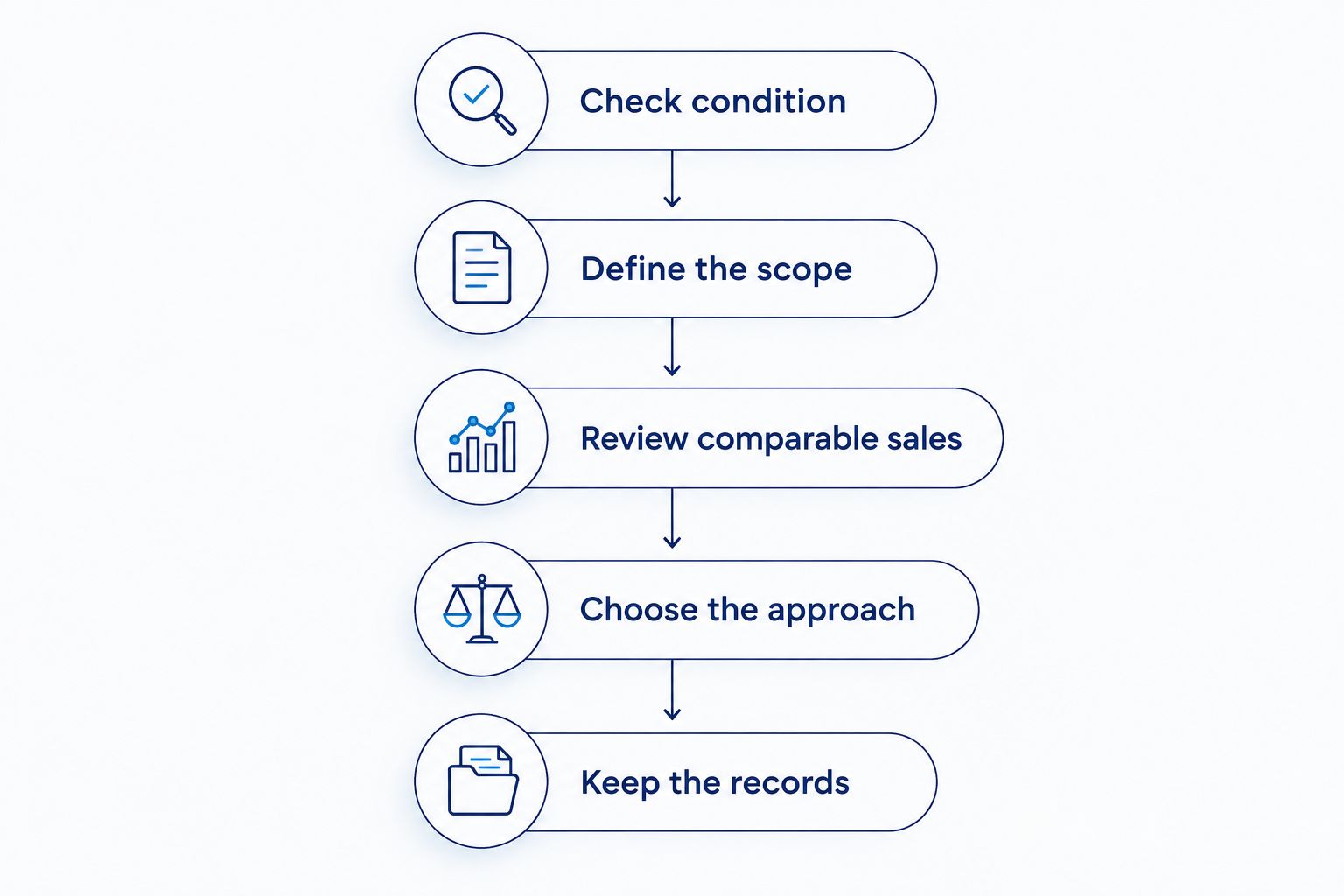
Use this sequence before committing to work for a 2026 listing. It keeps the technical assessment separate from the decision about selling.
- Check condition. Arrange an assessment of the existing system. Share service records and describe cooling or moisture problems, even if they happen only occasionally.
- Define the scope. Request a written explanation of the repair or replacement recommendation. Confirm whether the work includes related airflow, drainage, or electrical corrections.
- Review comparable sales. Ask your agent whether the property's HVAC condition changes the recommended selling strategy. Request the reasoning, not a promised return percentage.
- Choose the approach. Decide whether to maintain, repair, replace, or discuss contract options. Base the choice on the diagnosis and sale circumstances.
- Keep the records. Save the completed-work invoice and supporting documents. Check that descriptions match the work actually performed.
You don't have to resolve every question in one appointment. If a recommendation is unclear, ask what finding supports it and what happens if you choose the alternative. A useful explanation connects the proposed work to a specific problem in your home.
What matters more than buying a bigger AC?
Correct sizing and installation matter more than choosing extra capacity for a listing description. An oversized system can cool quickly and shut off before it removes enough moisture. That is a comfort problem, not an upgrade.
A contractor should assess the home's cooling needs rather than simply copy the old unit's capacity. Window exposure, insulation, and the condition of the duct system affect that assessment. This guide explains how to choose the right AC size for your home.
Older houses with restricted return airflow need particular attention. The return is the path that brings indoor air back to the equipment. Installing new equipment without addressing an inadequate air path leaves that restriction in place.
For a seasonal home, explain how the house is operated while vacant. Humidity control still matters when nobody is there to notice dampness or a cooling problem. Ask for operating guidance suited to the equipment and house rather than assuming a new thermostat solves everything.
What should you document for a 2026 sale?
Create a simple HVAC folder your agent can review. It should distinguish equipment information from promises about future performance.
Include the installation or service invoice, model and serial numbers, and the date work was completed. Add applicable permit and inspection records, along with maintenance records you have retained.
Keep warranty documents too, but read the transfer terms before advertising coverage to a buyer. Registration, transfer requirements, and coverage depend on the actual warranty. A newly installed system does not justify describing every part or future repair as covered.
Permitting and inspection arrangements depend on the property's jurisdiction. Confirm the requirements with the responsible building department and contractor rather than assuming the process is identical across Palm Beach, Martin, and St. Lucie counties.
For listing language, state the verified work plainly. If only a component was replaced, name that component. Don't describe a partial repair as a completely new HVAC system.
Will a new AC increase the appraised value?
A new AC does not create an automatic appraisal adjustment equal to its installation expense. The appraiser evaluates the property and relevant market evidence; the equipment invoice does not establish the home's market value.
Give your agent accurate improvement records for the appraisal process. Keep your own resale expectations separate from the amount you spent.
Should I replace my AC or offer the buyer a credit?
Replace the AC when the diagnosis supports replacement and completing the work fits your sale. Discuss a credit when the parties prefer that arrangement and the contract and financing permit it.
Ask your agent or attorney to explain the transaction implications. A technician can define the work, but does not decide which contract arrangement protects your interests.
Does higher efficiency guarantee a better resale return?
Higher efficiency does not guarantee a larger resale premium. Efficiency ratings describe equipment performance under standardized conditions, not what a particular buyer will pay for your house.
Choose efficiency features for the home's needs and your expected use before selling. Avoid adding features solely because someone promises that buyers will repay the difference.
Get an explanation before choosing the work
A.R. Williams Air Conditioning is a fit for South Florida homeowners who want an AC repair or replacement diagnosis explained before work starts. Technicians explain their findings and lay out the options, with transparent flat-rate pricing quoted before the work begins.
For a planned sale, ask A.R. Williams Air Conditioning to explain which work addresses an existing AC problem and which choices are optional. The mechanical recommendation should stand on its own, without a promise about your eventual selling price.
Talk with a technician about the system's condition, then review the sale decision with your agent. Those are separate conversations, and both deserve clear answers.
FAQ
Does a new AC add resale value to a home?
A new AC can support resale value, but it does not guarantee a higher sale price. The existing system’s condition and comparable properties matter more than a universal return percentage.
Should I replace a working AC before selling my house?
You do not need to replace a working AC solely because you are selling. Get its condition assessed, then discuss any findings with your real estate agent before choosing work.
Will buyers pay back everything I spend on a new AC?
You should not assume buyers will repay the installation expense through the sale price. Treat any resale estimate as a property-specific real estate question, not an equipment guarantee.
Is repairing an AC before selling better than replacing it?
Repair is appropriate when it resolves a diagnosed problem in an otherwise serviceable system. Replacement deserves consideration when the assessment supports a broader equipment change.
Does a new AC warranty transfer to the homebuyer?
Warranty transfer depends on the actual manufacturer’s terms. Read the documents and confirm any registration or transfer requirements before advertising coverage.
Will a bigger AC make my house more attractive to buyers?
A bigger AC is not automatically better for the house. Oversizing can interfere with moisture removal, so select capacity based on the home’s cooling needs.
What should I ask an AC contractor before listing my home?
Ask the contractor to explain the system’s condition, any diagnosed defects, and the scope of recommended work. A.R. Williams Air Conditioning provides AC repair and replacement services with findings and options explained before work starts.
One last thing
Before your 2026 listing goes live, compare its HVAC description with your invoices. "New AC" should describe what was actually replaced, not a new thermostat, a repaired component, or a recently serviced system.
Accurate records are more useful than an unsupported resale promise. Give the buyer a clear account of the equipment and completed work, and let your agent handle the valuation.
Related guides
- How to prepare your HVAC system before selling your home
- How to handle AC issues found during a home inspection
- How to get a second opinion on an AC replacement quote
