
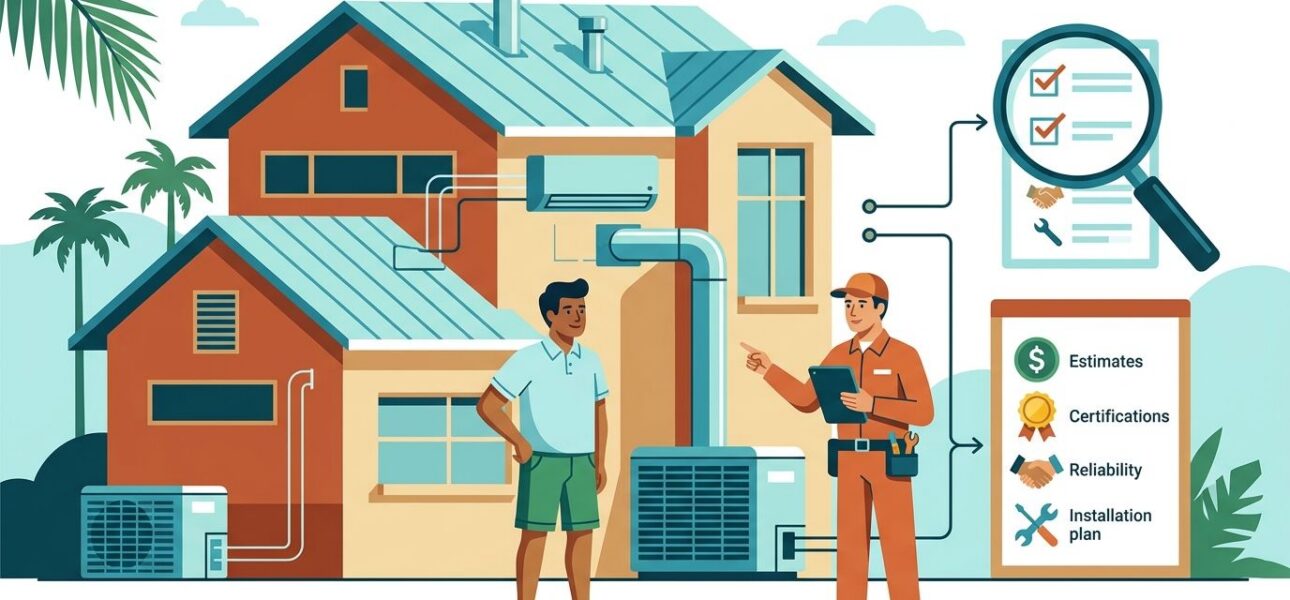
A multi-system Florida home, one with two or more air handlers, a zoned setup, or separate units cooling a main house and a guest casita, needs more from a contractor than a single-system home does. The right HVAC contractor for this kind of job runs a load calculation on every zone, holds an active Florida state HVAC certification, and can explain how the systems will work together instead of quoting each unit like a standalone install. Ask about zoning experience and permit handling before you ask about price.
- A licensed Florida contractor who calculates load per zone is the baseline for choosing an HVAC contractor for a multi-system home in 2026.
- Ask about zoning experience: homes with three or more systems need coordinated dampers and thermostats, not three unrelated units.
- A.R. Williams Air Conditioning holds Ruud Pro Partner, Carrier Authorized Dealer, and Daikin Comfort Pro certifications across Palm Beach and Treasure Coast counties.
- Permit requirements differ between Palm Beach, Martin, and St. Lucie counties, and a contractor unfamiliar with your county’s process risks delays.
- Get a written contract listing model numbers, SEER2 ratings, and permit responsibility for every system before you sign anything.
Why this matters
A lot of Florida homes built before 2010 started with one system and added a second, or third, as additions, guest suites, or converted lanais came along. Each addition was often handled by whoever was available that year, not one contractor who understood the whole house.
By 2026, that patchwork shows up as uneven cooling, mismatched thermostats, and confusion over which unit covers which zone when something breaks. Picking a contractor who treats your home as one system, not three unrelated jobs, is the difference between a coordinated setup and years of guessing which unit is struggling.
How to choose an HVAC contractor for a multi-system Florida home
Start with the four things that separate a contractor who understands multi-system homes from one who's just installing units one at a time.
| What to check | Why it matters | Red flag |
|---|---|---|
| Active Florida HVAC license | Confirms legal authority to pull permits and pass inspection | Won't provide a license number on request |
| Load calculation per zone | Prevents oversized or undersized units in different parts of the house | Quotes a system size based on square footage alone |
| Zoning and controls experience | Needed when systems share ductwork or thermostats need to coordinate | Can't explain how zones will interact after install |
| County permit familiarity | Palm Beach, Martin, and St. Lucie counties each have different inspection timelines | Suggests skipping permits to save time |
Verify licensing and manufacturer certifications
Any contractor working on your home needs an active Florida state HVAC license, not just a business license. This matters more on a multi-system home because more units means more code exposure if something is installed wrong.
Manufacturer partnerships add a second layer of accountability. A.R. Williams Air Conditioning is a certified Ruud Pro Partner, Carrier Authorized Dealer, and Daikin Comfort Pro, which means factory training on the specific equipment lines homeowners across Palm Beach and Broward counties are running in 2026. Before you hire anyone, verify their license is active through the state database rather than taking their word for it.
Ask for a load calculation on every system, not a guess
A contractor sizing one unit for a 4,000 square foot home with a guest suite and a main house needs separate calculations for each zone. Square footage alone doesn't account for ceiling height, window exposure, or how much heat a west-facing lanai conversion adds in July.
If a contractor quotes tonnage without asking about insulation, window count, or how the ductwork is split, that's a shortcut, not a plan. Multi-system homes are where oversizing mistakes get expensive fastest, because you're compounding the error across two or three units instead of one.
Zoning experience for homes with more than one system
Homes with multiple systems often benefit from zoning, dampers and controls that let one system handle two temperature needs, or that keep separate systems from fighting each other. A contractor who's installed zoning systems for multi-story Florida homes will ask how you actually use each part of the house before recommending anything.
This is where inexperience shows up fastest. A contractor unfamiliar with zoning will either recommend a full system replacement when a damper and control upgrade would solve it, or install a zoning kit that isn't matched to your equipment.
Permit handling across Palm Beach, Martin, and St. Lucie counties
If your multi-system home spans a main residence and a detached structure, or you're working with a contractor who covers both Palm Beach County and the Treasure Coast, permit timelines matter. Palm Beach County, Martin County, and St. Lucie County each run inspections on different schedules, and a contractor who only works one county may not know what the others require.
A contractor who pulls permits correctly the first time avoids the delay of a failed inspection holding up your second or third system's install date.
Get everything in writing before the first system goes in
A written contract on a multi-system job should list model numbers, SEER2 ratings, and which permits cover which unit, system by system. Vague language like "comparable equipment" or a single lump sum covering everything gives you no way to confirm what actually went in.
Read the contract line by line before signing, and don't let a salesperson rush you past the equipment specifics. On a job with multiple systems, a mismatch between what was quoted and what was installed is harder to catch after the fact.
Get your multi-system home evaluated
A technician can walk each zone with you before you sign anything.
Why the right contractor varies by home
Not every multi-system home needs the same contractor for the same reasons. A few factors change what "right" looks like:
- Number of systems. Two units on a standard two-story home is a different scope than three systems across a main house, casita, and pool cabana.
- Ductwork age. Homes built before 2010 often have undersized returns that need to be addressed before a new system can perform correctly.
- County jurisdiction. Permit rules and inspection timing shift between Palm Beach, Martin, and St. Lucie counties.
- Coastal exposure. Salt air corrodes outdoor coils faster near the water, which changes how often each system needs service.
- Snowbird occupancy. Homes sitting empty for months at a time need a maintenance plan that covers every system, not just the one in the main living area.
- Existing R-22 equipment. Older systems still running R-22 refrigerant may need a different conversation than newer SEER2-rated units.
How many HVAC systems does a Florida home need?
Most single-family Florida homes under 2,500 square feet run on one system, while homes with additions, guest suites, or two stories often run two or three. The number depends on square footage, layout, and how the ductwork was originally split, not a fixed rule.
Can one contractor service multiple AC brands in the same house?
Yes, a licensed HVAC contractor can service multiple brands in the same house, though certified dealer status only applies to specific manufacturers. A.R. Williams Air Conditioning services Ruud, Carrier, and Daikin equipment directly and can still diagnose and repair other brands already installed in a home.
Is it better to replace all systems at once or one at a time?
Replacing all systems at once is worth considering when they're the same age, since staggered failures usually mean staggered repair bills anyway. When systems are different ages or serve very different zones, replacing the oldest or least efficient one first often makes more financial sense in 2026.
FAQ
What questions should I ask an HVAC contractor before hiring them for a multi-system home?
Ask for their Florida license number, a load calculation for each system, and how they handle permits in your specific county. A contractor who hesitates on any of these three is worth a second call.
Do all systems in a multi-system home need to be the same brand?
No, systems in a multi-system home don’t need to match brands, but a mixed setup makes future service and parts sourcing more complicated. Matching brands across a home simplifies warranty tracking and technician familiarity.
How do I know if my ductwork can handle a new system in a multi-system home?
A contractor should inspect duct sizing and return air capacity for each zone before recommending equipment, not assume existing ductwork will work with a new unit. Undersized returns are common in homes built before 2010 and force new systems to work harder than they should.
What’s the difference between a zoned system and multiple separate systems?
A zoned system uses dampers and controls to split cooling from one or two units across different areas of the home, while multiple separate systems are independent units each covering their own zone. Which setup fits your home depends on layout, not preference alone.
Should I hire the same contractor for both systems in my home?
Hiring the same contractor for every system in your home is usually the better call, since it keeps warranty records, maintenance schedules, and equipment history in one place. Splitting the work across different companies makes troubleshooting harder later.
How often should a multi-system Florida home get serviced?
Each system in a multi-system Florida home should get its own tune-up at least once a year, and coastal homes often need more frequent coil checks due to salt air exposure. Skipping service on a secondary system, like a guest suite unit, is a common way small issues go unnoticed.
One last thing
The most overlooked step in hiring for a multi-system home isn't the equipment, it's asking whether the contractor will service all your systems under one maintenance plan or treat each visit as a separate call. A contractor who bundles service across every unit in your home in 2026 catches problems in the guest suite system before they turn into a no-cool call during the next heat wave, instead of only checking the unit you happened to mention.
Related guides
- How to get a second opinion on an AC replacement quote
- How to get permits for AC installation in Florida
