

To prepare your AC for holiday guests, check the filter, clear indoor vents, test the guest bedrooms, and confirm that your system cools normally before everyone arrives. Extra people, cooking, and open doors add heat and moisture, so address weak airflow, water leaks, or cooling problems before hosting rather than lowering the thermostat to hide them.
- Prepare AC for holiday guests by checking filters, airflow, thermostat schedules, and guest-room comfort before arrival.
- A.R. Williams Air Conditioning provides residential AC maintenance and repair with findings explained before work starts.
- Keep return vents clear of luggage and decorations; restricted airflow can affect cooling throughout your home.
- A comfortable thermostat reading does not rule out excess humidity or a poorly cooled guest bedroom.
Why this matters before guests arrive
A house that feels comfortable during a quiet afternoon can feel different during a holiday meal. The oven releases heat, guests add moisture, and repeated trips to the patio bring outdoor air inside.
Your AC needs to remove moisture as well as heat. If rooms feel clammy even when the thermostat reaches its setting, review how to reduce indoor humidity without overworking your AC rather than treating every comfort problem as a temperature problem.
For your 2026 holiday gathering, the goal is simple: confirm that the system works under normal conditions and remove avoidable obstacles. A gathering does not automatically mean you need a larger system or new equipment.
How do you prepare your AC before hosting holiday guests?
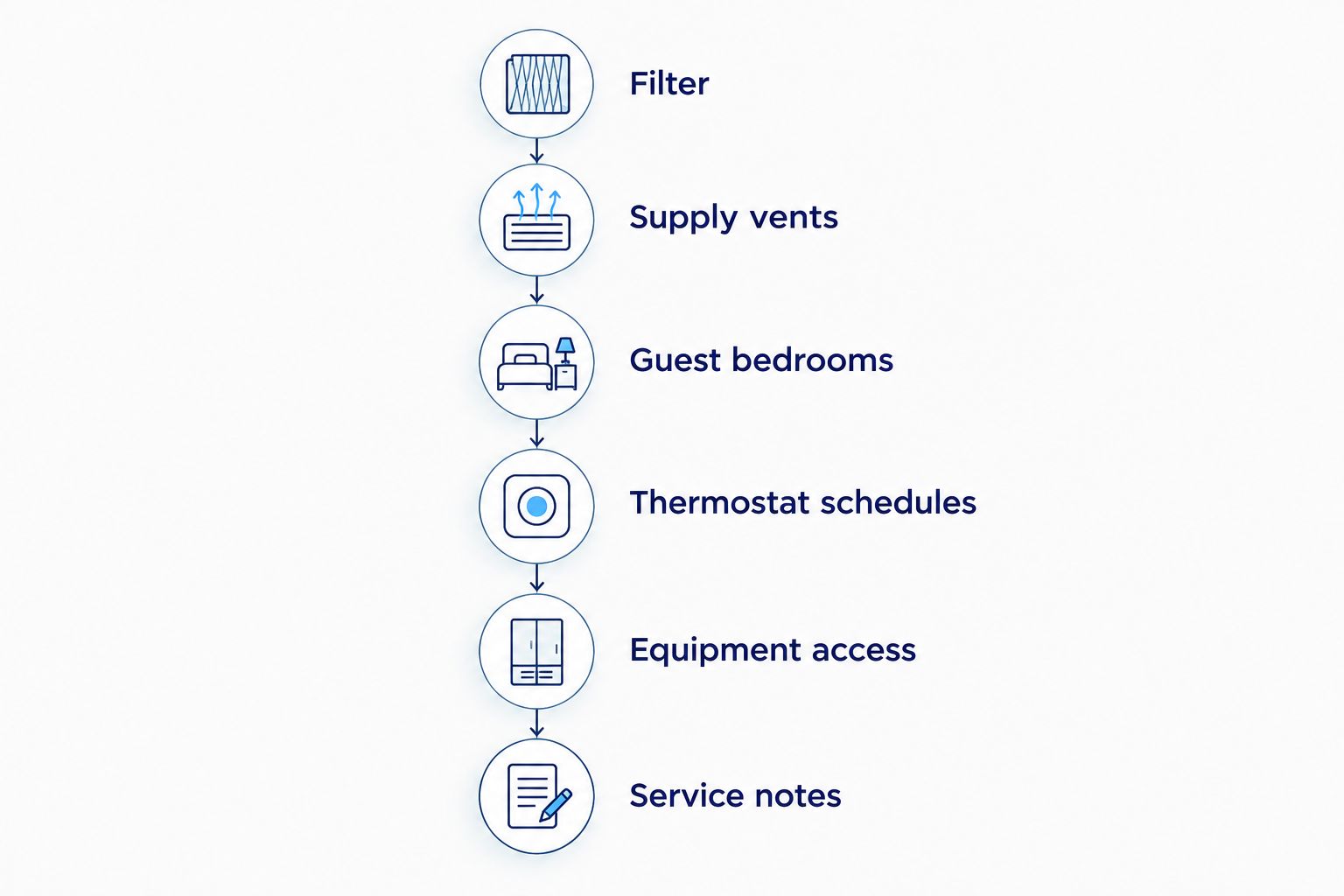
Work through these checks before you arrange furniture or unpack decorations. You are checking comfort and visible conditions, not opening equipment or attempting repairs.
1. Inspect the filter and confirm the correct replacement
Turn the system off at the thermostat before removing an accessible filter. Check its condition and follow the equipment manufacturer's replacement instructions. If it needs replacement, match the required dimensions and use a filter suitable for your system.
Do not assume a denser filter is an automatic improvement. A filter that restricts more airflow than your equipment can handle can interfere with cooling. Ask a technician about compatibility if you are changing filter type, especially before guests with allergies arrive.
Keep a record of the filter you installed and the date. Your 2026 holiday checklist should reflect its actual condition, not just whether someone remembers replacing it recently.
2. Clear supply vents and return grilles
Supply vents deliver cooled air. Return grilles draw room air back to the system, and both need an unobstructed path.
Check behind sofas, beside temporary beds, and wherever you plan to stack luggage. Holiday trees, table extensions, and folding chairs can block a grille that normally stays clear.
Leave vents open rather than closing unused rooms to force more cooling toward the gathering. Closing vents changes airflow through the duct system and is not a reliable fix for an uncomfortable room.
3. Test bedrooms as guests will use them
Run the AC normally and check each sleeping area with its usual bedding and furniture in place. Close the bedroom door as your guests will at night, then notice whether the room becomes warmer or feels stuffy.
A room that feels comfortable with the door open but uncomfortable when closed deserves attention. The return-air path, which lets air travel back to the system, can affect room comfort.
Write down which room has the problem and whether the door position changes it. That is more useful to a technician than a general report that the house feels uneven.
4. Review thermostat schedules and fan settings
Check that the thermostat is set to cooling and that its schedule matches when people will be home. An away setting that works during your normal workday can leave occupied guest rooms warmer than intended.
For a conventional central system, the fan's Auto setting runs the blower during cooling calls. Continuous fan operation can return moisture from a wet indoor coil to the house between cycles; follow your equipment guidance if your system uses specific humidity controls.
Do not set the temperature extremely low to make a conventional system cool faster. Choose a comfortable setting and let the equipment respond normally.
5. Look around the indoor and outdoor equipment
From a safe, accessible position, look for water around the indoor unit, ice on visible refrigerant piping, or debris around the outdoor unit. Keep decorations and stored items away from equipment and its service access.
Do not remove access panels, touch wiring, reach through fan guards, or climb into an attic for this checklist. Leave coil cleaning, drain servicing, and electrical checks to a technician when the work requires equipment access.
Near the coast, mention visible corrosion during a service visit. Salt exposure is relevant to outdoor equipment condition, but surface appearance alone does not establish whether a component needs replacement.
6. Note problems before you schedule service
Record what happens, where it happens, and what the thermostat shows. Include unusual sounds, repeated shutdowns, weak airflow, or rooms that remain warm while the rest of the house cools.
If the system already runs without cooling the house, use this guide to an AC that's running but not cooling to understand the symptoms. Do not keep lowering the setting or repeatedly restarting equipment as a substitute for diagnosis.
Why cooling needs change during a holiday gathering
A holiday gathering changes how your house is used. These factors help explain why a system that handles an ordinary evening can run longer when company arrives:
- More occupants: People release body heat and moisture into occupied rooms.
- Cooking: Ovens and stovetops add heat; boiling water and dishwashing add moisture.
- Open exterior doors: Trips between the kitchen and patio let outdoor heat and humidity enter.
- Different room use: A spare bedroom that usually stays empty becomes an occupied sleeping space.
- Blocked airflow: Temporary furniture and luggage can obstruct supply vents or return grilles.
- Existing equipment or duct problems: Restricted airflow, coil condition, and duct leakage affect how well cooling reaches the rooms you use.
In an older house with limited return airflow, hosting can make an existing comfort problem more noticeable. More thermostat adjustments will not correct an undersized return or damaged duct.
For 2026 hosting plans, separate temporary gathering-related heat from problems that happen every day. Tell the technician whether the discomfort started before guests arrived.
What should you handle yourself, and what needs a technician?
Homeowner checks are best for visible, accessible conditions. Professional service is best for diagnosing equipment faults. Neither replaces the other.
| Approach | Best for | What it helps you establish | Limitation |
|---|---|---|---|
| Homeowner walkthrough | A system that appears to work normally | Filter condition, blocked grilles, schedule settings, and room comfort | Cannot confirm refrigerant charge or internal component condition |
| Professional maintenance | A system due for routine care | Equipment condition and maintenance needs within the visit's scope | Does not guarantee that a future failure cannot happen |
| Diagnostic repair visit | Weak cooling, leaks, unusual noise, or repeated shutdowns | The cause of a specific operating problem | The technician must inspect the system before recommending a repair |
You do not need a repair recommendation simply because company is coming. If the system cools normally and maintenance is current, focus on the walkthrough and room setup.
If symptoms are present, ask for the diagnosis before discussing equipment replacement. A holiday deadline should not replace a clear explanation of what failed and what your options are.
How should you manage humidity while hosting?
Use a separate humidity monitor if you want to distinguish a warm room from a damp one. A thermostat without a humidity display cannot tell you both.
The U.S. Environmental Protection Agency's published mold guidance recommends keeping indoor relative humidity below 60 percent, ideally between 30 and 50 percent. For your 2026 gathering, use that guidance as a moisture-management reference, not a promise that every home will maintain the same reading throughout cooking and showers.
Run bathroom exhaust fans during showers and use a kitchen hood that vents outdoors when cooking. A recirculating hood does not exhaust cooking moisture outside.
Keep exterior doors closed between trips rather than leaving a patio door partly open. If humidity stays elevated after cooking and showers end, have the system and moisture sources evaluated instead of continually lowering the temperature.
Should you lower the thermostat before guests arrive?
Use a normal comfortable setting before guests arrive, rather than waiting until the house already feels warm. Check that an away schedule will not raise the setting during the meal or overnight.
Avoid choosing an unusually cold setting to compensate for a known problem. If your AC cannot maintain its normal setting before the gathering, that needs diagnosis rather than a more demanding thermostat setting.
Fans can help occupied rooms feel more comfortable, but they do not remove humidity. Keep portable fans out of walking paths and away from decorations that could obstruct them.
What if the guest bedroom stays warmer than the house?
Check the room's airflow and door position before changing the whole-house setting. Confirm that luggage does not cover the supply register and that furniture leaves the return grille clear, if the room has one.
If the room stays warmer with clear vents, report that pattern to a technician. Duct condition, airflow balance, and the return path need consideration before anyone recommends a larger AC.
Do not redirect the problem by closing several other rooms' vents. That changes system airflow without identifying why the guest room is uncomfortable.
What should you expect from a pre-holiday service visit?
Explain your concern when you book: routine maintenance, a warm bedroom, or a system that has stopped cooling normally. This helps distinguish a maintenance appointment from a visit to diagnose a fault.
A.R. Williams Air Conditioning is a good fit for homeowners who want residential AC findings explained before choosing a repair. Technicians explain what they found and lay out the options, with transparent flat-rate pricing quoted before work starts.
A.R. Williams Air Conditioning provides AC maintenance and repair, but a service visit cannot guarantee uninterrupted operation throughout a gathering. Ask what was checked, what needs attention, and whether any recommended work addresses the symptom you reported.
Request an estimate and choose a convenient service time before your 2026 holiday calendar fills with hosting tasks. Same-day service is available when scheduling allows.
FAQ
How early should I check my AC before holiday guests arrive?
Check your AC before guests arrive and before you finish arranging sleeping areas and furniture. Leave room in your plans for a service appointment if you find weak cooling, leaks, or unusual noise.
Should I replace my AC filter before having guests?
Replace the filter if its condition or the manufacturer’s instructions call for replacement. Use the correct size and a filter type compatible with your system rather than automatically choosing a denser filter.
Will setting my thermostat much lower cool the house faster?
Setting a conventional AC thermostat much lower does not make it cool faster. Select a comfortable temperature and address poor cooling instead of continually lowering the setting.
Why does my house feel humid when guests visit?
Guests, cooking, showers, and open doors add moisture to your home. If dampness persists after those activities end, have the cooling system and other moisture sources checked.
Should I close vents in empty rooms during a party?
Keep supply vents open rather than closing empty rooms to redirect cooling. Closing vents changes duct airflow and does not diagnose why an occupied room feels warm.
What should I do if I see ice or water around my AC?
Stop cooling if you see ice or an active water leak around the equipment and arrange a professional assessment. Do not chip off ice, open electrical panels, or keep restarting the system.
Does hosting more people mean I need a bigger AC?
Hosting more people does not automatically mean you need a bigger AC. Equipment sizing depends on the home’s cooling requirements, and temporary gathering-related heat is not enough to justify replacement.
One last thing
Test the guest bedroom with the door closed before you put fresh sheets on the bed. That simple change can reveal a comfort problem you would miss while walking through the house with every door open.
If something does not feel right, talk with a technician at A.R. Williams Air Conditioning. Describe the symptom and ask what needs checking before deciding on the work.
Related guides
- How to keep upstairs bedrooms cool
- AC maintenance for snowbirds and seasonal residents
- How to get rid of musty AC smells
