

To winterize your heating system in Florida, check the filter and airflow, test the heat before a cool night, and have a technician inspect the heating components and safety controls. For your 2026 preparation, keep the system ready for cooling too, and leave electrical work, refrigerant checks, and combustion testing to a qualified professional.
- To winterize your heating system in Florida, check airflow, test heating, and keep cooling available.
- Heat pumps need an unobstructed outdoor unit in winter; do not wrap the equipment.
- A.R. Williams Air Conditioning provides heating maintenance for homeowners who want professional checks and clearly explained options.
- Heating does not remove indoor moisture, so include humidity control in your seasonal preparation.
Why winter preparation matters in Florida
A mild afternoon doesn't tell you whether your heat will work when you need it. Cooling can operate normally even when a separate heating component has a problem, so a successful summer isn't proof that the whole system is ready.
Florida winter preparation also differs from shutting down equipment for a long northern winter. Your home can need heat overnight and cooling later in the week. If you're returning to a house that has been empty, start with this guide to AC maintenance for snowbirds and seasonal residents, then check heating operation before relying on it.
The goal is a system that changes modes reliably, without sacrificing airflow or moisture control. You don't need to open equipment panels or attempt repairs to gather useful information.
How do you winterize your heating system in Florida?
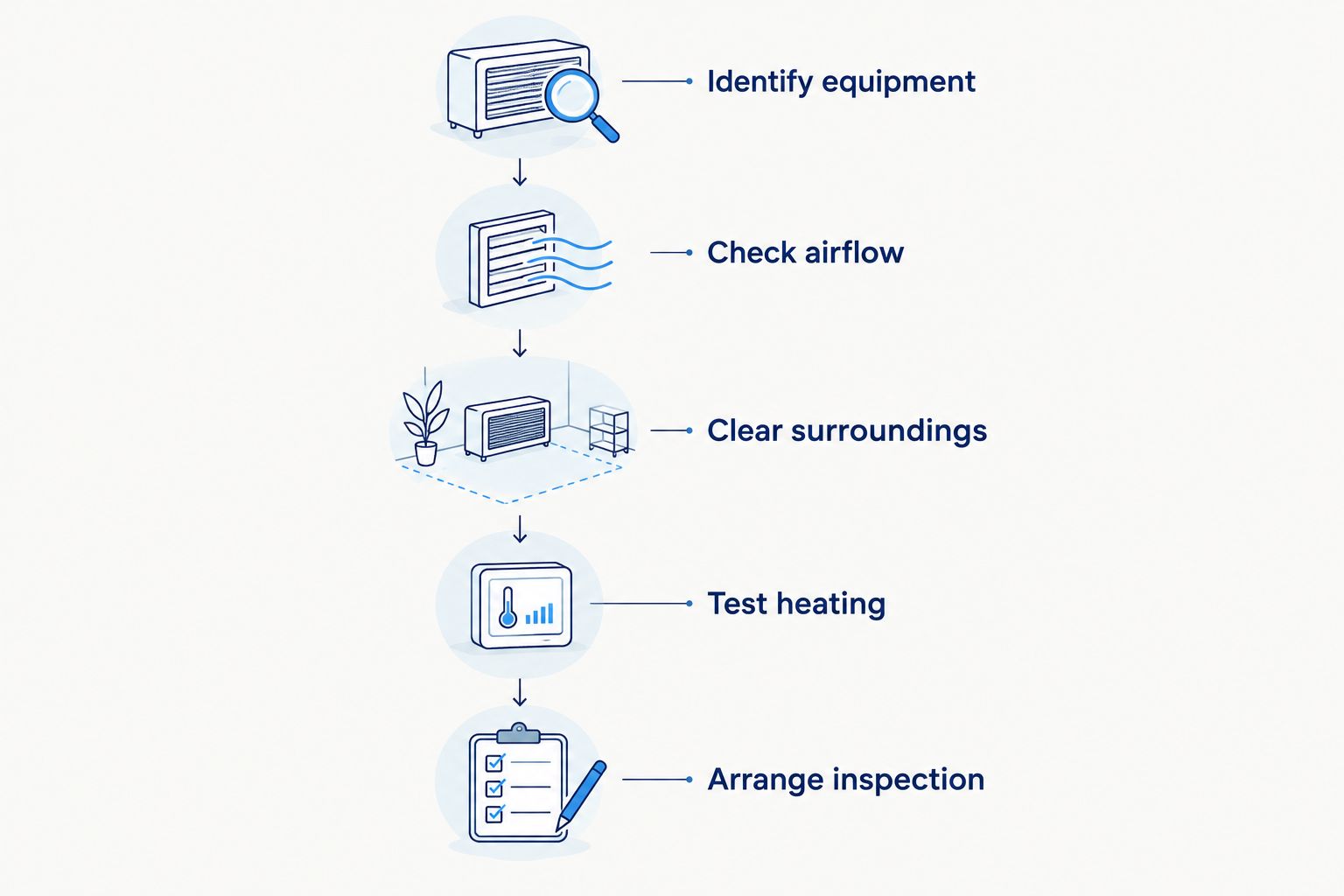
Use this 2026 checklist before the first night you expect to need heat. Follow the equipment manual whenever its instructions are more specific, and stop the test if you notice smoke, a persistent burning smell, or unusual electrical noise.
1. Identify your heating equipment
Find your equipment information in the owner's manual, installation paperwork, or an accessible exterior label. Don't remove a service panel to identify the system. A thermostat's Heat setting alone doesn't tell you how the equipment produces warmth.
Central ducted systems can use a heat pump, electric resistance heat, or a furnace. Knowing which you have helps you understand what should run during a heating call and what a maintenance visit needs to cover.
2. Check the filter and open airflow paths
With the system off at the thermostat, inspect the accessible filter. Replace a dirty disposable filter with the size and type specified for the equipment, and follow the manufacturer's instructions for reusable filters. Don't stack filters or choose a more restrictive filter without checking compatibility.
Keep supply vents open and move furniture away from return grilles, the openings that pull air back into the system. In older homes, an undersized return can restrict airflow even with a clean filter. A filter change won't correct that design problem.
3. Inspect the area around the equipment
Look for leaves, vegetation, stored belongings, or other obstructions around the outdoor unit. Maintain the clearances specified by the manufacturer. Keep the indoor equipment's service access clear as well.
Near the coast, salt air can corrode outdoor coils and metal components. Note visible deterioration for the technician, but don't scrape coils, spray electrical compartments, or apply an unapproved coating. Surface appearance alone doesn't establish whether a component needs replacement.
4. Test heating through the thermostat
Select Heat and set the temperature slightly above the room reading. Follow any startup delay described in the manual rather than repeatedly switching modes. Check whether air reaches the rooms and whether the indoor temperature begins moving toward the setting.
Write down what happens: no airflow, airflow without warmth, an unusual sound, or a thermostat message. Don't use a hand at the vent as the only test of performance. Heat-pump supply air can feel less hot than furnace air while still warming the home.
5. Arrange a heating-specific inspection
Ask for a maintenance visit that includes the heating functions, not just cooling operation. The technician should check the components and controls appropriate to your equipment, along with airflow and any symptoms you observed.
If the system repeatedly trips a breaker, doesn't heat, or produces a persistent burning odor, stop operating it and arrange service. Repeated resets don't correct the cause. Keep troubleshooting to thermostat settings, accessible filters, and observations you can make safely.
These homeowner checks establish what the system is doing. They don't confirm that electrical connections, heating elements, refrigerant operation, or safety controls are sound.
What changes with your type of heating system?
The basic airflow checks apply across central ducted systems, but the heating inspection differs. Have the equipment identified before approving a repair or changing thermostat configuration. A setting that suits one system isn't automatically right for another.
| Heating type | How it heats | Main benefit | Limitation | Winter preparation focus |
|---|---|---|---|---|
| Central heat pump | Moves heat from outdoors into the home | Provides heating and cooling through the same refrigeration system | Heating performance and backup operation depend on conditions and equipment design | Outdoor airflow, mode changes, defrost controls, backup heat if fitted |
| Electric resistance heat | Uses electric heating elements in the air handler | Supplies heat without an onsite fuel-burning appliance | Uses more electricity for the same delivered heat than a heat pump operating efficiently | Elements, electrical connections, airflow, safety limits |
| Fuel-burning furnace | Burns fuel and transfers heat into the airstream | Can deliver warmer supply air than a heat pump | Requires combustion and venting safety checks | Burners, heat exchanger, venting, safety controls |
Central heat pump: keep the outdoor unit uncovered
A heat pump uses its outdoor unit during heating. Wrapping it for winter blocks the airflow it needs, so don't treat it like equipment that will sit unused all season. Follow the manual's requirements for clearance and maintenance.
Ask the technician to verify the switch between heating and cooling and check backup heat if your system has it. A brief defrost cycle can change how the outdoor unit sounds or operates. Persistent heavy ice or a failure to warm the home needs diagnosis rather than guesswork.
Electric resistance heat: check the heating circuit
An air handler can circulate air normally even when its heating elements aren't working correctly. That makes a fan-only check insufficient. The inspection needs to confirm that the heating components respond properly and that airflow supports safe operation.
Don't open the cabinet to inspect elements or wiring. If heating brings a persistent sharp electrical odor, smoke, or repeated breaker trips, stop the system. Those symptoms need a professional inspection, not another thermostat adjustment.
Fuel-burning furnace: include combustion safety
A furnace needs checks that don't apply to an all-electric system. Ask about the burners, heat exchanger, fuel connections, venting, and safety controls. Leave adjustments and testing to a qualified technician.
Keep combustion-air openings unobstructed and maintain carbon monoxide alarms according to their instructions. If you smell gas, leave the home without operating switches and contact the gas utility or fire department from a safe location. Don't continue the heating test.
Why winter preparation varies between Florida homes
Use your equipment and the condition of your home to shape the 2026 maintenance visit. A generic checklist is a starting point, not a diagnosis.
- Heating type: A heat pump, electric air handler, and furnace have different components and safety checks.
- Coastal exposure: Salt air can damage outdoor equipment, so visible corrosion deserves attention during inspection.
- Return airflow: Older homes with restricted returns need an airflow assessment, not repeated filter changes alone.
- Seasonal occupancy: A house left empty needs an operating check before you depend on the system again.
- Maintenance history: Previous failures, recurring odors, and unresolved drainage problems should be part of the service conversation.
Bring any previous service findings to the appointment. A useful inspection connects current symptoms with documented equipment condition instead of treating every seasonal visit as a reason to recommend replacement.
Should you turn off your AC for the Florida winter?
Keep cooling available when your home still needs temperature or humidity control. A Florida winter doesn't create a reliable season-long shutdown window, particularly in homes exposed to warm, humid weather between cool fronts.
Heating raises the air temperature but doesn't remove water from the air. That distinction matters in a closed-up seasonal home. A comfortable temperature reading doesn't prove that moisture is controlled, so review humidity settings and drainage as part of your 2026 preparation.
The U.S. Environmental Protection Agency recommends keeping indoor relative humidity below 60%, ideally between 30% and 50%. Treat those figures as moisture-control guidance, not proof that your HVAC equipment is operating correctly. Persistent dampness or condensation deserves investigation.
Is a burning smell normal when you first turn on the heat?
A brief dusty smell can occur when heating components warm after sitting unused. It should fade rather than intensify. Don't assume every odor is harmless dust, especially if it smells like melting plastic or hot wiring.
Stop the system for persistent burning odors, smoke, or unusual electrical sounds. Don't keep restarting it to see whether the smell clears. If a smoke alarm activates or you see smoke, leave the home and contact the fire department from a safe location.
What should you ask for during a heating maintenance visit?
Ask the technician to explain what was tested, what passed, and what needs attention. If the proposed visit covers only the cooling side, request confirmation that heating operation and the relevant safety controls are included.
A useful service explanation separates maintenance from repair. Cleaning an accessible component, correcting a failed part, and addressing an airflow defect are different jobs. Ask what the finding means for your equipment before agreeing to the work.
A.R. Williams Air Conditioning is best for homeowners who want heating maintenance with findings explained and options quoted before work starts. Technicians lay out the options, with transparent flat-rate pricing provided before approved work begins. A maintenance visit identifies issues; it doesn't guarantee that every future failure can be predicted.
For your 2026 heating check, share any recurring odors, thermostat messages, or uneven temperatures when you book. You can request a convenient service time with A.R. Williams Air Conditioning and describe what happened during your test.
FAQ
Do I need to winterize my heating system if I rarely use it?
Yes. Infrequent use doesn’t confirm that heating components and safety controls work. Test the heat before you need it and arrange maintenance appropriate to your equipment.
Should I cover my outdoor heat pump during winter?
No. A heat pump needs outdoor airflow while heating, so wrapping it interferes with operation. Keep the area clear according to the manufacturer’s instructions.
Why does my heat pump air feel cooler than furnace air?
Heat-pump supply air can feel less hot than furnace air while still warming the home. Check whether room temperature rises toward the thermostat setting rather than judging performance only by touch.
Can I use heating to get rid of indoor humidity?
Heating doesn’t remove water from indoor air. If the home stays damp, have cooling operation, drainage, and humidity-control settings assessed.
Does a working AC mean my heating system is ready?
No. Cooling operation doesn’t prove that separate heating elements, heating controls, or furnace components work. Request a heating-specific operating check.
What should I do if the breaker trips when the heat starts?
Stop operating the system and arrange a professional inspection. Repeatedly resetting the breaker doesn’t fix an electrical or equipment fault.
Should I replace my system if it fails its winter heating test?
A failed heating test needs diagnosis before a replacement decision. Ask which component failed, whether repair is appropriate, and what the condition of the rest of the system shows.
One last thing
Put the thermostat back into the mode your home needs after the test. A successful heating check doesn't mean you should leave Heat selected through a warm spell, particularly before leaving a seasonal home vacant.
Keep a short record of the test and any service findings with your equipment paperwork. That gives you a useful starting point for the next visit and keeps the conversation focused on the actual condition of your system.
Related guides
- Coastal AC maintenance for salt-air exposure
- How to reduce indoor humidity without overworking your AC
- How to tell if your AC needs repair or replacement
