

A whole-house fan is usually not worth adding to central AC in South Florida unless you regularly have cooler, drier outdoor air and can safely open windows. It can replace some AC operation during suitable weather, but it does not remove moisture and can increase the humidity your AC must handle afterward. Treat it as an occasional ventilation option, not a fix for weak cooling or a damp house.
- Is a whole house fan worth it with central AC? In South Florida, usually only for occasional cooler, drier weather.
- Central AC removes heat and moisture; a whole-house fan replaces indoor air with outdoor air.
- The EPA recommends indoor relative humidity below 60%, ideally between 30% and 50%.
- Choose based on outdoor moisture, safe airflow and actual use, not promised savings alone.
Is a whole-house fan worth it with central AC?
Keep central AC as your main cooling system. Consider a whole-house fan only if you want open-window ventilation during suitable weather. For a South Florida homeowner making that decision in 2026, moisture matters as much as temperature. Our guide to AC systems for high-humidity climates explains why cooling and moisture control belong in the same conversation.
A whole-house fan pulls outdoor air through open windows, moves it through occupied rooms, and exhausts indoor air through the attic and its vents. It works only when the incoming air improves indoor conditions. Central AC recirculates indoor air through a cooling coil, which removes heat and collects moisture when conditions allow condensation.
| Option | Best for | Main benefit | Main limitation |
|---|---|---|---|
| Central AC | Hot, humid weather with windows closed | Removes heat and moisture | Requires maintenance and electricity to operate |
| Whole-house fan alongside central AC | Occasional cooler, drier weather with windows open | Exchanges indoor air for outdoor air | Does not dehumidify and needs a suitable exhaust path |
| Ceiling fan alongside central AC | Personal comfort in occupied rooms | Creates a cooling breeze without opening windows | Does not lower room temperature or remove moisture |
These options solve different problems. A ceiling fan helps you feel cooler; a whole-house fan changes the air in the house. Neither replaces central AC's moisture removal.
Why this matters in a humid climate
A pleasant evening outside does not automatically mean outdoor air belongs inside. Coastal breezes can feel comfortable against your skin while still carrying substantial moisture. Bringing that air indoors changes the job your AC must do when you close the windows again.
Temperature alone gives an incomplete answer. Dew point, the temperature at which moisture starts condensing, helps you compare the actual moisture in indoor and outdoor air. Outdoor relative humidity by itself can mislead because it changes with temperature.
The EPA's indoor mold guidance recommends keeping relative humidity below 60%, ideally between 30% and 50%. Those are moisture-control guidelines, not whole-house fan operating settings. Use an indoor humidity monitor and assess outdoor conditions rather than assuming every cool evening is suitable.
For your 2026 home improvement plans, start with the comfort problem. If your house feels clammy with the windows closed, adding outdoor airflow does not address the underlying cause.
When a whole-house fan makes sense
A whole-house fan fits a home where the owners enjoy open windows, outdoor conditions regularly suit ventilation, and the building can support the required airflow. You also need a practical way to switch between fan use and closed-window AC operation.
The benefit is straightforward: when outdoor air is cooler and sufficiently dry, you can exchange warm indoor air without running the AC compressor. That can reduce compressor operation during those periods. It does not establish an annual savings figure or prove that installation is worthwhile.
Before choosing a fan, ask yourself:
- Do you actually enjoy opening windows when the weather allows?
- Can you open enough suitable windows without compromising security?
- Are pollen, outdoor smoke or nearby traffic likely to limit use?
- Will someone check conditions before operating the fan?
- Can the fan opening be sealed and insulated when it is off?
Choose a whole-house fan for a ventilation habit you already want, not for a savings claim you cannot verify. A fan that stays off because of humidity, noise or window concerns provides little practical benefit.
When central AC is the better answer
Central AC is the better fit when outdoor air is hot or moisture-heavy, windows need to remain closed, or you need steady indoor conditions. That includes seasonal homes left unoccupied, where opening windows and managing a fan is not a practical humidity-control plan.
If one bedroom stays warm while the rest of the house cools normally, investigate airflow and duct conditions. Older homes with undersized return paths can have comfort problems that an exhaust fan will not solve. The return path is how room air gets back to the AC equipment.
Likewise, salt-air corrosion on an outdoor coil is an equipment issue, not a reason to add indoor ventilation. A fan cannot restore damaged coil surfaces or correct an AC fault. If your system runs but does not bring the temperature down, start with an AC cooling diagnosis before considering another installation.
Do not buy a whole-house fan to compensate for an unresolved central AC problem. Establish why the system is underperforming first.
How to decide whether your home is a good fit
Use this sequence before requesting a whole-house fan installation estimate. It separates weather suitability from building suitability, so an appealing idea does not become an unsuitable project.
- Check the weather. Compare outdoor temperature and moisture with indoor conditions. Cooler air alone is not enough if it brings an unwanted moisture load.
- Check the windows. Identify the openings you can safely use. Follow the fan manufacturer's required opening area rather than guessing.
- Check the attic. Have the installer confirm that the attic has adequate exhaust capacity and that the proposed location is suitable.
- Check combustion safety. Tell the installer about fuel-burning equipment, fireplaces and attached garages. Powerful exhaust can create pressure differences that require a safety assessment.
- Plan the controls. Establish how the fan and AC will operate separately, and how the fan opening will close when unused.
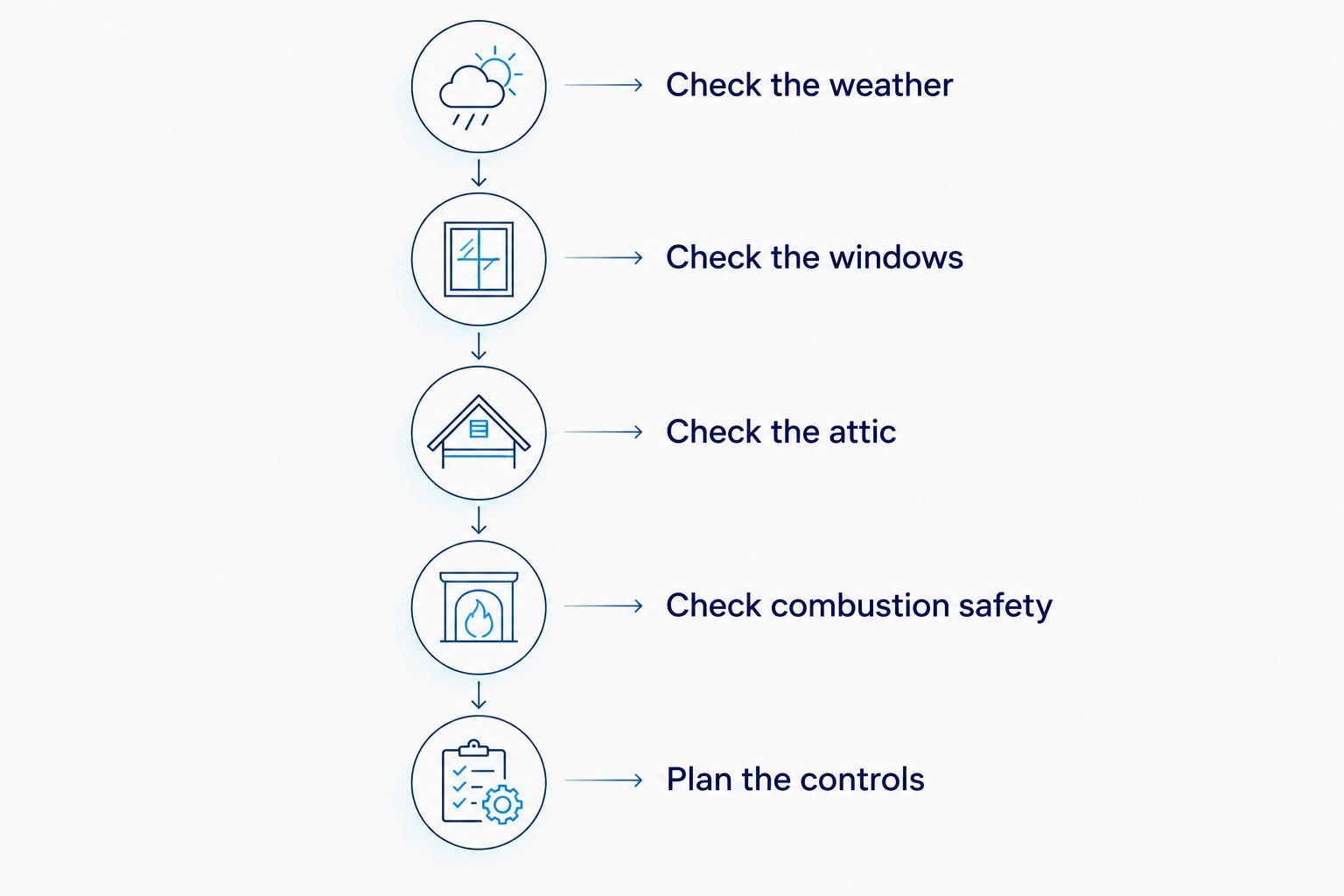
These checks belong in a 2026 installation discussion before you commit to equipment. A larger fan does not make unsuitable outdoor air suitable, and it does not eliminate the need for adequate openings.
Why a whole-house fan's value varies
The same fan can be useful in one home and rarely used in another. Its value depends on the conditions that let you operate it safely and comfortably.
- Outdoor moisture: Incoming moisture can offset the comfort benefit of a lower outdoor temperature.
- Usable weather: The relevant measure is weather during the hours you are home and willing to open windows.
- Attic exhaust capacity: The fan needs a clear, appropriately sized path for air to leave the building.
- Window access: Security, rain exposure and room layout affect which openings you can use.
- Installation quality: Air sealing, insulation and controls affect how the opening behaves while the fan is off.
- Your existing AC: A correctly operating system creates a different starting point from one with airflow or humidity problems.
Ask an installer to explain these factors separately. A claim about fan electricity use does not account for installation work, maintenance or moisture your AC must remove later.
What should an installation assessment include?
A proper assessment covers the house, not just the fan. The installer should review window intake requirements, attic exhaust capacity, mounting location, electrical work and access for future service. Noise near bedrooms also deserves discussion before a ceiling opening is cut.
Climate belongs in that assessment. A proposal for whole-house fan installation in the Bay Area cannot establish how often the same approach will suit a humid South Florida home; outdoor temperature and moisture determine the useful operating window.
For your home, ask how the opening will be sealed and insulated when the fan is off. An unsealed opening between conditioned rooms and an attic can undermine the separation your central AC depends on. The proposal should explain that detail rather than leave it for installation day.
Also ask who will verify any required permits and inspections with your local building department. Do not assume requirements are identical across Palm Beach, Martin and St. Lucie counties. Get the scope of responsibility in writing.
Can you run a whole-house fan and central AC together?
Do not intentionally operate a whole-house fan and central AC cooling at the same time. The fan exhausts conditioned indoor air while open windows admit replacement air. Your AC then works against that air exchange rather than cooling a closed house.
During suitable fan weather, switch off AC cooling and open the windows required by the fan manufacturer before starting the fan. When you return to AC operation, stop the fan, close its damper as designed, and close the windows. Follow the equipment instructions for the operating sequence.
An automatic control needs more than a temperature trigger. Discuss window requirements, humidity and safe operation with the installer. A thermostat setting alone does not confirm that outdoor air is appropriate.
Will a whole-house fan lower my AC bill?
A whole-house fan can reduce compressor operation when outdoor conditions let you leave AC cooling off. That is an operating opportunity, not a guaranteed reduction in your total bill. Fan electricity use and any later moisture removal also matter.
For a useful 2026 comparison, ask for a written estimate based on your home's conditions and intended operating pattern. The estimate should distinguish fan energy use from projected AC savings and explain its assumptions. Do not accept a fixed payback promise that ignores local humidity.
If savings are your main goal, check existing AC performance first. Correcting a documented airflow problem addresses the system you depend on during hot, humid weather, regardless of whether you later add a fan.
What if the house is cool but still feels damp?
A cool, damp house needs a moisture assessment before more ventilation. Possible causes include short cooling cycles, air leaks, duct problems or equipment settings that do not suit the home. A whole-house fan does not identify or correct those causes.
Measure indoor relative humidity rather than judging by temperature alone. The EPA recommends staying below 60%, ideally between 30% and 50%. Persistent readings outside that guidance deserve attention even when the thermostat reaches its setting.
A technician should explain what was measured and why the proposed correction fits. Depending on the findings, the answer can involve AC repair, airflow correction or dedicated moisture control. You should not have to choose equipment before understanding the problem.
Get the comfort problem checked first
A.R. Williams Air Conditioning is a fit for South Florida homeowners who want central AC findings and repair options explained before work starts. Technicians explain what they found, with transparent flat-rate pricing quoted before work begins. That gives you a clear starting point before deciding whether a ventilation add-on belongs in your home.
An AC assessment does not replace a whole-house fan installer's airflow and safety review. Each has a different purpose. Talk with a technician about the cooling or humidity issue you want solved, then request an installation assessment if a fan still fits your goals.
FAQ
Is a whole-house fan worth it if I already have central AC?
A whole-house fan is worth considering only when cooler, drier outdoor air regularly lets you switch off central AC and open windows safely. In South Florida, treat it as an occasional ventilation option rather than your main cooling solution.
Does a whole-house fan remove humidity?
A whole-house fan does not dehumidify air. It replaces indoor air with outdoor air, so indoor moisture depends on the air coming in.
Can I leave my windows closed while a whole-house fan runs?
Do not run a whole-house fan with the required intake windows closed. Follow the manufacturer’s opening requirements and have the installer assess pressure and combustion safety.
Is a whole-house fan the same as an attic fan?
A whole-house fan draws air through occupied rooms and exhausts it through the attic. An attic fan is intended to ventilate the attic, not pull replacement air through open windows in living spaces.
Should I use a whole-house fan when it feels cooler outside?
Cooler outdoor air alone is not enough to justify whole-house fan use. Check moisture conditions, outdoor air quality and the required window openings before operating it.
What indoor humidity should I watch for?
Keep indoor relative humidity below 60%, ideally between 30% and 50%, according to EPA mold guidance. A humidity monitor helps you see moisture conditions that a temperature reading misses.
Will a whole-house fan fix a hot upstairs bedroom?
A whole-house fan will not correct an undersized return path, damaged duct or central AC fault. Have persistent room-to-room temperature differences assessed before choosing another fan.
One last thing
Before adding a ceiling opening, ask how it will behave during all the hours the fan is off. The damper, insulation and air seal matter even when the motor never runs. For a 2026 project, make those details part of the written scope, not an assumption.
Related guides
- Whole-house fans for South Florida homes
- How to reduce indoor humidity without overworking your AC
- How to tell if you need a dehumidifier or a new AC
