

Yes, duct sealing is worth it for an older home when an inspection confirms leaks and the ductwork is otherwise in good condition. It can help more cooled air reach your rooms and reduce unwanted attic air entering the return system, but it won't fix undersized ducts, damaged insulation, or a failing AC. Before you approve the work, ask what is leaking, how it will be repaired, and how the result will be checked.
- Is duct sealing worth it? Yes, when confirmed leaks affect cooling and the existing ducts remain structurally sound.
- Older homes need an airflow check, not an automatic recommendation to replace every duct.
- A.R. Williams Air Conditioning explains AC repair options before work starts.
- Duct sealing cannot correct undersized returns, crushed ducts, or missing insulation.
Is duct sealing worth it for an older home?
Duct sealing makes sense when the problem is escaping air, rather than a duct system that needs a different layout or major repairs. Your home's age is a reason to inspect the ducts, not proof that sealing is necessary. A newer duct installation can leak, too.
Start with the evidence behind a duct repair and sealing recommendation. The technician should connect the findings to your complaint, whether that's a warm bedroom, weak airflow, or cooling that never feels consistent.
| Approach | Best for | Main benefit | Main limitation |
|---|---|---|---|
| Duct sealing | Sound ducts with leaking joints or connections | Keeps conditioned air in the intended path | Does not correct duct sizing or insulation problems |
| Targeted duct repair | A disconnected, crushed, or damaged section | Corrects the physical defect | Other leaks or design problems can remain |
| Duct replacement or redesign | Deteriorated ducts or an unsuitable layout | Addresses problems sealing cannot solve | Requires a broader installation scope |
Choose sealing because leaks were found, not because the house is old. If your ducts need physical repairs, those repairs belong in the plan before anyone treats sealing as the complete solution.
Why this matters in an older Florida home
An older home can have ductwork that no longer matches how the rooms are used. An enclosed space, a changed floor plan, or a relocated wall can alter cooling needs without a corresponding duct update. Sealing the existing system doesn't undo those changes.
Attic ductwork also operates outside the cooled living space. A leaking supply duct sends some cooled air into the attic instead of your rooms. A leaking return duct can draw hot, humid attic air toward the air handler, which is the indoor equipment that circulates and cools air.
For a 2026 inspection, separate those leakage problems from the condition of the AC itself. Salt air can corrode outdoor coils near the coast, while an older home's return opening can restrict airflow. Either issue can affect cooling without duct leakage being the main cause.
That distinction protects you from paying for work that doesn't address your complaint. You deserve an explanation that ties the proposed repair to an observed problem.
When sealing is the right repair
The strongest case for sealing is a duct system that has sound materials, an appropriate layout, and identifiable gaps at connections. These gaps can occur where duct sections join, where branches connect, or where ducts meet the air handler and room outlets.
A technician should inspect the supply side and the return side. Supply ducts carry cooled air to rooms. Return ducts bring indoor air back to the equipment, so leaks there create a different problem from leaks in the supply ducts.
Accessible gaps can be sealed with materials intended for duct systems, such as duct mastic or approved sealing tape. Mastic is a sealant applied over suitable joints and seams. Ordinary household duct tape is not a substitute for a properly specified duct-sealing material.
The method needs to suit the duct material and the location. Ask what will be used, which connections will be treated, and whether any damaged sections need repair first. A description of the actual work is more useful than a broad promise to make the system efficient.
When sealing is not enough
Ducts are crushed, disconnected, or deteriorated
A crushed duct restricts the air passing through it. A disconnected duct needs its connection restored and secured, not simply a layer of sealant around nearby seams. Deteriorated material needs an assessment of whether it can support a lasting repair.
Physical damage needs physical repair. Sealing remains useful at the repaired connections, but it isn't the whole job. Ask the technician to distinguish repairable sections from sections that need replacement.
Return airflow is restricted
Your AC needs a clear path for air to return from the rooms to the equipment. Sealing cannot make a return opening larger or provide a missing return path from a bedroom behind a closed door.
If room comfort changes when you close a door, describe that during the inspection. The guide to return air vent sizing explains why the return side belongs in an airflow assessment. A sealing recommendation should not ignore that part of the system.
Insulation is damaged or missing
A duct can be airtight and still gain heat through inadequate insulation. Sealing controls air leakage; insulation limits heat transfer. These are separate jobs, even when the same section needs both.
Wet insulation also needs investigation. Ask what caused the moisture and how that cause will be corrected before the insulation is repaired or replaced. Covering a damp section without resolving the moisture source is not a complete fix.
How to evaluate a duct-sealing recommendation
A good 2026 proposal should explain the condition of your ducts and the limits of the proposed work. You don't need to learn technical calculations. You need to understand what the technician found and what the repair is intended to change.
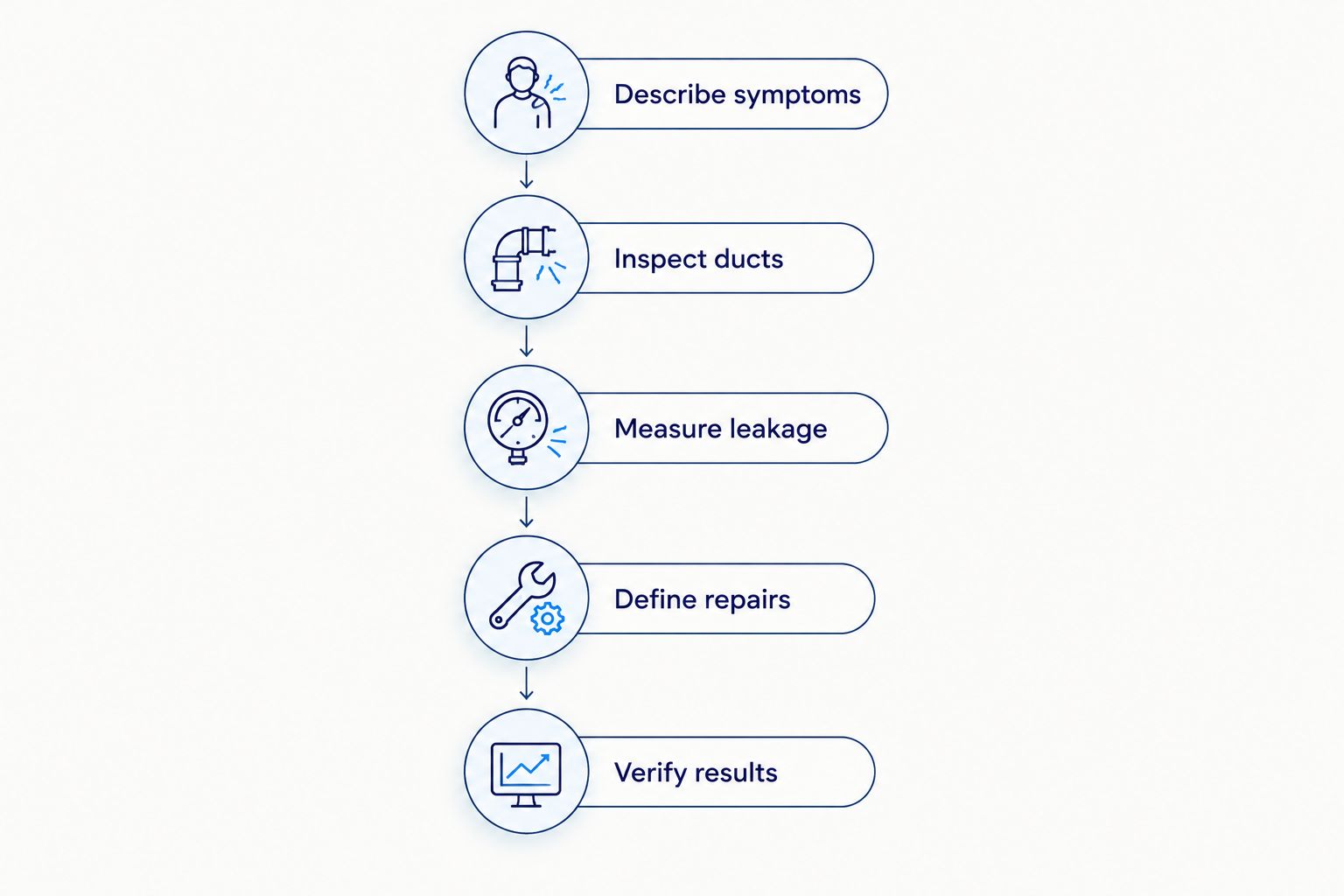
- Describe symptoms. Identify the rooms that feel warm, whether doors affect comfort, and when the problem occurs. Mention recent renovations or roof work.
- Inspect ducts. Ask for an assessment of connections, duct condition, insulation, and accessible supply and return paths. Photos help you understand findings in areas you cannot safely reach.
- Measure leakage. Ask whether a duct leakage test is appropriate and what it would establish. A dedicated test uses a fan and pressure measurements to assess leakage under controlled conditions.
- Define repairs. Get a written scope that separates sealing from damaged-duct repairs, insulation work, and airflow corrections. It should also identify inaccessible areas.
- Verify results. Ask how the completed work will be checked. When leakage testing is part of the job, comparable before-and-after testing provides stronger evidence than a promise about future bills.
The sequence matters because sealing should follow diagnosis. It should not become the diagnosis simply because your AC runs for long periods.
You can prepare without entering the attic or opening equipment. Keep a short record of which rooms feel different and whether the problem changes with doors open or closed. That gives the technician a useful starting point without asking you to perform repairs.
Why duct-sealing results vary
The value of sealing depends on where air is leaking and what else is wrong. In 2026, a worthwhile recommendation still rests on the condition of your particular home, not a generic savings claim.
- Leak location: A return leak drawing attic air into the system has a different effect from a small supply leak inside the cooled space.
- Duct condition: Sound ducts support a different repair plan from torn, crushed, or deteriorated sections.
- Duct location: Leakage outside the cooled space has different consequences from leakage within it.
- Access: Concealed connections affect which areas can be inspected and which repair methods are practical.
- Airflow design: Restricted returns and unsuitable duct sizes remain problems after sealing.
- Other cooling faults: Dirty coils, equipment problems, and damaged insulation can limit the improvement you feel.
These factors explain why a neighbor's experience is not a forecast for your home. Ask which findings apply to your system and which parts of your complaint the proposed work will not address.
Will duct sealing lower my electric bill?
Duct sealing can reduce cooling waste when it corrects leakage, especially outside the cooled space. It does not establish a guaranteed reduction in your electric bill. Weather, thermostat settings, occupancy, and equipment condition also affect electricity use.
For a 2026 project, distinguish the repair measurement from the household bill comparison. Leakage testing checks the duct system. Your utility bill reflects the whole home, so a lower or higher bill alone doesn't prove how well the ducts were sealed.
Ask for the expected benefit in plain language. Improving delivery to a warm room is a different goal from reducing unwanted attic air entering a return duct. Both deserve a clear explanation without an unsupported savings promise.
Should I seal ducts before replacing my AC?
Assess the ducts before you finalize an AC replacement. New equipment does not repair leaking connections or correct unsuitable duct sizes. The duct findings should inform the installation plan, even if the work is completed together.
If replacement is already under consideration, ask which ducts are suitable to keep and which need attention. Avoid treating a larger AC as the automatic answer to weak room airflow. The equipment and the air-distribution system need to work together.
Does duct sealing help with indoor humidity?
Duct sealing can help when return leaks introduce humid air from outside the cooled space. It is not a complete humidity solution if the main problem is equipment operation, moisture entering elsewhere, or an unresolved building issue.
Condensation on ducts also needs its own diagnosis. Air leaks, insulation defects, and surrounding humidity can affect surface moisture. Ask the technician to explain the source rather than assuming every damp duct needs the same treatment.
What a clear repair conversation looks like
You should leave the inspection knowing what was found, what needs attention, and what can reasonably remain in place. An explanation should distinguish confirmed defects from things that need further testing. That gives you room to choose without pressure.
A.R. Williams Air Conditioning is a fit for homeowners who want AC repair findings explained and options laid out before work starts. The company quotes transparent flat-rate pricing before work begins and focuses on long-term fixes rather than shortcuts.
For an AC repair assessment, A.R. Williams Air Conditioning's approach is relevant when several possible causes overlap. Duct sealing still has limits: even properly sealed ducts cannot correct a failed component or an unsuitable layout. Ask which problem each proposed item addresses.
A.R. Williams Air Conditioning provides residential AC repair, installation, and maintenance. If you're unsure whether the issue is duct leakage or equipment performance, talk with a technician and request an assessment before choosing the repair.
Get your system checked
Ask for an assessment of duct condition and the next repair step.
FAQ
Is duct sealing worth it if my house is old?
Duct sealing is worth it when inspection confirms leaks and the ductwork is suitable to keep. Age alone does not establish whether sealing, repair, or replacement is the right choice.
Can duct sealing fix a bedroom that stays warm?
Duct sealing can help a warm bedroom when leakage reduces the cooled air reaching it. Restricted returns, damaged ducts, or an unsuitable layout require a different correction.
Do I need to replace all my ducts instead of sealing them?
You do not need to replace all your ducts solely because leaks exist. Sound sections can remain, while damaged or unsuitable sections need a separate repair or replacement assessment.
Is duct sealing the same as duct cleaning?
Duct sealing closes air leaks, while duct cleaning removes material from inside the ducts. Cleaning does not close leaking joints, and sealing does not remove contamination.
How can I tell whether duct sealing worked?
Comparable before-and-after leakage testing provides evidence that leakage was reduced. Room comfort and airflow checks help assess whether the repair also addressed your original complaint.
Will sealed ducts stop my house from feeling humid?
Sealed ducts can reduce humidity problems caused by return leaks drawing in humid air. They cannot resolve every moisture source or correct all equipment-related humidity problems.
Should I approve duct sealing without a leakage test?
Visible gaps or disconnected joints can justify specific repairs without a whole-system leakage test. For a broader sealing proposal, ask what evidence supports it and how the completed work will be verified.
One last thing
Ask whether the quoted leakage result represents all leakage or leakage outside the cooled space. Those measurements answer different questions. A number without that explanation gives you less useful information than it appears to.
For your 2026 decision, keep the rule simple: approve a repair that names the defect, explains the work, and includes a way to check the result. That's a stronger basis for choosing duct sealing than the age of your home or a promised reduction in your bill.
Related guides
- Ductwork replacement for older South Florida homes
- How to check whether your ducts can handle a bigger AC
- How to reduce indoor humidity without overworking your AC
