
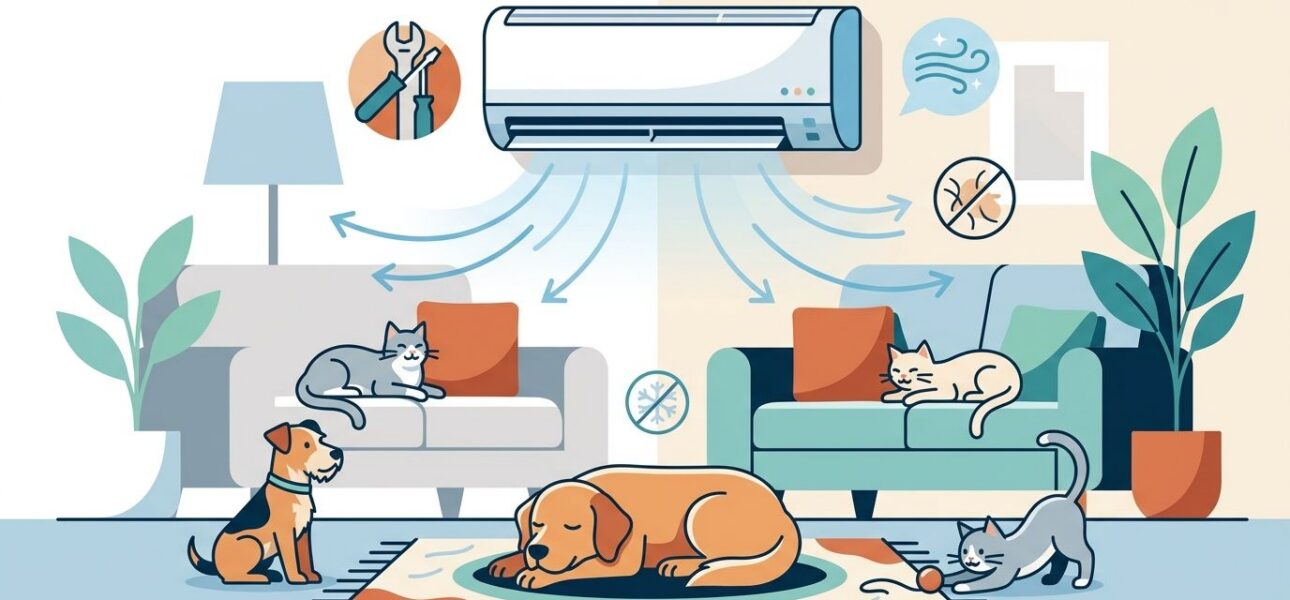
AC maintenance for pet owners with two, three, or more animals in the house means shorter filter cycles, more frequent coil checks, and closer attention to the condensate drain line than a pet-free household ever needs. Multiple pets shed more hair and dander into the return air, and that debris moves through your system faster than most homeowners expect. A maintenance routine built for a single-pet or pet-free home in 2026 will leave a multi-pet home under-serviced within a few months.
- AC maintenance for pet owners with 2+ animals means changing filters every 2 to 4 weeks, not the standard 90 days.
- Pet hair and dander build up on the evaporator coil and clog the condensate drain line faster than in pet-free homes.
- A MERV 11 to 13 allergy-rated filter plus a UV air purifier cuts down on dander and odor circulating through the ducts.
- Skipping filter changes in a multi-pet home is the fastest way to end up with a frozen coil or an AC that runs but doesn’t cool.
- A biannual professional tune-up catches coil fouling and drain line buildup before it turns into a repair bill.
Why AC maintenance matters for pet owners
Multiple pets change the math on how hard your AC system works. Every dog and cat sheds hair, dander, and skin cells into the air your system pulls through the return vents, and in a South Florida home running the AC nearly year-round, that debris has constant airflow to ride on.
Dander is finer than most household dust, and it packs into a standard filter fast. Once a filter loads up, the system pulls harder to move the same volume of air, and that strain shows up as weak airflow, longer run times, and higher bills. If you've already noticed your AC running but not cooling the way it used to, a clogged filter from pet hair is one of the first things worth ruling out.
Hair and dander that get past the filter settle on the evaporator coil inside the air handler. A coil coated in pet hair loses its ability to transfer heat efficiently, which forces the compressor to run longer to hit the same set temperature. Left alone long enough, that buildup contributes to a frozen coil or a system that short-cycles.
Update your filter change schedule
A standard 1-inch filter in a pet-free South Florida home gets changed every 60 to 90 days. In a home with multiple pets, that same filter can be visibly gray with hair and dander in 3 to 4 weeks.
- Check the filter every 2 weeks for the first month to learn your home's actual buildup rate
- Switch to a monthly replacement schedule if you have two or more shedding pets
- Hold the filter up to a light source: if you can't see light through it clearly, it needs replacing
- Keep a stock of filters on hand so a dirty filter never sits in place for an extra week
- Write the install date on the filter frame with a marker so you're not guessing later
Vacuum and clean around your return air vents
Return vents are where your system pulls room air back in, and in a multi-pet home they collect a visible layer of hair and dander on the grille itself within days.
- Vacuum the return vent grille weekly with a brush attachment, not just a quick wipe
- Pull the grille off every few months and vacuum inside the vent opening, not just the cover
- Keep pet beds and litter boxes at least a few feet away from return vents so loose material doesn't get pulled straight into the system
- Brush or groom shedding pets away from rooms with return vents when possible
- Check for a buildup of fine dust on nearby furniture, which usually signals the filter isn't catching enough at the vent level
Watch for early airflow warning signs
A system working harder because of pet hair buildup shows symptoms before it fails outright, and catching them early keeps a filter problem from becoming a coil problem.
- Weaker airflow at vents farthest from the air handler
- Longer cooling cycles to reach the same thermostat setting
- A faint musty smell when the system first kicks on
- Warm spots in rooms that used to cool evenly
- Ice visible on the refrigerant lines outside
If you're seeing more than one of these, it's worth having a technician check whether the issue is airflow-related or something more serious. Our guide on how to tell if your AC needs repair or replacement walks through the difference.
Upgrade to an allergy-rated filter
A standard fiberglass filter is built to catch large particles, not the fine dander multiple pets generate. Moving to a pleated filter rated MERV 11 to 13 catches significantly more of that fine material before it reaches the coil or recirculates into your living space.
- Confirm your system's static pressure can handle a higher MERV rating before upgrading (a technician can check this in minutes)
- Look for filters specifically labeled for pet dander or allergen capture
- Replace on the same accelerated schedule as before, higher MERV doesn't mean longer intervals in a multi-pet home
- Pair the upgrade with sealed duct connections so air isn't bypassing the filter through gaps
Our page on the best AC filters for allergy sufferers in Florida covers filter ratings in more detail if allergies are a factor in your household along with the pets.
Add UV air purification for dander and odor
A filter catches particles moving through the ductwork, but a UV air purifier installed near the coil targets the bacteria and organic material, including pet dander residue, that settles directly on the coil surface. This is where a professional upgrade starts to make more sense than a DIY filter swap alone.
- UV systems mount inside the air handler and run continuously alongside normal AC operation
- They reduce the biological buildup that contributes to musty odors in multi-pet homes
- They don't replace filter changes, they work alongside them
- A technician can confirm your air handler has room for installation during a maintenance visit
The best UV air purifiers for Florida HVAC systems breaks down how these systems pair with your existing AC.
Clear your condensate drain line before it clogs
Pet hair and dander that make it past the filter often end up in the condensate pan, where they mix with normal algae growth and speed up drain line clogs. A clogged line backs up condensate into the pan and, eventually, into your home.
- Check the drain line for slow drips or standing water in the pan every few months
- Flush the line with a wet/dry vacuum at the outdoor termination point if you notice slow drainage
- Watch for a musty smell near the air handler closet, which often means standing water in the pan
- Have a technician clear the line as part of a scheduled visit rather than waiting for a backup
If you've dealt with water where it shouldn't be, our page on how to stop your AC unit from leaking water covers the most common causes.
Book a professional tune-up on a fixed schedule
DIY filter changes and vent vacuuming handle the surface-level maintenance, but a technician checks the parts you can't see: coil condition, refrigerant charge, drain line flow, and electrical connections. In a multi-pet home, a biannual visit (spring and fall) catches hair and dander buildup on the coil before it costs you efficiency or a repair call.
A.R. Williams Air Conditioning technicians walk through what they find during every visit and lay out flat-rate pricing before any work starts, so a multi-pet household knows exactly what a coil cleaning or drain line service costs before agreeing to it.
“In a home with two or more shedding pets, the filter is doing three times the work it does in a pet-free home, and it needs to be treated that way.”
Comparing maintenance approaches for multi-pet homes
| Option | Best for | Key limitation |
|---|---|---|
| Standard filter, no schedule change | Homes with one small pet and light shedding | Loads up fast in homes with two or more pets, leads to airflow loss |
| Monthly filter changes only | Owners handling maintenance themselves between professional visits | Doesn't address coil fouling or drain line buildup |
| Allergy-rated filter (MERV 11-13) + monthly changes | Multi-pet homes with allergy concerns in the household | Requires checking static pressure compatibility first |
| Allergy filter + UV air purification + biannual tune-up | Homes with 2 or more pets wanting full coverage on odor, dander, and coil health | Requires a professional installation and scheduled visits |
Verdict: a multi-pet home in South Florida needs a monthly filter schedule at minimum, and pairing an allergy-rated filter with a biannual professional tune-up is the setup that actually keeps pace with the debris load in 2026.
Common mistakes pet owners make
- Judging filter condition by the calendar instead of looking at it. A filter rated for 90 days in a marketing brochure can be fully loaded in 3 weeks in a two-dog household.
- Blaming every odor on the pets. A musty smell is just as often a clogged drain line or a damp coil, not the animals themselves. Check our guide on musty AC smells before assuming it's pet-related.
- Letting pets dig or lounge near the outdoor condenser unit. Loose dirt and debris kicked up near the unit gets pulled into the coil fins over time.
- Vacuuming floors but never touching the return vent grille. The vent is where airborne dander actually enters the system, not the floor.
- Skipping the drain line until it backs up. A clogged AC drain line is one of the easier problems to prevent and one of the messier ones to ignore.
Get your system checked for pet-related wear
A technician can inspect the coil, filter fit, and drain line in one visit.
FAQ
How often should pet owners change their AC filter?
Homes with two or more shedding pets should check the filter every 2 to 4 weeks and plan on monthly replacement rather than the standard 60 to 90 day cycle. A filter loaded with pet hair restricts airflow and forces the system to work harder.
What’s the best air filter for a home with multiple pets?
A pleated filter rated MERV 11 to 13 catches significantly more fine dander than a standard fiberglass filter. Confirm your system’s static pressure can handle the higher rating before switching.
Can pet dander damage an AC system?
Dander itself doesn’t damage components directly, but buildup on the evaporator coil reduces heat transfer efficiency and forces the compressor to run longer. Over time that added strain shortens the life of the system.
Is a UV air purifier worth it for pet odor?
A UV air purifier targets bacteria and organic buildup directly on the coil, which reduces the musty odors that come from dander residue. It works alongside filter changes rather than replacing them.
Why does my AC drain line keep clogging in a multi-pet home?
Pet hair and dander that get past the filter mix with normal algae growth in the condensate pan and speed up clogs. Regular line flushing during maintenance visits prevents backups.
Do multiple pets increase AC bills?
Yes, a system straining against a hair-clogged filter or a dander-coated coil runs longer to hit the same set temperature, which shows up as higher bills. Keeping filters and coils clean keeps run times closer to normal.
Should I get a maintenance plan if I have multiple pets?
A scheduled maintenance plan with biannual visits catches coil fouling and drain line buildup before they turn into repair costs, which matters more in a multi-pet home than a pet-free one.
Does pet hair cause a frozen AC coil?
Restricted airflow from a hair-clogged filter is one of the more common contributors to a frozen coil. Once ice forms, the system needs to thaw before a technician can properly diagnose it.
One last thing
The detail most multi-pet households miss isn't the filter, it's the return vent grille itself. Dander clings to the metal or plastic slats before it ever reaches the filter, and a grille left unvacuumed for a few months can be feeding a steady stream of fine debris straight into the system regardless of how new the filter is. Wipe or vacuum the grille the same day you change the filter and you close that gap entirely.
Related guides
- Best AC filters for allergy sufferers in Florida
- How to clear a clogged AC drain line
- How to get rid of musty AC smells in your home
- Best UV air purifiers for Florida HVAC systems
- Best AC maintenance plan for South Florida homeowners
