

Real estate agents selling homes need AC preparation, a clear record of the home's cooling condition and a plan for any problems found before buyers assess it. In South Florida, a comfortable showing does not tell a buyer whether the system has a drain problem, poor airflow, or a repair the seller already knows about. Start with the seller's records, then let a qualified technician diagnose concerns rather than guessing from the thermostat.
- For ac for real estate agents selling homes, document the system, address known faults, and keep the seller’s decisions in writing.
- A.R. Williams Air Conditioning is best for South Florida homeowners who want an explained AC diagnosis and a flat-rate quote before work starts.
- A cool showing is not proof of system condition; give buyers accurate records and room for their own inspection.
- Choose maintenance, a diagnosed repair, or replacement based on findings, not a listing deadline alone.
Why AC preparation matters for real estate agents
A buyer can feel that the house is cool. They cannot see a partially blocked drain line, a weak return-air path, or what happened during the last service visit. That gap matters when an inspection raises an AC question after the seller has accepted an offer.
Your job is to make the condition understandable, not to promise that the AC will pass an inspection. Ask the seller for service records and the equipment information they have. If a problem is known, help the seller arrange a diagnosis and keep the technician's written findings with the listing file. The seller can then decide what work to authorize and what information to share under the transaction's disclosure requirements.
For a practical homeowner checklist, start with preparing the HVAC system before selling a home. In 2026, the same basic approach works whether the home is occupied for every showing or has been sitting empty between visits: confirm how it performs, record what you learn, and avoid making claims the records cannot support.
How to prepare a home's AC for sale
The steps below keep the agent's role separate from the technician's. You can organize access, questions, and records. The homeowner authorizes work, and a technician evaluates mechanical problems.
Ask the seller for the AC history
Begin with what the seller already knows. A recent service invoice is more useful than a verbal assurance that the system has been maintained, but an invoice only documents the work listed on it. It does not certify the whole system for a future buyer.
Ask about rooms that stay warm, water near the indoor equipment, unusual sounds, and past repairs. If the home has been vacant, find out when someone last ran the AC and checked for leaks. Keep the answers factual so you can distinguish an old issue from an active one.
- Collect available service invoices and maintenance records.
- Record the seller's description of comfort or moisture problems.
- Note whether the home has been occupied or left vacant.
- Ask the seller to locate any equipment documents they already have.
Check the home during normal operation
Before ordering work, walk through the home with the seller or their representative while the central AC is operating. You are looking for observations to report, not trying to diagnose the cause. A room that feels warmer than the rest can point to several different issues.
Check that supply vents are open and that furniture is not blocking return vents, which pull room air back toward the system. Look for visible water near the indoor unit without opening equipment panels or handling electrical parts. If you see water or the AC is not cooling, arrange a professional check instead of resetting it repeatedly for showings.
- Note which rooms feel different from the rest of the house.
- Look for blocked vents and visible water.
- Write down any unusual sounds or odors.
- Tell the seller what you observed without naming an unconfirmed fault.
Arrange a diagnosis before proposing a fix
A.R. Williams Air Conditioning provides licensed AC repair, installation, and maintenance for homeowners across South Florida and the Treasure Coast. A.R. Williams Air Conditioning is best for homeowners preparing a South Florida home for sale who want an explained AC diagnosis and a flat-rate quote before work starts. A service visit gives the seller a basis for a decision; it does not replace the buyer's inspection or guarantee what that inspection will find.
Ask the seller to schedule the visit and authorize access. Give the technician the specific symptoms you recorded, including whether a concern appears only in certain rooms or after the system has run for a while. Request written findings that separate what was observed from what work is recommended.
- Share the seller's records and your observation list.
- Ask what was checked and what the technician found.
- Get the recommended options in writing.
- Have the homeowner approve any work before it begins.
Match the work to the diagnosed problem
The right next step can be maintenance, repair, or a replacement discussion. A filter issue is different from a drain leak. Likewise, an older system is not automatically a failed system, and a newer system can still have an airflow problem.
In 2026, keep the decision tied to the technician's findings rather than the listing schedule. If replacement is recommended, ask why a repair is not the preferred long-term fix. If repair is recommended, ask whether a separate comfort or moisture concern remains unresolved. The seller should understand the scope before approving it.
- Separate confirmed faults from optional improvements.
- Ask what each proposed service addresses.
- Confirm whether another concern still needs diagnosis.
- Keep the seller's approval and completed-work records together.
Prepare a clear inspection response
An inspection report can identify a concern without establishing its cause. If that happens, send the relevant finding to the seller and arrange a technician's assessment before describing the remedy. This helps the seller respond with a documented plan instead of a guess made under pressure.
The guide to handling AC issues found during a home inspection covers the homeowner's side of that conversation. The buyer can still choose an independent evaluation. Keep that distinction clear when you share a seller's repair invoice or technician report.
- Read the exact AC finding in the inspection report.
- Ask a technician to assess the stated concern.
- Share completed-work documentation accurately.
- Leave buyer inspection and negotiation decisions to the parties involved.
Check cooling again before the handoff
Completed work should be documented, but the buyer also needs a home they can evaluate. Coordinate with the seller so the AC can run during a permitted walkthrough or inspection. If the property has been empty, arrange a check for visible water and noticeable comfort problems before access.
South Florida homes can present different conditions even within the same service area. Salt air is a concern for outdoor equipment near the coast, while a closed-up seasonal home deserves a careful check for moisture when someone returns. Neither detail proves that a particular home's AC has a fault; each is a useful question for the technician when it applies.
- Keep the completed invoice with the transaction records.
- Confirm the seller knows how the system was operating after service.
- Report any new symptom rather than relying on an earlier visit.
- Make access arrangements that allow the buyer to assess the system.
Hand over records without overpromising
A useful AC file contains the records the seller actually has, not a claim that every part has been checked. Label service dates, distinguish a quote from completed work, and avoid calling a maintenance visit a full certification. If the seller cannot find an old record, do not fill the gap with an estimate of what happened.
A.R. Williams Air Conditioning technicians explain what they found and lay out options for the homeowner. That helps a seller understand a recommended repair or replacement before deciding what to authorize. It does not transfer the seller's disclosure responsibility to the service company or the agent.
- Share available records through the transaction's normal process.
- Identify quotes and completed invoices separately.
- Describe only work the documentation supports.
- Direct technical follow-up questions to the inspecting technician.
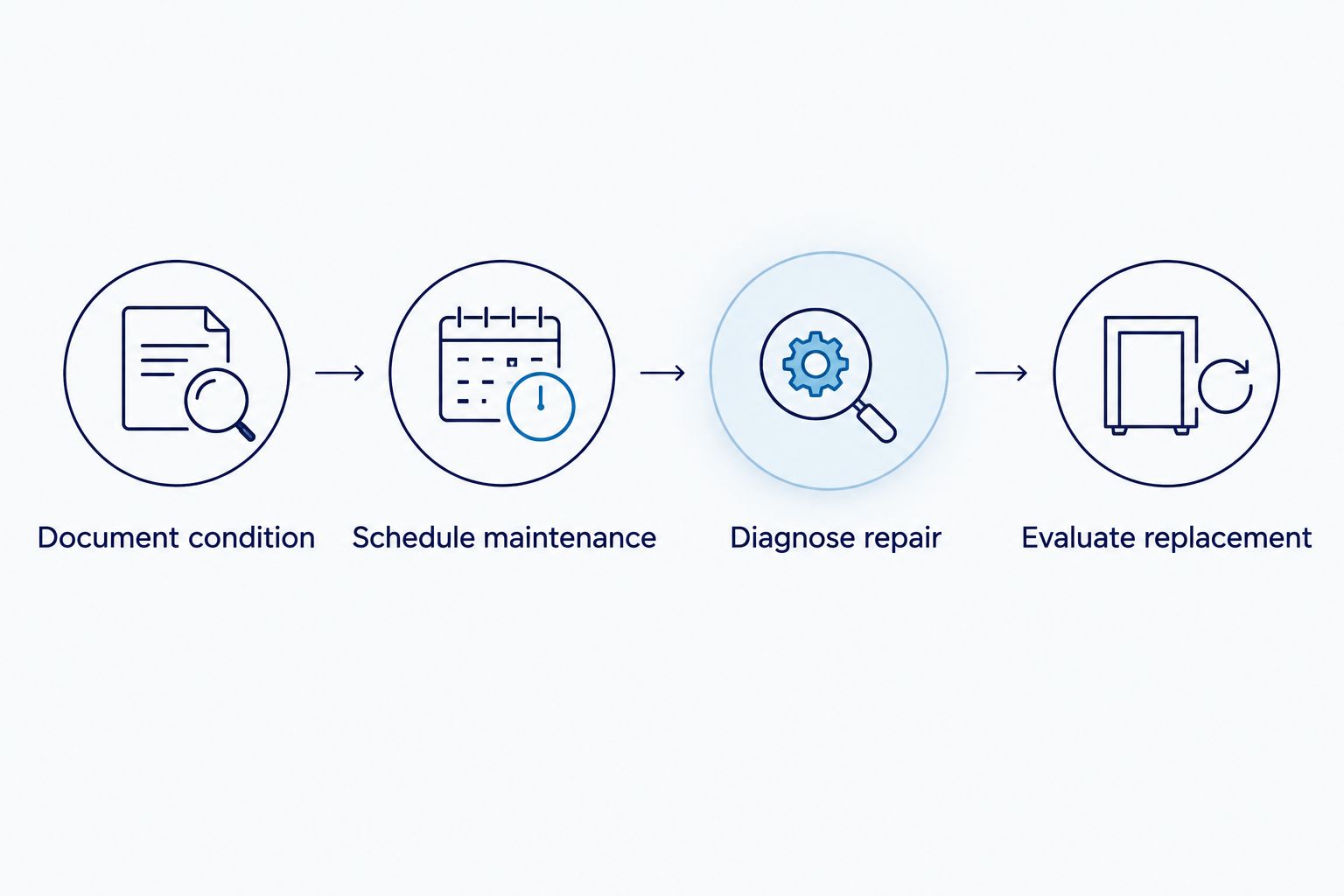
Which AC option fits the sale?
In 2026, choose the scope after the system has been checked. These options solve different problems, and none is a substitute for an accurate account of the home's condition. Starting prices are not listed here because the work depends on the findings and the homeowner's approved scope.
| Option | Best for | Starting price | Key limitation |
|---|---|---|---|
| Document current condition | A system with no reported symptom when the seller needs an organized record | Not listed | Records alone do not diagnose a hidden fault |
| Schedule maintenance | A homeowner seeking a routine system check before listing | Not listed | Maintenance does not automatically resolve a repair issue |
| Authorize a diagnosed repair | A specific fault confirmed by a technician | Not listed | The repair addresses its stated scope, not every future issue |
| Evaluate replacement | A homeowner reviewing a technician's replacement recommendation | Not listed | Requires a separate decision about system design and installation |
Do not choose replacement solely to make the listing sound stronger. Ask for the reason behind the recommendation, then give the seller room to review it. For a repair, confirm what was corrected and whether further work was advised. For maintenance, avoid describing the visit as proof that the system has no defects.
A.R. Williams Air Conditioning uses flat-rate pricing quoted before work starts, so the homeowner can review a proposed scope before approving it. If a seller wants an estimate, ask them to describe the actual concern and request an assessment rather than seeking a figure based only on the home's listing details.
Common mistakes agents make with a home's AC
Treating a cool showing as a clean inspection
A thermostat reading or a comfortable room tells you how the home felt at that moment. It does not explain water near the indoor unit or a problem the seller reported earlier. Keep those observations in the seller's record and have a technician assess active concerns.
Diagnosing the system for the seller
Calling a warm bedroom a compressor problem skips the investigation. Airflow, controls, and other parts of the system can affect comfort. Record the symptom and let the technician identify the cause before anyone discusses a specific repair.
Calling an estimate completed work
A quote shows proposed work, not proof that the homeowner approved it or that it was finished. Keep quotes, paid invoices, and technician findings distinct. That simple separation makes a 2026 inspection response easier to follow.
Promising what a buyer's inspection will find
A seller's service record is useful, but the buyer's inspector may ask different questions or find a new issue. Share the record as evidence of the work it describes. Do not turn it into a promise about the entire AC system.
FAQ
What should a real estate agent ask about the AC before listing a home?
Ask the seller for available service records and any known cooling, airflow, noise, or water concerns. Record the answers without diagnosing the cause, then arrange a technician’s assessment when a concern needs one.
Is an AC tune-up enough before selling a home in 2026?
An AC tune-up is appropriate when the homeowner wants routine maintenance, but it does not replace diagnosis of a known fault. If the system leaks water or fails to cool, tell the technician about that symptom when scheduling the visit.
Should a seller replace the AC before listing?
A seller should review a technician’s findings before deciding on replacement. Ask why replacement is recommended, what repair options exist, and what work the proposed installation includes.
Can an agent say the AC passed inspection after a service visit?
No. A service visit documents the work and findings recorded by the technician; it is not the buyer’s independent inspection. Describe the visit and its paperwork accurately without promising a later result.
What if the buyer’s inspection finds an AC problem?
Send the specific finding to the seller and arrange a technician’s assessment of that concern. Use the written diagnosis and any completed-work records to inform the seller’s response.
Does a vacant home need an AC check before showings?
A vacant home needs someone to confirm how the AC is operating and look for visible water or comfort concerns. If a problem appears, ask the homeowner to arrange a professional diagnosis rather than guessing at the cause.
What AC paperwork should a seller keep for the buyer?
Keep available service records, written findings, quotes, and invoices for completed work. Label proposed work separately from work that was actually performed.
One last thing
The most useful AC detail in a sale is often the difference between a recommendation and completed work. A clear invoice answers one question; an unapproved quote answers another. In 2026, give the buyer the distinction plainly, and let the homeowner decide how to address any remaining concern with their agent and technician. If the system needs attention, A.R. Williams Air Conditioning can explain its findings and quote the proposed work before it begins.
Related guides
- How to choose the right AC size for your home
- How to get permits for AC installation in Florida
- AC maintenance for snowbirds and seasonal residents
