
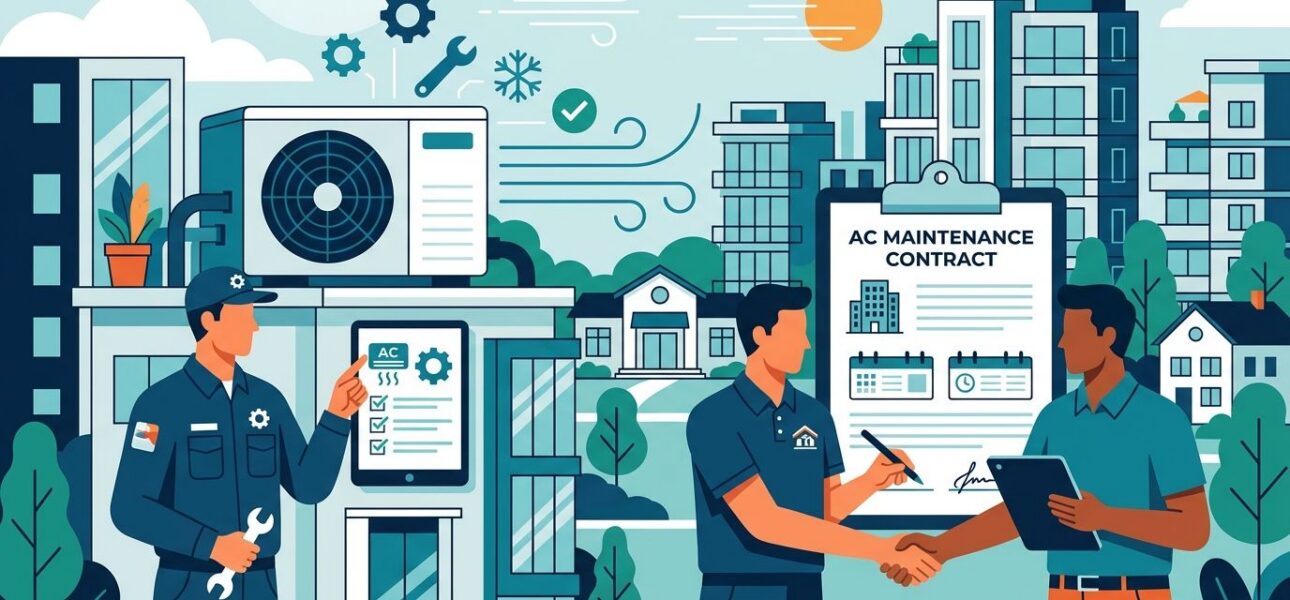
AC maintenance contracts for condo associations and HOAs set the maintenance schedule, response window, and cost structure for common-area cooling equipment and, in some communities, unit-level systems that individual owners cannot manage on their own. Boards juggle vendor bids, reserve fund limits, and owner expectations at the same time, which single-family homeowners never have to deal with.
- AC maintenance contracts for HOAs work best when common-area and unit-owner equipment are separate line items, not bundled.
- A.R. Williams Air Conditioning services condo and HOA properties across Palm Beach, Broward, and the Treasure Coast with flat-rate quotes before work starts.
- Contracts should specify a response window and a maintenance calendar, not just a visit count per year.
- Skipping a licensing check on the lowest vendor bid is the fastest way an HOA ends up with unpermitted work.
- Track which units still run R-22, since production ended in the US in January 2020.
Why AC maintenance contracts matter for condo associations and HOAs
A single-family homeowner decides on their own how often to service one system. A condo association or HOA board is deciding for a shared clubhouse unit, a lobby system, sometimes a fitness center, and often dozens of individual condensers sitting on a shared roof or in a mechanical room. One bad decision does not cost one household, it shows up at the next board meeting.
Florida's cooling season runs close to nine months a year in Palm Beach and Broward counties, and longer along the coast where humidity stays high into what other parts of the country call fall. A common-area system that is not on a maintenance schedule does not fail quietly. It fails in July or August, when a compressor swap means weeks of coordinating vendor availability, board sign-off, and resident complaints at once.
Older buildings compound the problem. Plenty of condo properties built before 2010 still have R-22 refrigerant systems in service, and the EPA ended R-22 production and import in the United States in January 2020. Every pound now comes from reclaimed stock. A contract that does not flag which units still run on R-22 is missing the single biggest budget risk on the property.
How to build an AC maintenance contract for your association
Inventory every cooling system on the property
Before a board signs anything, someone needs a full list of what is actually running. This is the step most associations skip, and it determines everything else in the contract.
- List every common-area unit: clubhouse, lobby, gym, guardhouse, mailroom
- Note the age, brand, and refrigerant type for each system
- Flag any unit still running on R-22
- Record which condensers sit on shared roofs versus individual balconies
- Identify systems that serve multiple units through shared ductwork
Separate common-area equipment from unit-owner equipment
Most disputes between boards and residents trace back to this line being blurry. A contract that lumps common areas and private units together causes confusion at renewal time.
- Write common-area coverage as its own section with its own scope
- List unit-owner equipment separately, even if the same vendor services both
- Spell out who calls for service on unit-level systems, the owner or the association
- State clearly whether unit coverage is optional or automatic through dues
- Confirm which spaces count as common area under the governing documents
Owners looking for their own coverage on a private unit are usually shopping a different scope than what a board negotiates, and AC repair for condos and townhomes sits on the owner's side of that line in most communities.
Set a maintenance schedule that matches Florida's cooling season
A once-a-year visit does not hold up against nine months of continuous run time. Twice-a-year service, spring and fall, is the baseline most South Florida properties need to stay ahead of coil fouling and drain line clogs.
- Schedule the spring visit before peak cooling season starts in April or May
- Schedule the fall visit before hurricane season ends November 30
- Add a mid-summer filter and coil check for high-traffic common areas
- Build in an extra inspection after any named storm passes through the county
- Increase coil cleaning frequency for coastal buildings exposed to salt air
Define response time in plain, realistic terms
Boards often write contracts promising faster service than any vendor can actually deliver. State a real response window instead of vague urgency language.
- State the hours the vendor is reachable for service calls
- Define what counts as priority service versus routine maintenance
- Avoid language implying round-the-clock availability no vendor can back up
- Require written confirmation of the technician's findings before repairs proceed
- Set expectations for how fast a common-area no-cool issue gets looked at
Require licensing, insurance, and permit documentation
A board that signs without checking licensing exposes every owner to liability. This step takes an afternoon and saves months of trouble later.
- Confirm the vendor holds an active Florida HVAC contractor license
- Ask for proof of liability insurance and workers' comp coverage
- Verify the vendor pulls permits for compressor or coil replacement work
- Check the vendor knows how permits for AC installation in Florida differ between Palm Beach, Martin, and St. Lucie counties
- Request references from at least one other condo or HOA property
Build reserve fund line items into the budget
A maintenance contract covers routine service. Compressor failure, coil replacement, and full system swaps come out of the reserve fund, and too many boards never plan for that separately.
- Estimate remaining useful life for every system on the inventory list
- Flag R-22 units as higher-priority reserve candidates
- Set aside a line item for equipment replacement, not just repair
- Review reserve allocations annually alongside the contract renewal
- Ask the vendor for a written estimate range on likely near-term replacements
Review and renegotiate the contract every year
A contract signed three years ago probably does not reflect the property's current equipment mix. Annual review keeps scope, schedule, and accountability aligned with what is actually installed in 2026.
- Compare the current equipment inventory against what the contract covers
- Check the vendor's response record from the past year
- Adjust the schedule if any systems were replaced or added
- Revisit whether unit-owner terms still match resident turnover
- Confirm licensing and insurance documents are still current
Maintenance contract options for condo associations and HOAs
| Option | Best for | Key limitation |
|---|---|---|
| Self-managed, ad hoc repairs | Small associations with one or two common-area units | No preventive schedule, costs spike when equipment fails mid-summer |
| Single-vendor common-area contract | Buildings with a clubhouse, lobby, or gym system | Does not cover individual unit owners' equipment |
| Master agreement with resident opt-in | Larger properties wanting one point of contact for the whole building | Needs board approval and clear opt-in terms so owners are not auto-billed |
| Per-unit owner contracts, negotiated individually | Smaller HOAs with detached or townhome-style units | No shared scheduling, inconsistent service quality across the property |
A master agreement with a clear opt-in for unit owners gives boards the most consistent record-keeping without forcing coverage on residents who do not want it.
Get your association’s AC plan reviewed
Flat-rate pricing quoted before any work starts, for common-area and unit systems.
Common mistakes HOAs and condo boards make
- Treating common-area AC like a set-and-forget expense. A clubhouse system running untouched for two years is the one that fails during a resident event.
- Bundling unit-owner service into dues without opt-in language. This creates billing disputes the moment an owner who never used the service asks for a refund.
- Awarding the contract to the lowest bid without checking licensing. Unpermitted work on a common-area system surfaces during a milestone inspection or a resale, and the association owns that liability.
- Ignoring which units still run R-22. Boards that do not track this get blindsided by refrigerant costs on systems installed before 2010.
- Skipping the annual review. A contract written in 2022 rarely matches the equipment on the property in 2026, especially after storm-related replacements.
Why this matters for the board specifically
Board members rotate. Vendors change. The maintenance record is the only thing that carries institutional memory from one board to the next, which is why the documentation requirement in the contract matters as much as the service itself.
A.R. Williams Air Conditioning works with condo and HOA properties across Palm Beach County, Broward County, and the Treasure Coast. Technicians explain what they found and lay out options in plain terms, which is what a board needs when it has to justify a spend to owners at the next meeting.
“The maintenance record is the only thing that carries institutional memory from one board to the next.”
FAQ
What is the difference between common-area AC maintenance and unit-owner AC maintenance in a condo?
Common-area maintenance covers systems the association owns outright, like clubhouse, lobby, or gym units. Unit-owner maintenance covers the condenser and air handler serving one resident’s living space, which is typically the owner’s responsibility unless the governing documents say otherwise.
How often should an HOA schedule AC maintenance for common areas?
Twice a year is the standard baseline in South Florida, once in spring before peak cooling season and once in fall after hurricane season ends November 30. Coastal buildings often need an added mid-year coil check because of salt air exposure.
Can an HOA require unit owners to maintain their own AC systems?
Yes, most governing documents place individual unit HVAC equipment under owner responsibility. The association can still offer a group contract as an optional add-on for owners who want it.
Is a group AC maintenance contract better value than owners hiring separately?
A single contract usually means consistent scheduling and one point of contact for the whole property, which cuts the coordination burden on the board. Terms vary by vendor and by how many units opt in, so confirm specifics directly with the contractor.
Who is responsible for AC repairs in a condo, the owner or the association?
It depends on the equipment’s location and the community’s governing documents. Systems serving one unit exclusively are typically the owner’s responsibility, while shared or common-area equipment falls to the association.
Why does R-22 refrigerant matter for an older condo building?
R-22 production and import ended in the United States in January 2020, so any remaining supply comes from reclaimed stock. Systems installed before 2010 that still use it are the ones most likely to need replacement rather than repair.
What should be included in an AC maintenance contract for an HOA?
A solid contract separates common-area and unit-owner scope, sets a schedule tied to cooling season, states a realistic response window, and requires proof of licensing and insurance. It should also be reviewed annually against the current equipment inventory.
One last thing
The R-22 phase-out is the line item most boards underestimate. A system installed before 2010 running on R-22 is not just older, it depends on refrigerant that has not been manufactured in the United States since January 2020. When that system needs a recharge instead of a repair, the cost is the kind of surprise a reserve fund should already account for going into 2026, not after a compressor fails in August.
Related guides
- AC maintenance plans for rental property owners
- Best AC maintenance plan for South Florida homeowners
- Verify your AC contractor is licensed in Florida
