
Not every single-story Florida home has a full attic to run ductwork through or room on the pad for a large multi-ton condenser. If your home has a shallow attic, a slab foundation with no crawlspace, or duct runs that were added on after the original build, the system that cools your neighbor's two-story home is not automatically the right one for yours. Here's what actually holds up in a compact, single-story South Florida home in 2026.
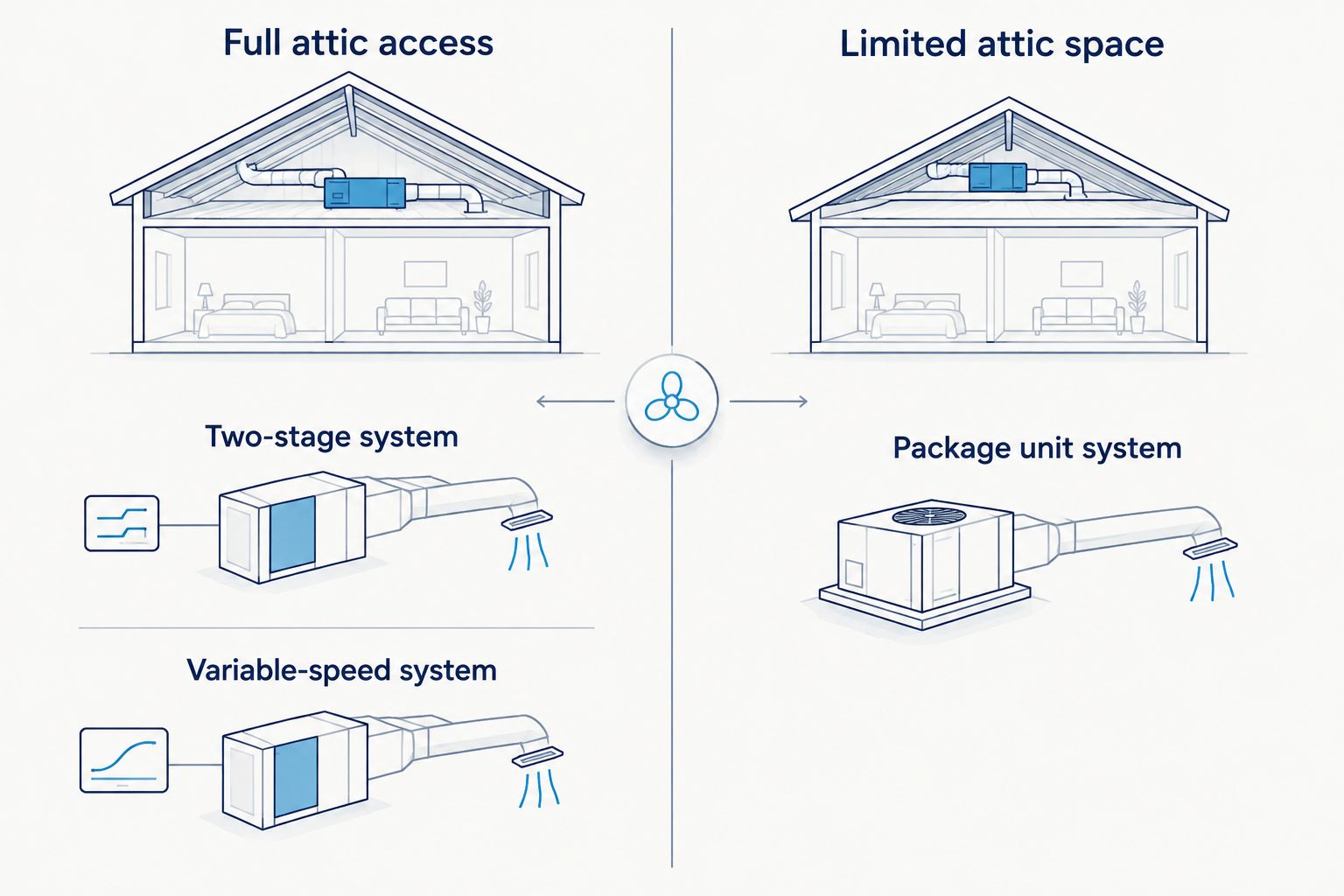
- Two-stage AC systems win for compact single-story homes with limited attic space and tight duct runs.
- Variable-speed AC systems hold indoor humidity down best in homes under roughly 1,800 square feet.
- Package unit systems skip the attic air handler entirely, which matters when there is no usable attic.
- Goodman AC systems cover smaller square footage homes without oversizing the equipment.
- Rheem AC systems handle coastal, salt-air locations with coated coils built for corrosion resistance.
Why this matters
A lot of AC sizing advice online assumes a two-story house with a walk-in attic and plenty of room to run trunk lines. That is not what a lot of Palm Beach County and Treasure Coast homes look like. Older single-story homes built before the 1990s often have 7-foot ceilings, shallow attic trusses, and undersized return air paths that were never updated when the AC was replaced.
Getting the right AC size for your home matters more in a compact house than a large one, because there is less room to correct a sizing mistake with extra ductwork or a second zone. Oversize the equipment and it short cycles, leaving the house cold but humid. Undersize it and it runs constantly without catching up during a South Florida afternoon in July or August.
What makes the best AC system for a compact home
A system that ranks well for a 3,000 square foot house does not automatically rank well for a smaller one. These are the criteria that actually separate a good fit from a bad one:
- Duct run length and static pressure – short, tight duct runs in additions or converted spaces raise resistance and cut airflow
- Attic or crawlspace access – some homes simply do not have room for a standard air handler and coil
- Equipment footprint – condenser size and clearance matter more on a small slab or narrow side yard
- Humidity control independent of raw tonnage – a right-sized unit that still leaves the house feeling damp is a design problem, not a capacity problem
- Coastal corrosion resistance – salt air near the Intracoastal or the beach shortens coil life faster on undersized, poorly finned units
- Serviceability – common brands with available parts keep repair costs and wait times down over the life of the system
AC systems for compact Florida homes at a glance
| System | Best for | Standout feature | Key limitation |
|---|---|---|---|
| Two-stage AC systems | Homes with limited attic space | Two capacity stages cut short cycling without a full attic overhaul | Less precise humidity control than a variable-speed system |
| Variable-speed AC systems | Tight humidity control in a small footprint | Continuous capacity adjustment holds indoor humidity down | More electronics, higher upfront investment |
| Package unit systems | Homes without usable attic ductwork | All components sit in one outdoor cabinet, no attic air handler | Less flexible if you later want multiple zones |
| Goodman AC systems | Smaller square footage homes | Wide range of right-sized capacities, easy to match to a small home | Fewer premium humidity features than top-tier lines |
| Rheem AC systems | Coastal, salt-air exposure | Coated coils built for corrosion resistance | Still needs periodic coil rinses near the water |
1. Two-stage AC systems: best for homes with limited attic space
A two-stage system runs at a lower capacity most of the time and only shifts to full output on the hottest afternoons. That matters in a compact home because a single-stage unit sized for a July heat wave tends to overcool and short cycle the rest of the year.
Two-stage AC systems pros:
- Reduce short cycling compared to single-stage equipment
- Fit into the same attic footprint as older single-stage units
- Hold humidity better than single-stage systems at similar cost
- Widely available across major brands, so parts are easy to source
Two-stage AC systems cons:
- Not as precise on humidity as a full variable-speed system
- Two-stage air handlers are slightly larger than base single-stage models
Best for: homes where the attic is shallow but you still want better humidity performance than a base single-stage unit.
Verdict: Buy.
2. Variable-speed AC systems: best for humidity control in a compact home
A variable-speed system adjusts capacity in small increments instead of jumping between one or two fixed stages. In a home under roughly 1,800 square feet, that fine adjustment keeps the indoor humidity level steadier than a two-stage or single-stage unit running the same square footage.
Variable-speed AC systems pros:
- Best humidity control of any option on this list
- Runs longer at lower speeds, which cuts noticeable temperature swings
- Pairs well with a smart thermostat for tighter humidity targets
Variable-speed AC systems cons:
- More electronic components to service over the system's life
- A meaningful jump in upfront cost over two-stage equipment
Best for: compact homes where humidity, not just temperature, is the complaint.
Verdict: Buy if consistent humidity control matters more than upfront cost.
3. Package unit systems: best for homes without usable attic ductwork
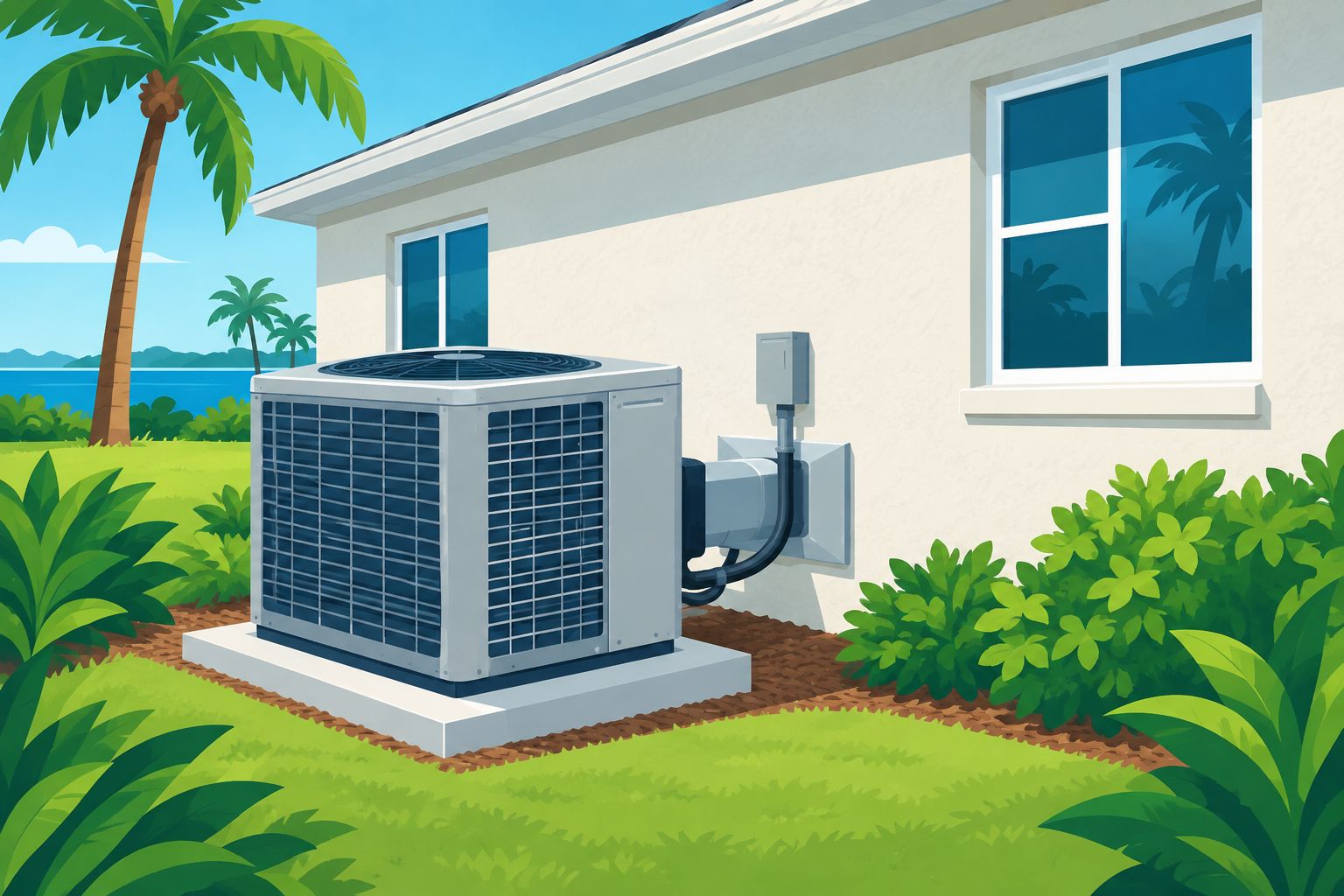
A package unit puts the compressor, coil, and blower in one outdoor cabinet, usually on a slab beside the house or on the roof. There is no attic air handler at all, which solves a real problem in homes where the attic space is too shallow or too hot to put equipment in.
Package unit systems pros:
- No attic air handler to install, access, or service
- Simplifies duct runs when the attic is too shallow to work in
- Keeps noisy or heat-generating components outside the living space
Package unit systems cons:
- Fixed location on the property, less flexible than a split system
- Harder to add a second zone later without a separate unit
Best for: homes where the attic genuinely cannot accommodate a standard air handler and coil.
Verdict: Buy when attic access is the actual constraint, not just a preference.
4. Goodman AC systems: best for smaller square footage homes
Goodman's lineup covers a wide range of capacities in smaller increments, which makes it easier to match equipment to a home instead of rounding up to the next available tonnage. That matters in a compact home, where even half a ton of extra capacity can cause short cycling.
Goodman AC systems pros:
- Broad range of capacities makes precise sizing easier
- Straightforward equipment that is easy to service and diagnose
- Common enough that most licensed contractors carry parts locally
Goodman AC systems cons:
- Fewer high-end humidity control features than variable-speed premium lines
- Base models don't include the two-stage or variable-speed compressor tech listed above
Best for: a smaller home where accurate sizing matters more than premium humidity features.
Verdict: Buy for straightforward, right-sized cooling.
5. Rheem AC systems: best for coastal, salt-air exposure
Homes within a few miles of the Intracoastal or the ocean see outdoor coils corrode faster than homes further inland. Rheem's coated coil options are built to slow that process, which extends the useful life of the outdoor unit in a spot where salt air is a daily fact, not an occasional one.
Rheem AC systems pros:
- Coated coils resist salt air corrosion better than uncoated units
- Solid warranty support through certified dealer networks
- Available in capacities that fit compact home footprints
Rheem AC systems cons:
- Coil coatings reduce but do not eliminate the need for periodic rinsing
- Coastal placement still shortens outdoor unit life versus an inland install
Best for: a compact home within a few miles of saltwater exposure.
Verdict: Buy, and pair it with regular coil rinses near the coast.
“A package unit with no attic air handler does not develop the airflow losses that show up over time in long attic duct runs.”
How this ranking was built
Each system above is matched to one specific constraint: attic space, humidity control, coastal exposure, or square footage. None of them is a universal "best," because a compact home's limiting factor is rarely the same from house to house. The comparison table lets you match your actual constraint (attic access, humidity, salt air, square footage) to the system built to handle it, rather than picking a name off a list.
Which AC system should you choose in 2026?
Start with the physical constraint, not the brand. If your attic is too shallow or too hot to put an air handler in, a package unit system is the default choice. If the attic works fine but humidity is the complaint, a variable-speed AC system is the better fit. Everyone in between, a two-stage system covers most compact Florida homes without the cost jump of full variable-speed equipment.
Federal minimum efficiency standards for split systems sold in the Southeast region sit at a SEER2 rating of 14.3, so any option above should be compared against that floor, not treated as optional. A technician who has actually measured your duct static pressure and attic conditions will tell you faster than any table which of these fits your house.
Get your AC options explained in person
A technician can measure your attic space and duct runs before recommending a system.
FAQ
What size AC do I need for a 1,200 to 1,800 square foot home?
Most homes in that range need roughly 2 to 3 tons of cooling, but the correct number depends on ceiling height, window area, and insulation, not square footage alone. A load calculation done in person catches details a size chart misses.
Is a package unit better than a split system for a small home?
A package unit is the better choice when the attic cannot fit a standard air handler and coil. If the attic has usable space, a split system with a two-stage or variable-speed compressor usually gives better humidity control.
Do smaller homes need less powerful AC systems?
Usually yes, but square footage is only one factor. Ceiling height, window count, sun exposure, and insulation quality all change the actual load, so two homes the same size can need different tonnage.
Can a two-stage AC system handle Florida humidity?
Yes, a two-stage system handles humidity better than a single-stage unit because it spends more time running at lower capacity, which pulls moisture out of the air more consistently. It is not as precise as a full variable-speed system, but it is a meaningful step up.
How often should an AC in a home with limited attic access be serviced?
Twice a year is standard for South Florida, once before the summer cooling season and once in the fall. Limited attic access does not change the schedule, but it can affect how long a service visit takes.
How long do AC systems last in coastal Florida homes?
Coastal salt air typically shortens the life of the outdoor unit compared to an inland install, even with a coated coil. Regular rinsing of the outdoor coil is the single biggest factor in extending life near the water.
What is the difference between a package unit and a split system?
A package unit houses the compressor, coil, and blower in one outdoor cabinet with no indoor air handler. A split system separates those components, with the air handler typically installed in an attic or closet.
Is a higher SEER2 rating always worth it in a compact home?
Not automatically. The federal minimum SEER2 for split systems in the Southeast is 14.3 as of 2023, and going above that helps with monthly cooling costs, but a compact home often benefits more from correct sizing and duct condition than from chasing the highest SEER2 number available.
One last thing
The detail that gets missed most often in a compact home is the return air path, not the equipment brand. A single undersized return grille on an older 7-foot-ceiling home can choke airflow enough that even a correctly sized 2026 system feels weak. Before anyone quotes you new equipment, ask whether the return air sizing was checked, because a $200 return upgrade sometimes fixes what looks like a $6,000 equipment problem.
Related guides
- Package unit AC repair for South Florida homes
- Best Goodman AC systems for South Florida budgets
- Best Rheem AC systems for South Florida homes
