
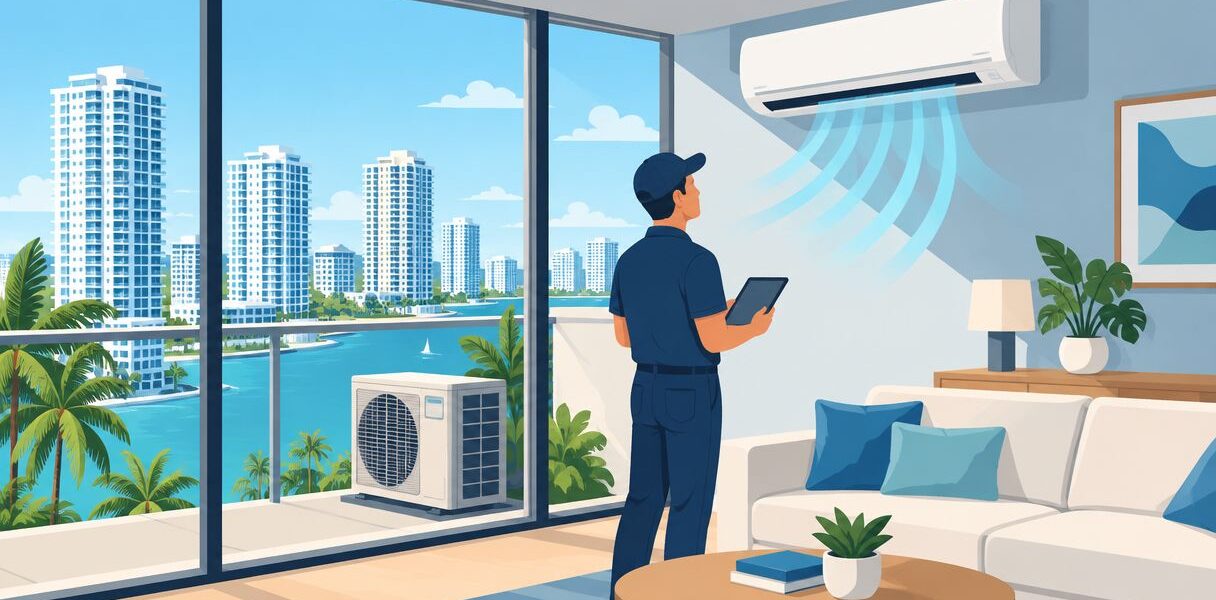
Condo and high-rise cooling in South Florida runs into problems a single-family home never sees: salt air chewing through outdoor coils, HOA noise rules, and utility closets built too small for modern equipment. Here is how the best AC systems for condos and high-rises actually compare against those specific problems in 2026.
- Ruud two-stage systems are the best overall pick for a full condo AC replacement in 2026.
- Carrier variable-speed systems fit high-rise units where HOA noise rules are strict.
- Daikin compact ducted systems solve the tight utility closet problem common in older buildings.
- Corrosion-resistant coil packages are close to mandatory within a few blocks of the ocean or Intracoastal.
Why this matters
A condo AC system does not fail the same way a single-family system does. The condenser usually sits on a balcony, a rooftop pad, or a narrow side yard shared with two or three other units, so salt air and airflow restrictions hit harder and faster.
Utility closets built in the 1980s and 1990s were sized for equipment that does not exist anymore, and condo boards now expect proof of efficiency compliance before signing off on a replacement. Add HOA rules on sound level, permitting differences between Palm Beach, Martin, and St. Lucie counties, and older buildings still running R-22 systems banned from production since 2020, and picking the right AC system gets complicated fast.
A.R. Williams Air Conditioning handles condo and townhome AC repair across Palm Beach County, Broward County, and the Treasure Coast. The rankings below come from what actually holds up in these buildings, not from a spec sheet.
Quick verdict
Best overall for a full condo AC replacement: Ruud two-stage systems. Best for noise-sensitive high-rise units: Carrier variable-speed systems. Best for tight utility closets: Daikin compact ducted systems. Best for oceanfront and Intracoastal high-rises: corrosion-resistant coil packages. Best for condos with separate living and sleeping zones: variable-speed air handlers with zoning add-ons.
What makes the best AC system for a condo or high-rise
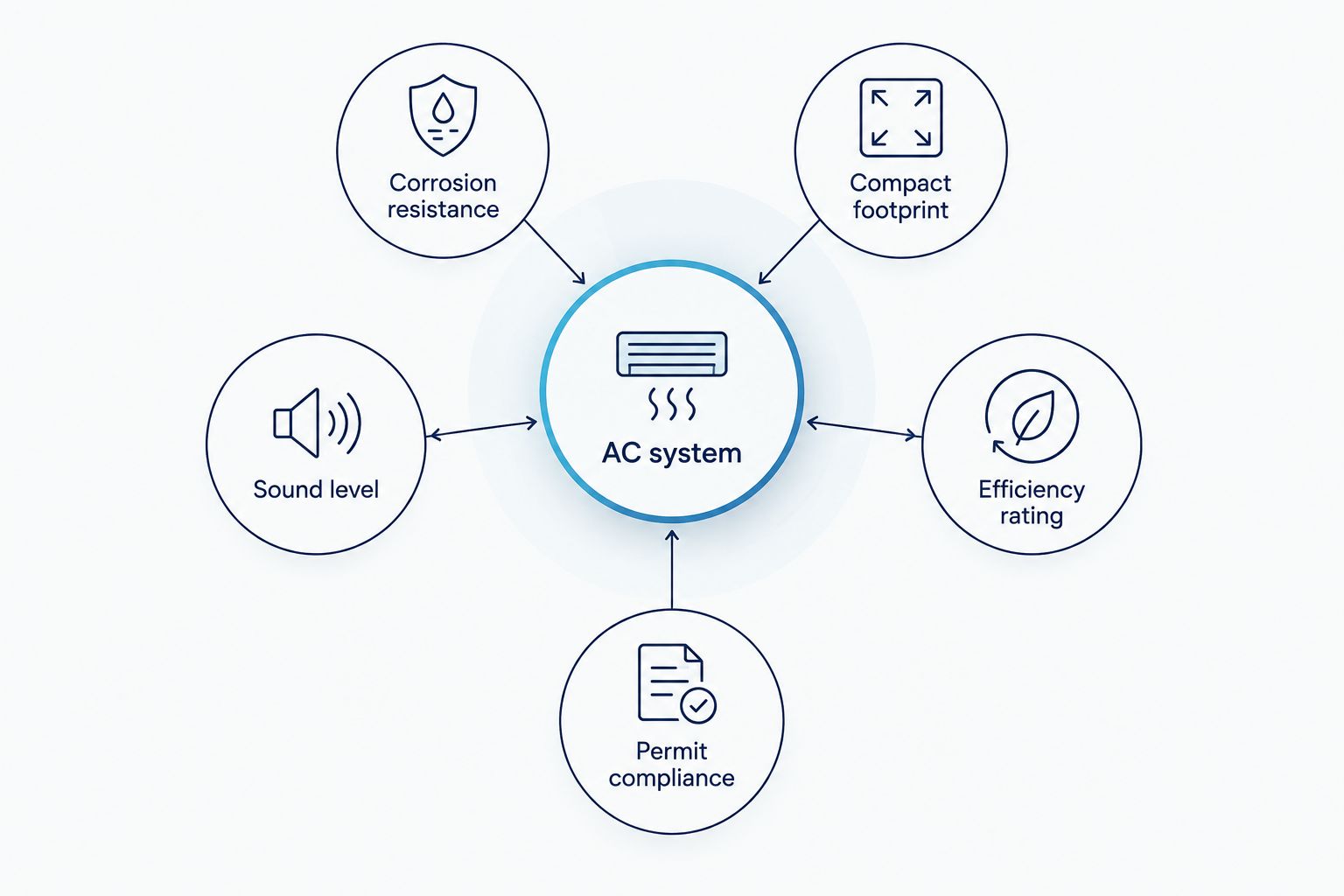
- Corrosion resistance. Salt air eats through an unprotected outdoor coil in a few years on oceanfront and Intracoastal buildings.
- Compact footprint. Condo utility closets and balcony pads leave little room for oversized equipment.
- Sound level. Shared walls and HOA noise rules make quiet operation non-negotiable, not a nice-to-have.
- Efficiency rating. The federal minimum is 15.2 SEER2 in South Florida, and boards increasingly ask for proof before approving work.
- Permitting ease. Palm Beach, Broward, Martin, and St. Lucie counties each handle AC permits a little differently, and high-rises add HOA approval on top.
- Warranty transferability. Condo ownership turns over more often than single-family homes, so a warranty a new owner can register matters at resale.
Best AC systems for condos and high-rises in 2026, at a glance
| System | Best for | Standout feature | Key limitation |
|---|---|---|---|
| Ruud two-stage systems | Full condo AC replacements | Two-stage compressor cycles down for steadier temperatures | Not the smallest footprint for tight balcony spacing |
| Carrier variable-speed systems | Noise-sensitive high-rise units | Variable-speed compressor modulates sound output | More sensors and calibration to service |
| Daikin compact ducted systems | Tight utility closets | Smaller air handler footprint than standard models | Fewer size options at the largest capacities |
| Corrosion-resistant coil packages | Oceanfront and Intracoastal high-rises | Coated coils resist salt air corrosion | Not every model includes coating by default |
| Variable-speed air handlers with zoning | Condos with separate living and sleeping zones | Independent temperature control per zone | Zoning dampers add complexity to ductwork |
1. Ruud two-stage systems: best for full condo AC replacements
A two-stage system runs on low output most of the day and only ramps to full capacity during peak heat, which means less on-off cycling in a sealed condo unit. A.R. Williams Air Conditioning installs these as a Ruud Pro Partner, which keeps manufacturer support tied to the install.
Ruud two-stage systems pros:
- Steadier indoor temperature than single-stage equipment
- Handles South Florida's humidity load without overworking the compressor
- Manufacturer-backed installation support
Ruud two-stage systems cons:
- Larger footprint than compact models built for closets
- Two-stage components cost more to service than single-stage units
Best for: owners doing a complete AC replacement, not a patch job. Verdict: Buy.
2. Carrier variable-speed systems: best for noise-sensitive high-rise units
A variable-speed compressor adjusts output continuously instead of switching between one or two fixed speeds, which keeps the unit quieter for longer stretches. That matters on the 15th floor of a building where the condenser sits ten feet from a neighbor's bedroom window.
Carrier variable-speed systems pros:
- Lower sound output than single- or two-stage equipment
- Smoother humidity control in sealed condo units
- Fits HOA sound ordinances that single-stage systems sometimes fail
Carrier variable-speed systems cons:
- More electronics that require a technician trained on the specific model
- Higher upfront installation complexity than a standard system
Best for: high-rise units where the HOA has a documented noise limit. Verdict: Buy.
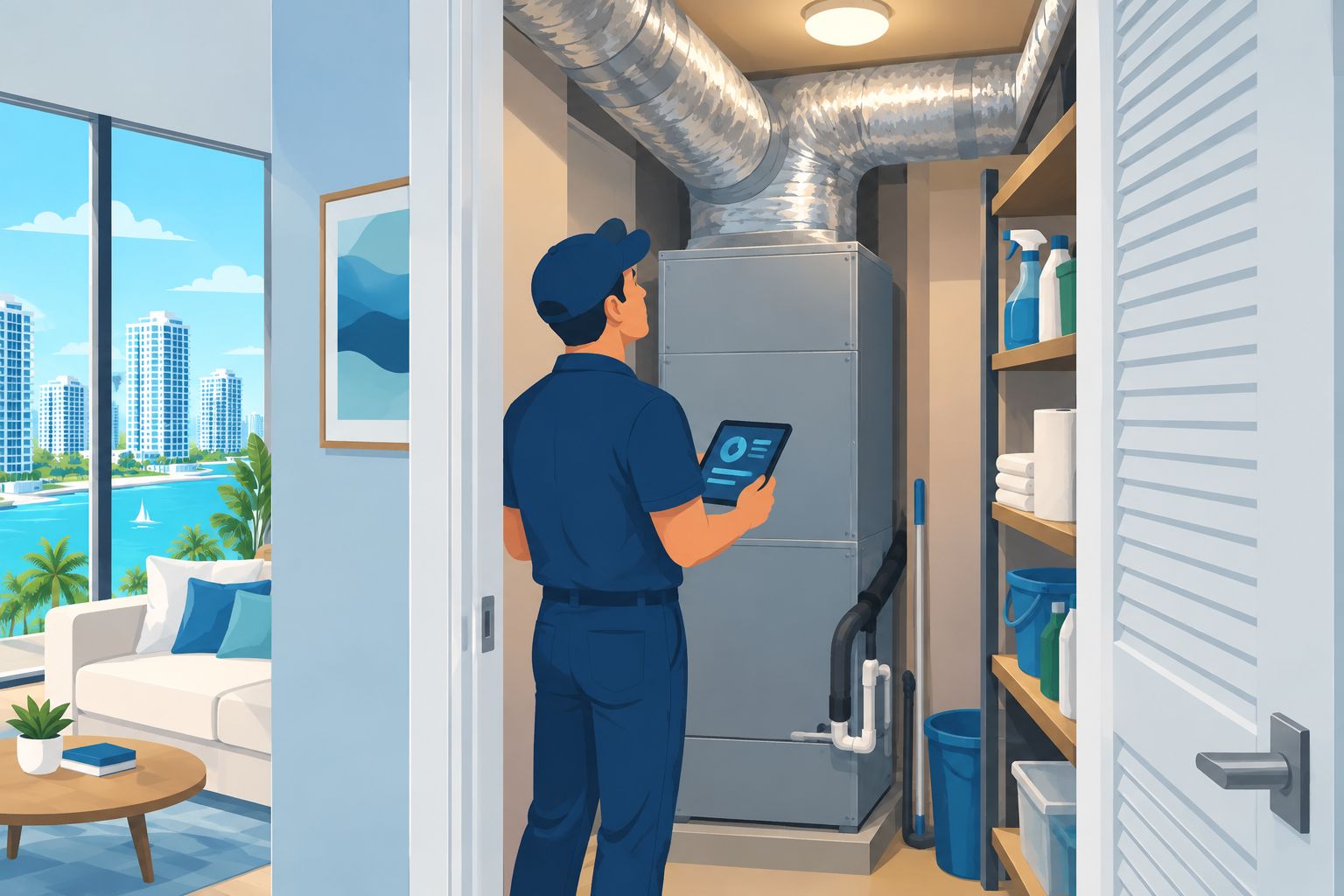
3. Daikin compact ducted systems: best for tight utility closets
Older condo buildings were built around equipment sizes that stopped being made decades ago. A compact ducted system solves the physical problem: it fits a narrower closet without forcing a wall cutout or a custom platform.
Daikin compact ducted systems pros:
- Smaller physical footprint than standard air handlers
- Daikin Comfort Pro certified installation and support
- Efficient enough to meet 15.2 SEER2 without oversizing the unit
Daikin compact ducted systems cons:
- Fewer capacity options at the top end for larger condo layouts
- May need auxiliary equipment paired in for bigger multi-room units
Best for: condos with a utility closet under standard equipment width. Verdict: Buy.
4. Corrosion-resistant coil packages: best for oceanfront and Intracoastal high-rises
Coated aluminum or copper coils resist the salt air that pits and corrodes standard coils within a few years on buildings close to the water. This is less a single product and more a spec to confirm on whichever brand goes in, and it pairs with details covered in saltwater coastal corrosion resistance guidance for coastal homes.
Corrosion-resistant coil packages pros:
- Extends coil lifespan significantly near saltwater
- Reduces refrigerant leaks caused by coil pitting over time
- Available as an add-on across most major brand lines
Corrosion-resistant coil packages cons:
- Not standard equipment, so it has to be requested and confirmed
- Adds a line item most inland condo owners never think to ask about
Best for: units within a few blocks of the ocean or Intracoastal Waterway. Verdict: Buy.
5. Variable-speed air handlers with zoning add-ons: best for condos with separate living and sleeping zones
Zoning dampers split airflow so the living room and bedroom get independent temperature control instead of sharing one thermostat setting. It solves the classic complaint in larger condo units: one room too cold, the other still warm.
Variable-speed zoning systems pros:
- Even cooling across distinct rooms or zones
- Reduces the fight between a sunny west-facing living room and a shaded bedroom
Variable-speed zoning systems cons:
- Adds ductwork complexity and more thermostats to manage
- Not worth the cost in a studio or one-bedroom layout
Best for: larger condo units with clearly separate living and sleeping areas. Verdict: Hold, only if the layout actually needs it.
How we ranked these AC systems
Each system above earned its slot against the same six criteria: corrosion resistance, compact footprint, sound level, efficiency rating, permitting ease, and warranty transferability. None of the five ranks first on every criterion, which is the point: a Carrier variable-speed system that wins on noise is not automatically the right pick for a unit with a tiny closet, and a Daikin system sized for a closet is not automatically the quietest option on a high floor. A.R. Williams Air Conditioning also weighs how a system holds up with condo association and HOA maintenance contracts in the picture, since board approval timelines affect which system actually gets installed on schedule.
Get your condo AC checked
Flat-rate estimates for condo and high-rise AC replacement, same-day when the schedule allows.
Which AC system should you choose for your condo or high-rise?
If the current system is at the end of its life and the closet is a standard size, Ruud two-stage systems are the default answer for 2026. If the building has a documented sound limit or the unit sits on a floor above the 10th, Carrier variable-speed systems solve the noise problem the two-stage option does not fully address. If the closet is genuinely narrow, start with Daikin compact ducted systems before anything else, because footprint eliminates options before efficiency or noise even enter the conversation. Anyone within a few blocks of saltwater should ask about corrosion-resistant coil packages regardless of which brand goes in.
FAQ
What size AC system does a South Florida condo need?
Condo AC sizing depends on square footage, ceiling height, and window exposure, not floor plan alone. A proper load calculation, not a rule of thumb, determines the right tonnage, especially for west-facing units or those above the 10th floor where heat gain runs higher.
Can I replace a condo AC without HOA approval?
Most condo associations require approval before an AC replacement, especially when the condenser sits on a shared balcony or pad. Check the building’s governing documents before scheduling installation day.
Do high-rise condos need special permits for AC replacement?
Yes. AC replacements need a county permit in Palm Beach, Broward, Martin, and St. Lucie counties, and high-rise buildings often add their own inspection steps on top of the county process.
How often should condo AC systems be serviced in South Florida?
Twice a year at minimum. Coastal humidity and salt air put more wear on coils and electrical components in a condo unit than in a typical inland single-family home.
Is a two-stage or variable-speed system better for a condo?
Two-stage systems work well for full replacements, and variable-speed systems win when HOA noise rules or shared walls make quiet operation the priority. Which one is right depends on which constraint matters more in that specific building.
How does salt air affect condo AC systems on the coast?
Salt air corrodes unprotected aluminum and copper coils within a few years on oceanfront and Intracoastal high-rises. Corrosion-resistant coil packages matter more the closer a unit sits to the water.
Can an R-22 system in an older condo still be repaired?
R-22 production stopped in 2020, so repairs on older systems now depend on reclaimed refrigerant supply. Owners of pre-2010 condos are generally better off planning a replacement than chasing R-22 parts in 2026.
How long does a condo AC replacement take?
The equipment swap itself typically takes one day. HOA approval and permit scheduling in Palm Beach, Broward, Martin, or St. Lucie counties can add time before installation day arrives.
One last thing
The condenser pad an HOA approved five years ago was not necessarily sized for a 2026 variable-speed unit. That mismatch shows up on installation day more often than it should, so confirm pad dimensions and clearance with the board before ordering equipment, not after.
Related guides
