

AC systems in South Florida span a wide price range, from entry-level Goodman units to premium Lennox systems, and the equipment sticker price alone won't tell you which one is the right long-term fit for a humid, salt-heavy climate like Palm Beach or Broward County. This guide from A.R. Williams Air Conditioning ranks the main options by price tier and shows what each tier actually buys a homeowner in 2026.
- Goodman sits at the lowest equipment cost among major brands installed in South Florida homes in 2026.
- Ruud’s coastal-rated coils resist salt air corrosion better than standard mid-tier systems near the water.
- Carrier’s variable-capacity models handle Florida humidity without oversizing the compressor.
- Trane and Lennox sit at the premium tier, built for homeowners planning to stay in the home 15 years or more.
- SEER2 rating, not brand name alone, drives most of the price gap between tiers in 2026.
Why this matters
Every AC quote in Palm Beach County and Broward County starts with the same question: what tier of equipment actually matches this house. A 1970s home in Lake Worth Beach with an undersized return duct needs something different than a two-story house built in 2015 in Wellington. Getting the AC size right matters more than the brand printed on the side of the unit. Get the sizing wrong and even a premium system will short-cycle and struggle with humidity, no matter what tier it sits in.
Price differences between tiers usually come down to three things: compressor type (single-stage versus variable-capacity), coil coating for salt air resistance, and warranty length. None of that shows up on a spec sheet at a glance, so homeowners often compare AC systems on brand name alone and miss the parts that actually affect a Florida electric bill in 2026.
What makes the best AC system for a South Florida home
- SEER2 efficiency rating. The Southeast region requires a 14.3 SEER2 minimum on new split systems, and the price gap widens fast above that floor.
- Coastal corrosion resistance. Homes within a few miles of the Intracoastal or the Atlantic need coated coils and cabinets, or salt air eats through a standard outdoor unit in a handful of years.
- Humidity handling. Variable-speed and two-stage compressors run longer at lower speeds, which pulls more moisture out of the air than a single-stage unit cycling on and off.
- Warranty length. Manufacturer parts coverage on a new system typically runs about 10 years when registered, and that coverage varies by brand and tier.
- Ductwork condition. An older home with undersized returns won't get full value out of a premium system until the ductwork is corrected.
- Noise level. Narrow side yards common in older Palm Beach and Broward neighborhoods put the condenser close to bedroom windows, so sound rating matters as much as the name on the unit.
Line these criteria up against price and three tiers show up clearly: entry-level, mid-range, and premium. None of the three is wrong for every home. They fit different situations.
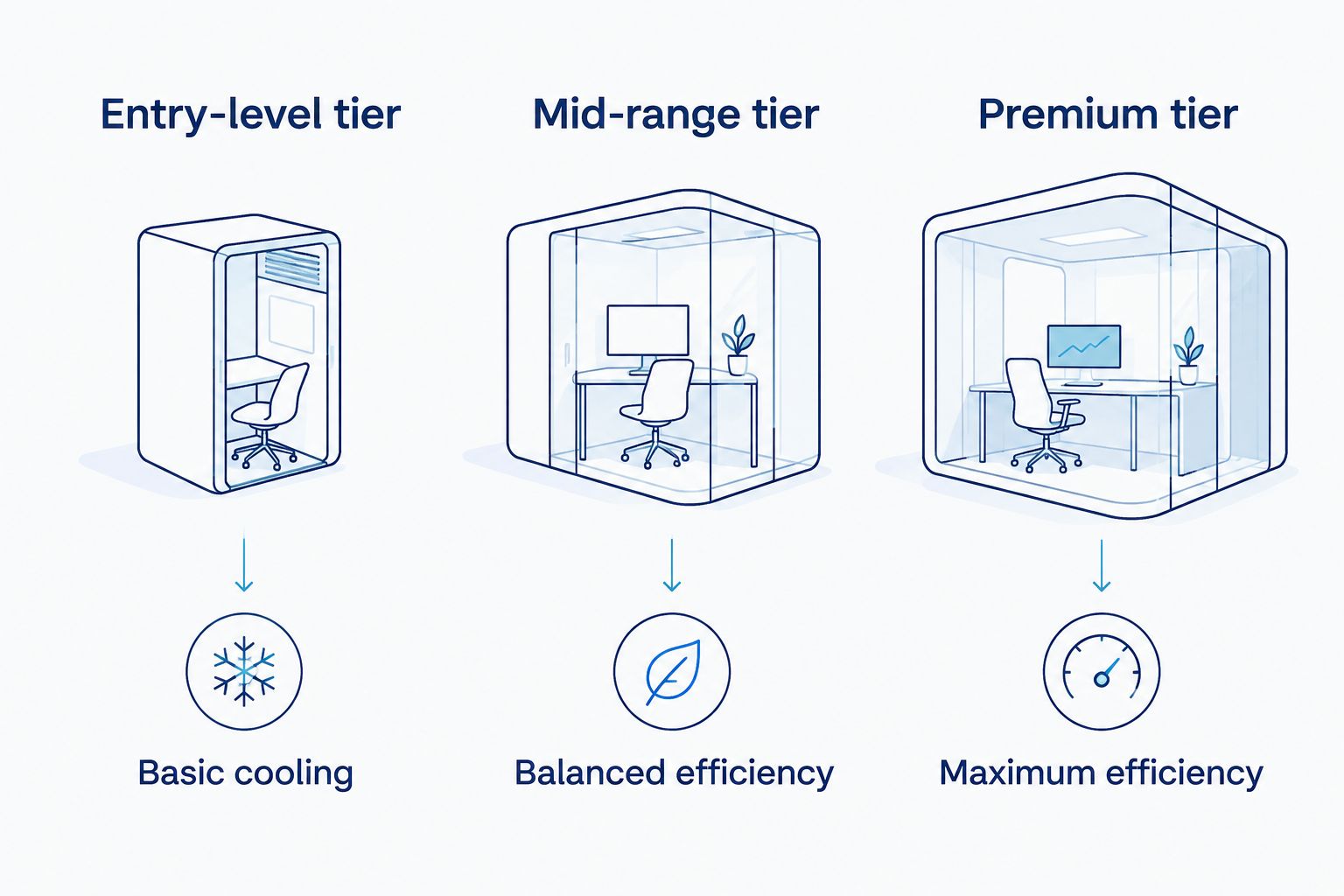
AC systems ranked by price tier: at a glance
| System | Best for | Standout feature | Price tier | Key limitation |
|---|---|---|---|---|
| Goodman | Lower-cost entry into central air | Single-stage reliability at the base SEER2 tier | Entry-level | Shorter standard warranty window, no variable-capacity option |
| Ruud | Coastal, salt-air-exposed homes | Coated coil and cabinet built for salt corrosion | Mid-range | Not the strongest fit for a two-story home needing zoning |
| Carrier | Humidity control in a mid-size home | Variable-capacity compressor holds low humidity without oversizing | Mid-range to upper | Higher install cost than a comparable single-stage system |
| Trane | Long-term durability for a 15-year hold | Heavier-gauge cabinet and compressor built for continuous cycling | Premium | Highest cost with a longer payback period |
| Lennox | Maximum efficiency and quiet operation | Highest SEER2 ratings in this lineup, sound-dampened cabinet | Premium | Smaller efficiency gain in homes under 1,800 square feet |
1. Goodman: best AC system for a lower-cost entry into central air
Goodman AC systems sit at the entry-level tier among the major brands installed across Palm Beach County and the Treasure Coast. The compressors are single-stage, meaning the unit runs at full capacity or not at all, a simpler design than the variable-speed options higher on this list.
Goodman pros:
- Lower equipment cost than mid-range and premium brands
- Widely available parts, which keeps repair turnaround fast
- Straightforward single-stage design with fewer components to fail
Goodman cons:
- No variable-capacity option, so humidity control lags behind mid-range systems during a wet Florida summer
- Standard warranty coverage runs shorter than some competing brands unless extended coverage is added
- Less coastal-specific corrosion protection than Ruud's coated coil line
Goodman AC systems for South Florida budgets work for homeowners who want reliable central air without paying for features a smaller, inland home won't use. Verdict: Buy for a straightforward replacement on a defined timeline. Skip if the home sits within a mile of saltwater and needs coastal corrosion protection.
2. Ruud: best AC system for coastal, salt-air homes
Ruud is A.R. Williams Air Conditioning's certified partner brand for coastal installations, and it shows in the equipment: coated coils and cabinets built to slow the corrosion that eats through standard outdoor units near the Intracoastal or the Atlantic coastline.
Ruud pros:
- Coastal-rated coil coating built for salt air exposure
- Mid-range pricing puts it within reach for most single-family replacements
- Backed by a Ruud Pro Partner certification that affects install quality and parts access
Ruud cons:
- Not the strongest option for a large two-story home that needs zoning
- Mid-tier compressor options don't match Carrier's humidity control on the hottest, wettest days
- Coastal coating adds cost over Goodman's base tier
Ruud AC systems for coastal Florida homes are the safer pick for salt-exposed properties. Verdict: Buy for any home within a few miles of saltwater in Delray Beach, Boca Raton, or along the Intracoastal. Hold if you're inland and don't need the corrosion protection.
3. Carrier: best AC system for humidity control in a mid-size home
Carrier is a factory-authorized line for A.R. Williams Air Conditioning, and its variable-capacity compressors run longer at lower output, pulling more moisture out of the air than a single-stage system cycling on and off every few minutes.
Carrier pros:
- Variable-capacity compressor holds indoor humidity down without overcooling the house
- Factory-authorized dealer network affects warranty processing and parts sourcing
- Sits in the middle between Goodman's price and Trane or Lennox's premium tier
Carrier cons:
- Costs more upfront than a single-stage Goodman or Ruud system
- Added components mean a longer repair if a control board fails
- More capacity than a small, well-sealed home under 1,500 square feet needs
Carrier AC models for South Florida humidity fit a mid-size or larger home where humidity, not just temperature, is the complaint. Verdict: Buy for that situation. Skip if the house is small and the ductwork is already tight.
4. Trane: best AC system for homeowners planning to stay 15 years or more
Trane sits at the premium tier with a heavier compressor and cabinet built for the kind of continuous cycling that's normal in a Florida summer.
Trane pros:
- Heavier-gauge components built for years of continuous summer runtime
- Strong track record in high-heat, high-humidity climates
- Solid resale story for homeowners planning to sell within the equipment's lifespan
Trane cons:
- Highest tier pricing among the brands on this list
- Longer payback period if you won't be in the home long-term
- No meaningful humidity control advantage over Carrier's variable-capacity line
Trane AC systems suit homeowners settled in a property for the next decade or more. Verdict: Buy for that homeowner. Hold if you might sell within 5 years; a mid-tier system pays for itself faster.
5. Lennox: best AC system for maximum efficiency and quiet operation
Lennox rounds out the premium tier with the highest SEER2 ratings in this lineup and cabinets built to dampen outdoor unit noise, which matters on the narrow side yards common in older Palm Beach and Broward neighborhoods.
Lennox pros:
- Highest efficiency ratings available among the brands compared here
- Sound-dampened cabinet design, useful when the condenser sits near a bedroom window
- Long-term energy savings can offset the premium price over the system's lifespan
Lennox cons:
- Smallest efficiency gain in a home under 1,800 square feet
- Parts and service can take longer to source than more common brands
- Efficiency advantage shrinks fast if the ductwork isn't sealed and sized correctly
Lennox AC systems fit a well-insulated home over 1,800 square feet where noise and long-term energy costs matter. Verdict: Buy for that home. Wait if the ductwork hasn't been inspected yet; fix that first or the efficiency gain won't show up on the bill.
How we ranked these
This ranking comes from manufacturer specifications, SEER2 ratings, and the patterns that show up in service calls across Palm Beach County, Broward County, and the Treasure Coast in 2026: which coils hold up near the coast, which compressors handle humidity without short-cycling, and which cabinets survive years of continuous summer runtime. Price tier follows from those factors, not the other way around.
Which AC system should you choose in 2026?
If you're still deciding, start with a load calculation, not a price list. A correctly sized entry-level system beats an oversized premium unit in a home with tight ductwork, every time.
“A correctly sized entry-level system beats an oversized premium unit in a home with tight ductwork, every time.”
For most single-family homes in Palm Beach County that aren't right on the water, Carrier's variable-capacity line is a safe default for 2026: enough humidity control for a Florida summer without paying for headroom the house won't use. Homes within a few miles of saltwater should lean toward Ruud for the coastal coating. Homes on a tighter timeline before selling should stay in the entry-level tier with Goodman rather than financing a premium system they won't recoup.
A technician can walk through the load calculation, the ductwork, and the options in person before quoting anything.
Get a flat-rate quote before you decide
A technician explains what the home needs and lays out options with clear pricing first.
FAQ
What’s the most affordable AC system for a South Florida home in 2026?
Goodman sits at the entry-level tier among major brands installed in South Florida in 2026, with single-stage compressors that keep equipment cost lower than mid-range or premium options. It still meets the 14.3 SEER2 regional minimum.
Is a lower-priced AC system worth it in a high humidity climate?
It depends on the home. A single-stage entry-level system can handle a small, well-sealed house fine, but a larger or leakier home usually needs a variable-capacity compressor to keep indoor humidity down.
How does SEER2 rating affect the price of a new AC system?
Higher SEER2 ratings generally cost more upfront because they use more efficient compressors and larger coils. The Southeast region’s 14.3 SEER2 minimum sets the price floor, and premium brands like Lennox push well above it.
Does a Goodman AC system cost more to run than a Carrier or Trane system?
A single-stage Goodman system typically uses more energy over a cooling season than a variable-capacity Carrier or Trane system, since it cycles on and off at full power instead of modulating output.
Do coastal-rated AC systems like Ruud cost more upfront than standard models?
Coastal-rated coatings on brands like Ruud typically add cost over a base-tier system, but they extend the life of an outdoor unit exposed to salt air near the Intracoastal or the Atlantic.
Is it better to repair or replace an aging AC system?
It depends on the system’s age and refrigerant type. A unit past 10 to 15 years old, especially one running on R-22 refrigerant, usually makes more sense to replace than repair once parts availability gets involved.
What’s the real difference between a base model and a premium AC system?
The main differences are compressor type (single-stage versus variable-capacity), coil coating, cabinet build quality, and warranty length. Premium systems like Trane and Lennox also run quieter and hold efficiency longer.
Do lower-priced AC systems have shorter warranties?
Warranty length varies more by brand and registration than by price tier alone, but entry-level systems commonly carry shorter standard coverage than premium models unless extended coverage is purchased separately.
One last thing
If your home was built before 2010 and the outdoor unit still runs on R-22 refrigerant, price comparisons between new systems matter less than timing. R-22 production ended in 2020, and every year in 2026 and beyond, parts for those older systems get harder to find and more expensive when they do turn up. A repair quote on an R-22 system is often the real moment to compare replacement tiers, not the moment the system finally fails in August.
Related guides
