

Yes, hurricane shutters can affect AC airflow if they block the outdoor unit's air intake or hot-air discharge, but shutters over ordinary windows usually don't restrict a central AC system. The key is where the shutter sits, not whether it is closed. Before changing anything, check whether the problem is weak indoor airflow or air that still blows normally but no longer feels cool.
- Can hurricane shutters affect AC airflow? Yes, when panels obstruct the outdoor condenser or a dedicated ventilation opening.
- Closed window shutters usually leave central AC supply and return airflow unchanged.
- A.R. Williams Air Conditioning recommends checking shutter placement before assuming a cooling problem requires equipment replacement.
- Never operate an outdoor AC unit under a solid cover or behind an obstruction that violates its installation requirements.
Why this matters
You shouldn't have to choose between protecting your windows and keeping your home comfortable. Properly placed window protection and a correctly installed central AC system can coexist.
The trouble starts when stacked panels, an open shutter leaf, or an added enclosure crowds the outdoor equipment. If your system loses cooling after storm preparation, the timing is useful information, but it isn't a diagnosis. This guide to an AC that's running but not cooling explains other problems that can look similar.
For your 2026 storm preparation, separate window protection from equipment clearance. Protect the windows without enclosing the running outdoor unit.
Can hurricane shutters affect your AC's airflow?
Hurricane shutters affect central AC airflow when their location interferes with an air path the system actually uses. A standard central system recirculates indoor air through return grilles, the air handler, and supply ducts. It doesn't depend on open windows to deliver cool air.
Outside, the condenser releases heat collected from your home. Its fan moves outdoor air across the coil and discharges heated air away from the equipment. Blocking that movement reduces its ability to release heat, even when the indoor vents still blow strongly.
| Shutter arrangement | Effect on airflow | Benefit and limitation | What to check |
|---|---|---|---|
| Closed shutters over ordinary windows | Usually no direct restriction of central AC airflow | Protect windows without changing the indoor duct path; they don't protect the AC equipment itself | Confirm no separate ventilation opening is covered |
| Open accordion or hinged shutters beside the condenser | Can obstruct intake air if they extend into required clearance | Convenient window protection; the parked position can crowd equipment | Check both open and closed positions |
| Loose panels stored against the outdoor unit | Can block coil surfaces or fan discharge | Keeps panels nearby; the AC unit is not a storage rack | Move storage away from required equipment clearance |
| Shutters enclosing a patio that contains the condenser | Can restrict ventilation or trap discharged heat | Protects the enclosed area; the condenser still needs an adequate outdoor air path | Have the enclosure and equipment location assessed |
The practical distinction is simple: normal vent strength doesn't prove the outdoor unit has enough airflow. Indoor air movement and outdoor heat rejection are separate parts of the cooling process.
Closed window shutters: usually no direct airflow restriction
If your shutters cover glass and leave the outdoor equipment clear, you generally don't need to open them for central AC airflow. Opening a protected window isn't a remedy for a condenser problem.
Shutters that shade glass can also reduce direct sunlight entering a room. That changes the room's cooling load, which is the amount of heat the AC must remove. It doesn't mean the ducts receive more air, and the effect depends on the window exposure and shutter design.
For a 2026 shutter installation, ask the installer to identify any wall openings that aren't ordinary windows. A dedicated fresh-air intake, for example, needs separate consideration. Don't assume every exterior grille can be covered safely.
Shutters beside the outdoor unit: clearance matters
An accordion shutter can sit neatly against a wall yet project toward a nearby condenser when folded open. A hinged shutter can create a similar problem in its parked position. Check the full movement, not just how the shutter looks when secured over the window.
The correct clearance comes from the installation instructions for your exact outdoor model. There isn't one distance that fits every unit, wall arrangement, or discharge direction. Keep access for maintenance separate from airflow requirements; the technician needs both.
Don't cut, relocate, or alter a storm-protection assembly to make room on your own. Ask the shutter installer and HVAC contractor to resolve the conflict without compromising the protection system or the AC installation.
Enclosed patios: open space isn't always enough
A condenser inside a patio or lanai needs a layout that allows outdoor air to enter and discharged heat to leave. Closing shutters around that space changes the conditions around the unit.
A large enclosure can still have poor ventilation. Heated discharge air that circulates back through the condenser makes heat removal harder, even if nothing touches the cabinet. A ceiling or nearby barrier can also interfere with discharge, depending on the equipment design.
Don't run a condenser inside a newly closed enclosure without confirming that the arrangement meets its installation requirements. For a 2026 patio renovation, resolve equipment placement before the enclosure design is finalized.
Why the airflow effect varies
The same shutter can be harmless in one location and obstructive in another. These are the factors that determine the difference:
- Equipment position: A condenser beside the shutter's travel path needs a different review from one on another side of the house.
- Intake and discharge layout: The outdoor unit needs room wherever its design draws in air and releases heat.
- Shutter position: Folded, swung-open, and closed positions create different nearby barriers.
- Enclosure ventilation: Patio walls, ceilings, and closed panels can limit the movement of heated air away from the equipment.
- Other obstructions: Landscaping, stored furniture, and protective structures can combine with shutters to crowd the same space.
- Coil condition: Dirt and coastal corrosion can affect heat transfer independently of shutter placement.
Near the coast, salt exposure deserves attention even when the shutters are correctly installed. A clear air path doesn't undo damaged coil surfaces. Include the outdoor coil in your AC maintenance for coastal homes with salt-air exposure rather than treating shutter clearance as the only concern.
How can you check the setup safely?
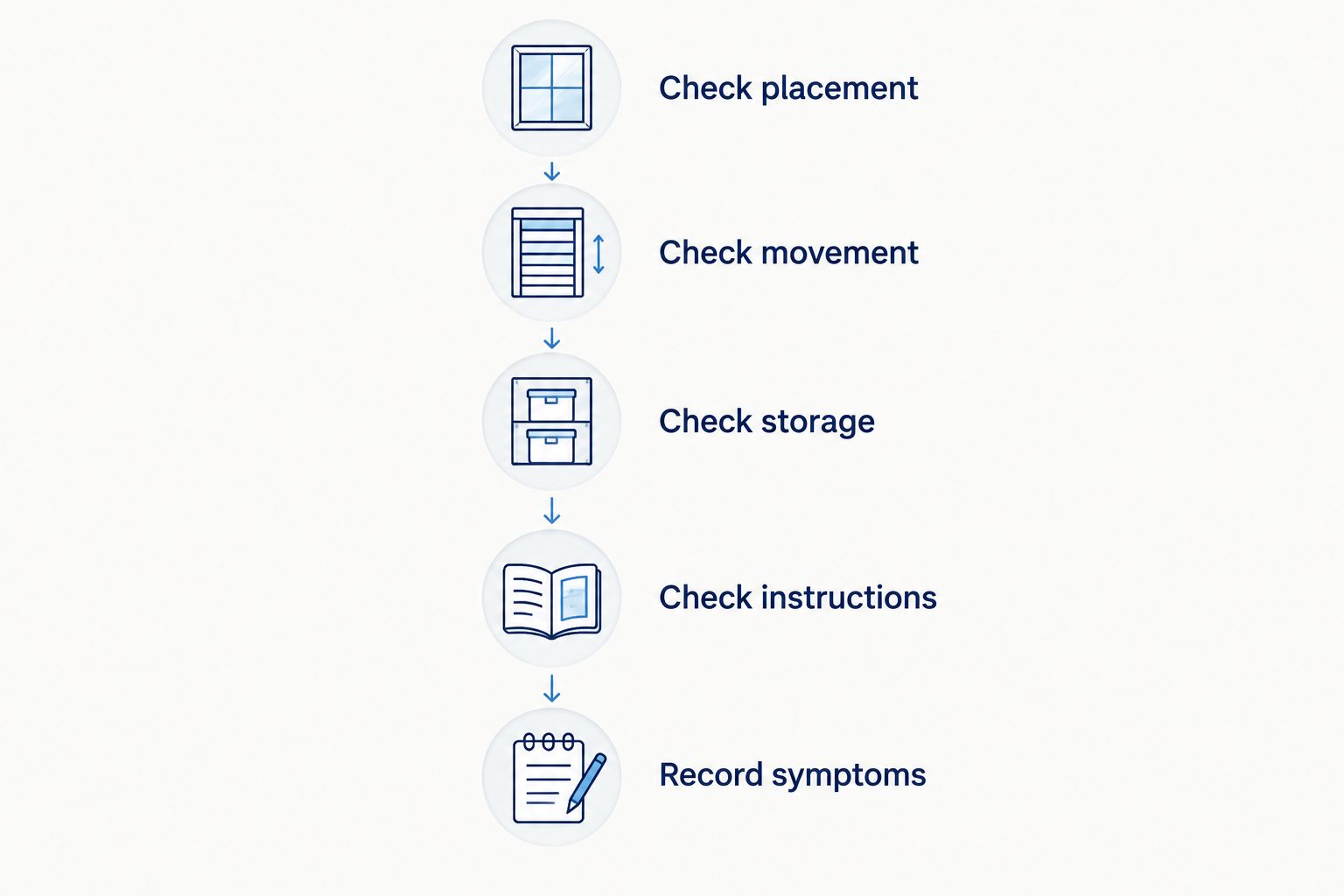
Use this visual check before shutter deployment, when conditions are safe. It doesn't require opening equipment, touching wiring, or testing refrigerant.
- Check placement. Identify whether the shutters cover windows only or also close an area around the outdoor unit.
- Check movement. Look at where each shutter sits when open, folded, and secured. Don't move heavy panels alone or work in unsafe weather.
- Check storage. Keep loose panels and stored items away from the condenser. Never rest them on its cabinet.
- Check instructions. Have the outdoor model's installation requirements reviewed against the actual layout.
- Record symptoms. Note whether vent strength changed, cooling changed, or the issue began before the shutters moved.
For your 2026 preparation checklist, photograph the equipment area before and after the shutters are positioned. Those views help a technician understand the layout without relying on a description of how close a panel looked.
Keep the inspection visual. Don't reach through the fan guard, remove electrical panels, or attempt to straighten damaged equipment. If you see displaced equipment, damaged wiring, or evidence that floodwater reached electrical components, leave the system off and have it assessed before restarting.
Does weak airflow indoors mean the shutters are responsible?
Weak airflow indoors usually points toward the indoor air path rather than shutters covering ordinary windows. A restricted filter, blocked return grille, blower problem, or duct issue belongs on the diagnostic list.
In an older house with a small return opening, that existing restriction doesn't disappear when shutters reopen. Tell the technician whether the problem affects every room or only one area. That distinction helps separate a whole-system airflow problem from a room-specific distribution issue.
If air blows at its usual strength but feels warmer, the outdoor unit and refrigeration system need attention too. The symptom doesn't establish a refrigerant leak or compressor failure. Ask for the cause to be confirmed before agreeing to a major repair.
Should you turn off the AC when you close hurricane shutters?
Closing shutters over ordinary windows, by itself, isn't a reason to turn off a properly installed central AC system. Enclosing or covering the outdoor unit is different: don't operate it with its required air path blocked.
Storm conditions introduce separate electrical, wind, and flooding risks. Follow local safety instructions and the equipment manufacturer's storm guidance rather than using shutter position as your only operating rule. Don't go outside during unsafe conditions to inspect or uncover equipment.
What should a technician check before recommending a fix?
A useful assessment compares the shutter layout with the equipment instructions, then checks whether the cooling symptoms match an outdoor restriction. The technician should also consider the filter, return airflow, coil condition, and fan operation as the symptoms require.
Ask for a plain explanation of what was found. If the proposed fix is moving equipment or changing the shutter arrangement, ask why that work is necessary and whether coordination with the shutter installer is needed.
A.R. Williams Air Conditioning is a fit for South Florida homeowners who want an AC diagnosis explained before choosing a repair. Its technicians explain their findings and lay out the options, with flat-rate pricing quoted before work starts. An HVAC assessment doesn't replace a shutter installer's review of the storm-protection assembly.
If cooling changed after shutter work, talk with a technician at A.R. Williams Air Conditioning. Share photos of both shutter positions and describe what changed at the vents. That gives the conversation a clear starting point without assuming you need a replacement system.
FAQ
Can I leave my hurricane shutters closed while the central AC runs?
Yes, shutters over ordinary windows generally don’t interfere with central AC airflow. Keep the outdoor unit’s required intake and discharge paths clear, and treat storm-related operating precautions separately.
Does my central AC need an open window to breathe?
No, a standard central AC system recirculates indoor air through return grilles and ducts. A separate fresh-air ventilation system has its own outdoor intake requirements.
How far should hurricane shutters be from my outdoor AC unit?
Use the clearance requirements in the installation instructions for your exact outdoor model. The required space depends on the equipment design and surrounding layout, so a universal distance isn’t reliable.
Why does my AC blow air but stop cooling after I put up shutters?
A shutter or stored panel could be restricting outdoor airflow even though the indoor blower still works. Other equipment faults can cause the same symptom, so the timing alone doesn’t confirm the cause.
Can I put a solid cover over the condenser while it runs?
No, don’t operate the condenser under a solid cover. The outdoor unit must move air across its coil and release heat away from the equipment.
Should I reopen shutters around a patio to help the AC?
A condenser inside a shuttered patio needs an assessment of the enclosure’s ventilation and equipment clearances. Don’t change storm protection during unsafe weather or assume a small opening makes the arrangement suitable.
Do hurricane shutters make indoor humidity worse?
Window shutters alone don’t establish the cause of an indoor humidity problem. A cooling fault, outdoor moisture entering the house, or another moisture source needs to be evaluated separately.
One last thing
Check the shutters when they're open, too. A folded stack beside the wall can sit closer to the condenser than the same shutter does when closed over the window.
For your 2026 home checklist, record both positions. That small detail helps you avoid correcting one obstruction while overlooking the other.
Related guides
- How to prepare your AC for hurricane season
- AC unit security cages for Florida homes
- Return-air vent sizing for South Florida HVAC systems
