

There is no reliable number of months or years an AC can run without maintenance before failing. A neglected system can still cool while airflow, drainage, or electrical problems develop, so continued operation is not proof that it is safe to skip service.
- How long can an AC run without maintenance? There is no dependable failure countdown.
- Annual professional AC maintenance is a baseline, not a guarantee against breakdowns.
- Weak airflow, ice, water leaks, and repeated shutdowns need diagnosis, not another thermostat adjustment.
- A.R. Williams Air Conditioning provides residential AC maintenance for South Florida homeowners who want clear explanations before work starts.
How long can an AC run without maintenance before failing?
Time since service cannot predict a failure date. What matters is the condition of the equipment, how heavily it runs, and whether a developing problem has already affected cooling or drainage.
A clean system with sound components and a neglected system with a blocked drain can both produce cold air today. That does not give them the same outlook. The blocked drain can stop cooling if a safety switch detects backed-up water, even when the compressor itself still works.
For your 2026 maintenance plan, use a scheduled inspection rather than a guessed deadline. The U.S. Department of Energy's Energy Saver guidance recommends professional service at least annually; ENERGY STAR also recommends annual pre-season checkups and monthly filter checks.
For coastal properties, the AC maintenance schedule for coastal homes explains how exposure affects what needs attention.
Does missing a visit mean the system is damaged?
No. A missed appointment is a reason to establish the system's condition, not proof that it needs a major repair or replacement.
Tell the technician when it was last serviced and describe any changes in comfort. An inspection should separate routine cleaning needs from an actual defect, with evidence for each repair recommendation.
Why this matters before the AC stops cooling
An AC does more than lower the temperature. It also removes moisture as indoor air passes across the cold indoor coil, the part that absorbs heat from your home.
Restricted airflow or poor coil performance can affect comfort before the system stops altogether. You might notice a clammy bedroom, weaker air from the vents, or cooling that takes longer under similar weather conditions.
That distinction matters in South Florida, where cooling and moisture control are closely connected. A thermostat that reaches its setting does not tell you whether the drain is clear, the outdoor coil is clean, or an electrical connection needs attention.
Maintenance checks condition. A thermostat reading only tells you part of the story. Neither a comfortable room nor a quiet outdoor unit replaces an inspection.
How often should you schedule AC maintenance?
Use 1 professional service visit per year as a baseline, then follow the equipment manufacturer's instructions and the technician's findings. A system with salt exposure, recurring drain problems, or unusually heavy use needs a schedule based on those conditions.
Annual means an interval of about 12 months, not waiting until the equipment struggles. If your last service was well before your 2026 planning cycle, arrange a visit and establish a documented starting point.
Keep filter care separate from the professional service calendar. ENERGY STAR recommends checking the filter every 1 month, especially during heavy use, and replacing it when dirty according to the filter and equipment instructions.
A clean filter does not replace a tune-up. It cannot reveal a failing electrical component, inspect the drain's safety controls, or establish whether the cooling system operates correctly under load.
What should change the schedule?
Ask the technician to explain what was found and which condition justifies a different interval. A recommendation based on visible coil buildup or repeated drainage trouble is more useful than a blanket schedule with no explanation.
Record the next service date in your 2026 calendar. Keep the service report with the equipment information so the next visit can compare findings rather than start from memory.
Why the time before failure varies
There is no single maintenance-free lifespan because different parts fail for different reasons. These factors help explain why your neighbor's experience is not a reliable schedule for your home:
- Operating load: Long cooling periods place demands on the compressor, fans, and electrical components. Runtime alone does not diagnose a problem, but it affects how much work the equipment performs.
- Airflow restrictions: A dirty filter, blocked return grille, or dirty indoor coil limits air movement. Older homes with undersized return ducts can have an airflow problem that cleaning alone will not correct.
- Coastal exposure: Salt air can corrode outdoor coils and metal components. The condition of the equipment matters more than distance from the beach alone.
- Drainage conditions: Cooling produces water that must leave through the drain. Buildup or a poorly draining line can cause a shutdown or water leakage.
- Existing wear and installation issues: Maintenance can identify deterioration, but it cannot undo corrosion or correct every design problem. Refrigerant leaks and duct defects need their own diagnosis.
Seasonal occupancy adds another concern. A home that sits empty can develop a drain or cooling problem without someone noticing the early symptoms. Arrange access for inspections and decide who will respond if monitoring shows that the house is not holding its usual temperature.
What happens when maintenance is skipped?
Neglect does not follow a fixed sequence. A dirty coil might reduce performance gradually, while an electrical component can stop working without an obvious change in comfort first.
The indoor and outdoor coils need airflow to move heat. Dirt on those surfaces interferes with that process, and restricted airflow across the indoor coil can contribute to freezing. Ice is a symptom to diagnose, not evidence that the system needs more refrigerant.
The drain has a different job. It carries away water collected during cooling, and a blockage can affect an otherwise functioning system. A safety switch, where installed, can stop cooling to help prevent an overflow.
Electrical checks address another set of problems. A technician can inspect connections and test components, but a maintenance visit cannot guarantee that every part will remain sound until the next appointment.
A tune-up reduces avoidable problems; it does not provide a failure-proof period. Treat any promise of a precise breakdown date, or guaranteed remaining life after service, with caution.
Which warning signs need a diagnostic visit?
A routine appointment is appropriate when the equipment works normally and you want its condition checked. Once you see a symptom, describe it when booking so the visit addresses the problem rather than only a standard maintenance checklist.
These signs deserve attention:
- Weak airflow: Air movement has dropped at several vents, or a previously comfortable room no longer cools normally.
- Visible ice: Frost or ice appears on accessible refrigerant tubing or around the indoor equipment.
- Water leakage: Water collects around the air handler, drain pan, or nearby ceiling.
- Repeated shutdowns: The system stops unexpectedly or repeatedly trips a breaker.
- Changed cooling: The equipment runs but the home does not approach its usual temperature under comparable conditions.
If the AC is operating without cooling, the guide to an AC that's running but not cooling explains the difference between an observation and a diagnosis.
Do not repeatedly reset a tripping breaker or keep operating equipment with visible ice. Turn cooling off and ask for professional guidance. Keep clear of electrical panels and do not remove equipment covers.
What should you do if the service history is unknown?
You do not need to guess how long the previous owner went without maintenance. Establish the system's current condition, then build a service record from there.
- Gather records: Look for service invoices, equipment information, and warranty documents. Missing paperwork does not prove neglect.
- Record symptoms: Note uneven cooling, new sounds, water marks, or changes in normal operation. Describe what you observed without trying to name the failed part.
- Arrange inspection: Ask for a condition assessment and explain that the service history is unknown.
- Review findings: Request an explanation of what needs cleaning, what is defective, and what only needs monitoring.
- Set reminders: Save the report and schedule the next filter check and professional visit.
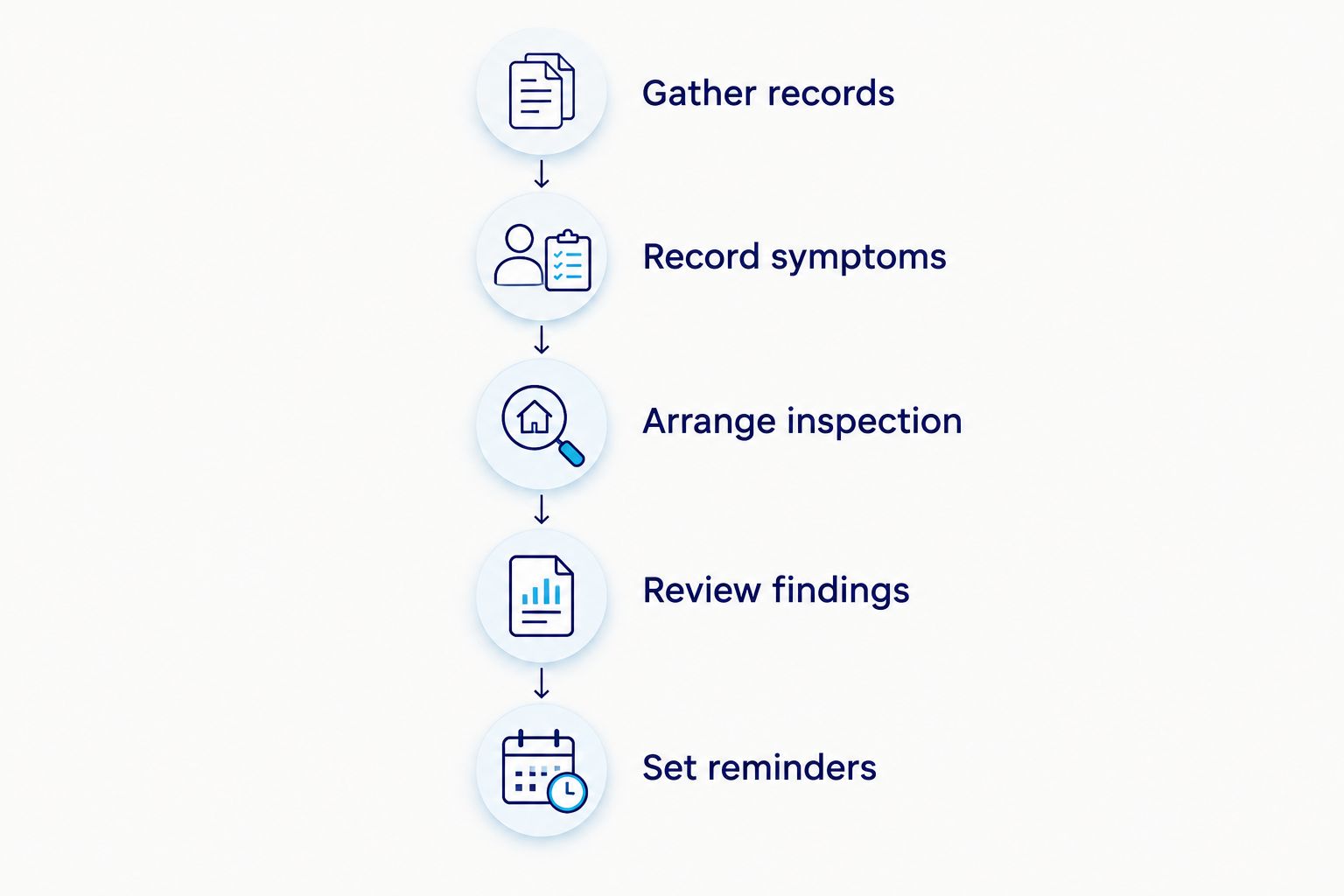
For a home purchased in 2026, keep the inspection findings separate from assumptions about the seller's maintenance habits. The useful result is a clear record of what the system needs today.
Do you need maintenance, repair, or replacement?
Choose the work that addresses the finding, not the number of missed visits. Maintenance, repair, and replacement solve different problems, and none should be recommended solely because the service history is incomplete.
| Approach | Best for | Main benefit | Limitation |
|---|---|---|---|
| Maintenance | Normally operating equipment due for scheduled care | Checks condition and addresses routine service needs | Does not restore a failed or badly deteriorated component |
| Repair | A diagnosed fault in an otherwise serviceable system | Corrects a specific cause of poor operation | Does not renew unrelated aging parts |
| Replacement | Equipment whose documented condition supports replacement | Allows the system and installation needs to be reassessed | Requires a larger project and careful sizing |
A neglected system is not automatically beyond repair. Ask which finding supports replacement and whether a repair would restore dependable operation without leaving a known major problem unresolved.
The reverse is also true. Cleaning should not be presented as a permanent fix for a refrigerant leak, extensive corrosion, or defective equipment. You deserve a distinction between restoring cleanliness and correcting damage.
What should a useful service visit explain?
A useful visit connects observations to recommendations. Ask what the technician found, how it affects operation, and what work is proposed before approving it.
The explanation should distinguish a dirty component from a defective one. If airflow is poor, ask whether the restriction comes from the filter, coil, blower, or duct system. If refrigerant is low, ask how the cause will be investigated rather than treating a refill as the entire solution.
A.R. Williams Air Conditioning is a fit for homeowners who want residential AC maintenance findings and options explained before work starts. The company provides transparent flat-rate pricing quoted before work, with an emphasis on long-term fixes rather than shortcuts.
A.R. Williams Air Conditioning also provides AC repair and replacement when the findings call for them. Those services are different from maintenance: an inspection establishes condition, while corrective work addresses a diagnosed problem.
The limitation is straightforward. No company can promise a failure date from the time since service, and no routine visit can reverse damage that already exists.
Can an AC fail even with regular maintenance?
Yes. Maintenance can identify service needs and developing faults, but components can still fail between visits, and sudden electrical events can damage equipment.
Keep following the maintenance schedule without treating it as permission to ignore new symptoms. A change after a recent visit still deserves a clear description and diagnosis.
Does a working AC prove it does not need service?
No. Producing cool air does not confirm that the coils, drainage, airflow, and electrical components are all in good condition.
Use normal operation as useful information, not a substitute for scheduled care. Your 2026 service record should document findings, not simply state that the unit turned on.
FAQ
Can I skip AC maintenance if my house still feels cool?
A cool house does not establish that the AC needs no maintenance. Drainage, coil cleanliness, and electrical condition require checks that a thermostat reading cannot provide.
How often should a professional check my central AC?
Annual professional service is a baseline, alongside the manufacturer’s maintenance instructions. Ask whether the equipment’s condition or coastal exposure justifies a different schedule.
Does changing the filter count as AC maintenance?
Changing the filter is part of maintenance, but it does not replace a professional inspection. Coils, drains, electrical components, and system operation need separate attention.
Will a tune-up fix an AC that has stopped cooling?
A stopped or poorly cooling AC needs diagnosis before anyone can say whether routine service will fix it. A defective component or refrigerant leak requires corrective work beyond cleaning.
Is it normal for an AC to run longer during hot weather?
Longer operation during hotter weather can be normal. A new inability to cool, visible ice, water leakage, or weaker airflow needs investigation rather than an assumption about the weather.
Should I replace an AC because the previous owner never serviced it?
Missing maintenance records alone do not establish a need for replacement. Have the equipment inspected and base the decision on documented condition and repair findings.
Can maintenance guarantee my AC will not break down?
Maintenance cannot guarantee that an AC will not break down. It helps identify service needs and developing problems, but parts can still fail between appointments.
One last thing
Cold air is not a maintenance report. Before your next service visit, write down what has changed in the house, including rooms that feel damp or vents that seem weaker.
Ask A.R. Williams Air Conditioning to check the system and explain the findings. You can make a considered decision about the next step without guessing how much longer the AC will run.
Related guides
- How to extend the life of your AC system
- How to tell if your AC needs repair or replacement
- AC maintenance for snowbirds and seasonal residents
