

AC installation takes as long as the agreed job scope requires: replacing equipment in existing locations involves less work than replacing equipment and rebuilding ductwork or electrical connections. The installation visit also excludes time spent assessing your home, arranging permits, and scheduling inspections. Ask for an estimated installation window and an expected cooling-restoration time separately, so you can plan around the part that affects your household.
- How long does AC installation take? Equipment access, ductwork, electrical work, and testing determine the timeline.
- Central AC replacement requires more than removing old equipment and connecting new equipment.
- A.R. Williams Air Conditioning suits homeowners who want AC installation options explained before work starts.
- Separate installation time, cooling downtime, and permit closeout when comparing contractor estimates.
If you're planning an AC replacement in 2026, start with the scope rather than a promised finish time. Equipment selection belongs in that discussion too. Our guide to choosing the right AC size for your home explains why the new system should fit your home's cooling needs, not simply match the old equipment.
How long does AC installation take?
The useful answer comes from a contractor who has checked your equipment locations and the connections the new system needs. An estimate based only on the outdoor unit leaves important work unaccounted for. The indoor air handler, which moves cooled air through your ducts, matters just as much.
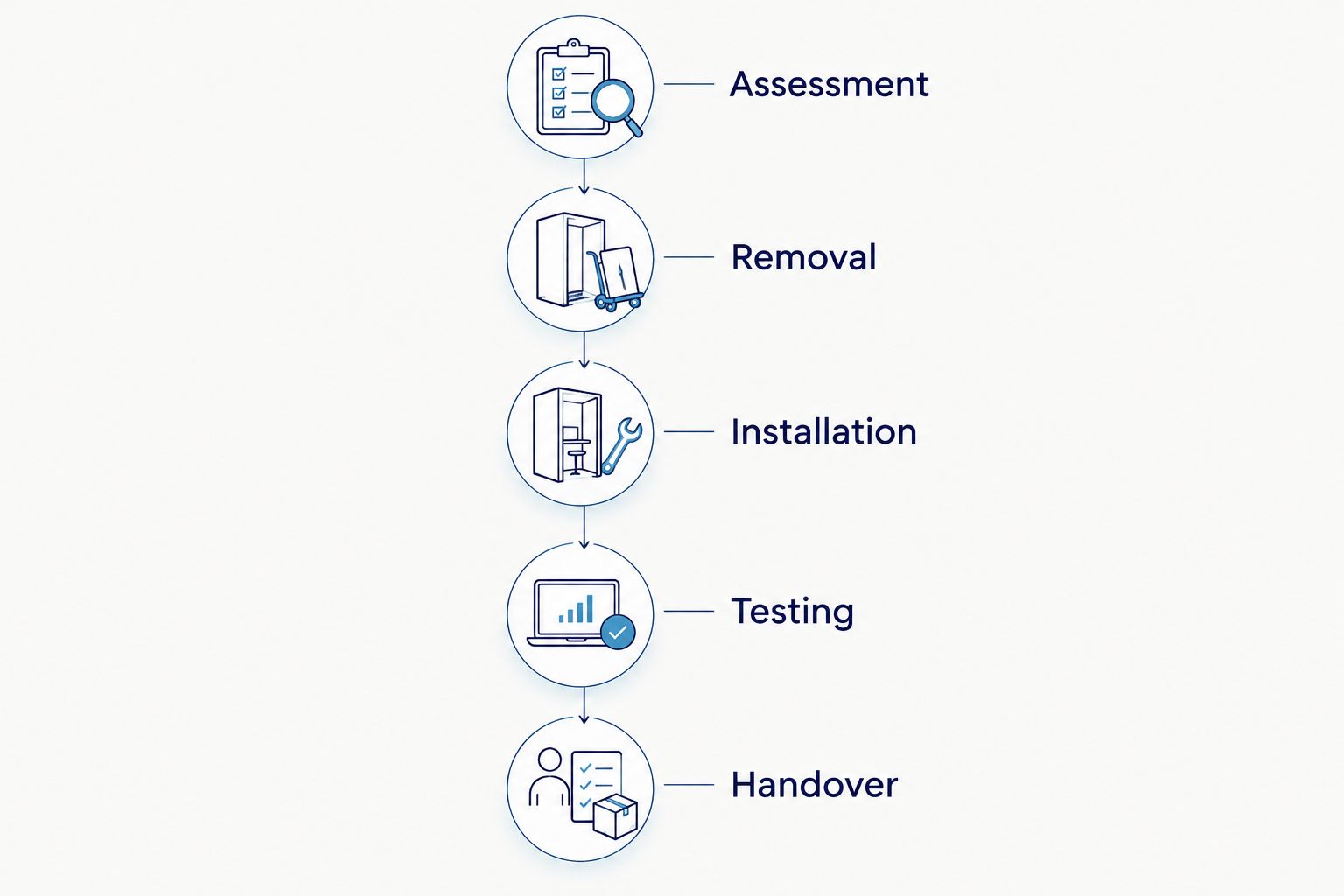
For a central ducted system, installation follows this basic sequence:
- Assessment: Confirm the equipment selection, access, existing connections, and agreed work.
- Removal: Shut down and disconnect the old equipment, including proper refrigerant recovery.
- Installation: Position and secure the new equipment, then complete the required connections.
- Testing: Check refrigerant-system integrity, electrical operation, airflow, drainage, and controls.
- Handover: Explain operation, review the completed work, and identify any remaining inspection steps.
Each stage has a purpose. Connecting the equipment does not establish that the system works correctly, and feeling cool air at a vent does not replace the final checks.
Why this matters for your household
The question behind the timeline is usually, "How long will my house be without cooling?" That is different from how long the crew will be on site. Preparation can happen before the old system is disconnected, while cleanup and paperwork can happen after the new system starts operating.
In South Florida, losing cooling affects more than the temperature on the thermostat. Your AC also removes moisture while it runs. Plan for the interruption itself, especially if someone in your household has difficulty tolerating heat.
For your 2026 project, ask when the existing system will be shut down and what must happen before the replacement can operate. A clear answer gives you a basis for arranging work, pets, or a comfortable place to spend the installation period.
Equipment replacement versus a larger installation project
An equipment replacement and a replacement that includes ductwork are different jobs. Compare the work included before comparing finish-time estimates. A shorter estimate is not automatically a better plan.
| Project scope | Best for | What simplifies the work | What adds complexity |
|---|---|---|---|
| Equipment replacement using suitable existing connections | Homes where the existing layout supports the selected system | Equipment locations and usable connections remain in place | Existing connections still need evaluation and testing |
| Equipment replacement with duct corrections | Homes with confirmed airflow or duct problems | Equipment and airflow problems can be addressed together | Duct access, fabrication, sealing, and airflow checks add work |
| Equipment replacement with electrical or location changes | Homes where the new installation needs different connections or placement | The installation can address the identified site limitations | Additional trades, routing, or access arrangements require coordination |
Choose the scope that solves the documented problem, not the scope with the shortest visit. Reusing suitable components avoids unnecessary work. Reusing unsuitable components leaves the underlying issue unresolved.
If your existing system struggles to cool certain rooms, tell the contractor before equipment selection. The answer belongs in the assessment, rather than becoming a surprise after installation.
Why AC installation time varies
These factors change the amount of work or the sequence of the project. Ask which ones apply to your home rather than accepting a general estimate meant for every installation.
- Equipment access: An indoor unit in a tight attic or closet requires a different removal and installation plan from one with open access. Doorways and the route through your home also matter.
- Duct condition: Damaged ducts, poor connections, or undersized returns need attention if they affect the new system. The return is the pathway that brings household air back to the air handler.
- Electrical suitability: The circuit and connections must suit the equipment being installed. A needed correction changes the scope and can require coordination with an electrician.
- Refrigerant piping: The pipes between the indoor and outdoor equipment must be suitable for the new system. Their condition and compatibility determine whether reuse is appropriate.
- Drainage and equipment support: The condensate drain carries away moisture removed from the air. Drain problems, an unsuitable equipment base, or damaged supports add corrective work.
- Permits and inspections: Administrative steps follow the rules of the authority responsible for your address. Those steps have their own schedule, separate from the crew's work.
Near the coast, salt air can corrode outdoor coils and exposed components. That makes the condition of the existing installation relevant, even when the new unit is going in the same spot.
Older homes also deserve a close look at return-air paths. Replacing equipment does not make an undersized return larger. Ask whether the existing airflow arrangement supports the selected system.
Does permitting count as installation time?
Permitting is part of the project timeline, but it is not the same as hands-on installation time. Keep the two separate when you review the proposed schedule. Also separate the date cooling resumes from the date the permit is fully closed.
For a 2026 installation, confirm the responsible permitting authority for your actual address. A property in Palm Beach, Martin, or St. Lucie County can fall under a municipal or county process. Do not assume a neighbor's installation schedule applies to yours.
Ask who handles the application, what approval is needed before work begins, and who arranges any required inspection. The guide to AC installation permits in Florida covers the questions to bring to that conversation.
An installation appointment is not proof that every approval step is complete. Get the sequence explained before the existing equipment is removed.
What should happen before installation day?
A useful pre-installation assessment checks more than the brand and size printed on the old unit. The contractor needs to understand the house and the work area. You can help by describing comfort problems accurately.
Tell the contractor about rooms that stay warm, persistent humidity, water around the air handler, or unusual operating noise. Describe what happens without trying to diagnose it. Those observations help distinguish an equipment replacement from a broader airflow or drainage problem.
Ask the contractor to confirm these details in the written scope:
- Which indoor and outdoor equipment will be replaced.
- Which existing components will be reused and why.
- Whether duct, drain, electrical, or support corrections are included.
- What access the crew needs inside and outside the home.
- What testing and homeowner walkthrough are included.
For a seasonal home, arrange access before the appointment. Someone needs to provide entry, receive explanations, and deal with questions about the agreed work. An empty house still needs a clear installation plan.
Keep the route to the equipment open and secure pets away from the work area. Ask before moving items near wiring or piping. Home preparation should make access easier, not involve handling HVAC components yourself.
How do you keep schedule changes from becoming surprises?
Ask how the contractor handles a condition discovered after removal. Some parts of an existing installation are concealed until equipment or panels come out. The important issue is how the finding gets explained and approved.
A sound process separates the original scope from additional work. The contractor should identify the condition, explain the proposed correction, and tell you what it changes before proceeding. Ask for photographs when they help you understand a concealed problem.
For your 2026 installation, include schedule questions in that conversation. Will the finding change when cooling returns? Does it require another trade or a separate visit? Which part of the project can continue?
A.R. Williams Air Conditioning explains findings and lays out options, with transparent flat-rate pricing quoted before work starts. That gives homeowners a clear point at which to understand and approve the proposed work.
The practical limit remains: an explanation is not a guaranteed completion time. Your property's condition and the agreed corrections still determine the installation sequence.
When is the new AC actually ready to use?
The new AC is ready for normal operation after the installer completes the required startup checks and confirms that it operates correctly. Physical installation comes first. Verification follows.
The refrigerant circuit needs leak checks and evacuation, a process that removes air and moisture before the system is put into service. The installer then follows the equipment manufacturer's requirements for refrigerant setup and startup.
Airflow, thermostat operation, and condensate drainage also need checking. These are practical safeguards against problems such as poor cooling or water where it should not be. Ask what the technician checked and what the results mean.
Your 2026 handover should include an explanation of the thermostat settings, filter location, and routine maintenance needs. Keep the equipment information and installation documents together. Confirm who handles any remaining registration or inspection tasks without assuming they happen automatically.
Do not ask the crew to skip testing to meet a preferred departure time. Build the appointment around finishing the work correctly.
How long will the house take to cool afterward?
Cooling recovery depends on the indoor temperature, moisture level, outdoor conditions, and heat stored in the building. Restoring AC operation does not instantly return every room to your preferred temperature. The equipment can be operating while the house is still cooling down.
Keep exterior doors and windows closed once the system is running. Use the thermostat as the installer explains rather than repeatedly changing settings. A very low setting does not create extra cooling capacity.
Ask what behavior to expect during the initial cooldown and what symptoms need a follow-up conversation. Persistent water leakage, unusual sounds, or rooms that remain uncomfortable deserve attention rather than being dismissed as part of installation.
What should you ask before agreeing to a date?
Ask for an estimated arrival window, an estimated work window, and the expected cooling interruption. Then ask what assumptions support those estimates. That makes the answer useful without turning it into a promise the site conditions cannot support.
Keep your questions specific: "Does this include startup testing?" "Are duct corrections included?" "What remains after the crew leaves?" The answers reveal whether you are comparing equivalent jobs.
A.R. Williams Air Conditioning provides residential AC installation and replacement for homeowners across South Florida and the Treasure Coast. A.R. Williams Air Conditioning is best for homeowners who want AC installation findings and options explained before they approve the work. Talk with a technician about your home's layout and request an estimate based on the actual scope.
FAQ
Can central AC installation be finished in one visit?
A central AC installation can be planned as one visit when the agreed scope and site conditions support it. Ask your contractor whether the plan includes removal, installation, startup testing, and the homeowner walkthrough.
Will I have air conditioning while the new system is installed?
The system being replaced cannot cool your home while it is disconnected. Ask when that shutdown begins and what work must be completed before cooling can resume.
Does replacing ductwork make AC installation take longer?
Replacing ductwork adds work beyond equipment replacement. The extent of the duct changes and access to the ducts determine how that work fits into the project schedule.
Should the installer check my electrical connections before installation?
The installer should evaluate whether the existing electrical connections suit the selected equipment. Any required correction belongs in the scope and schedule discussion before installation.
Can I stay home during AC installation?
Staying home depends on your comfort needs and whether you can remain clear of the work area. Plan around the loss of cooling and keep children and pets away from equipment handling.
Does cool air from the vents mean installation is complete?
Cool air from the vents does not confirm that every installation check is complete. The installer still needs to verify system operation, drainage, controls, and the other checks required for the equipment.
What if the installer finds a problem after removing my old AC?
Ask the installer to explain the finding and the proposed correction before additional work proceeds. Confirm how the change affects both the agreed scope and the expected return of cooling.
One last thing
Ask this before installation begins: "What exactly will be finished when you say the job is complete?" The answer should distinguish working cooling, completed testing, cleanup, and any remaining inspection steps.
That question is more useful than asking for the fastest possible installation. It helps you plan your day while keeping the focus on a system that has been installed and checked properly.
Related guides
- How to prepare your home for AC installation day
- How to read your AC installation contract before signing
- Ductwork replacement for older South Florida homes
