

Best overall for humidity-focused comfort: Bryant variable-speed central AC. Best for homeowners who want staged cooling without continuously variable output: Bryant two-stage central AC. Best for straightforward operation in a home with well-balanced ducts: Bryant single-stage central AC. This 2026 guide explains which configuration fits your home and what to check before choosing.
- The best Bryant AC systems for South Florida start with correct sizing, matched equipment, and humidity control.
- Bryant variable-speed central AC is the strongest starting point when steady temperatures and moisture removal matter most.
- Bryant two-stage central AC offers lower-output cooling without continuously variable compressor operation.
- A.R. Williams Air Conditioning helps homeowners evaluate replacement needs without skipping airflow problems.
Why this matters
A house can reach the thermostat setting and still feel clammy. Central AC must remove moisture as well as heat, especially during humid weather when your home needs less cooling than it does on a hot afternoon.
Bryant variable-speed central AC is the best starting point for South Florida homeowners who prioritize humidity control. That recommendation depends on correct sizing and setup, not the name on the outdoor cabinet. Start with how to choose the right AC size for your home before comparing equipment features.
You don't need to become an HVAC expert to make a sound decision. You need a contractor who explains the cooling requirement, checks the ducts, and shows how the proposed system addresses your comfort problems.
What makes the best Bryant AC system?
For a 2026 replacement, judge the complete installation against these criteria:
- Correct capacity: A room-by-room load calculation should account for windows, insulation, sun exposure, and air leakage. Existing equipment size isn't proof of what your house needs.
- Moisture control: Compressor operation, indoor airflow, thermostat settings, and drainage must work together. A high efficiency rating alone doesn't establish humidity performance.
- Matched equipment: Confirm the exact outdoor unit, indoor coil or air handler, and controls. Performance ratings apply to equipment combinations, not an outdoor unit by itself.
- Duct compatibility: Check return airflow and supply distribution before selecting equipment. An advanced compressor cannot repair restrictive or leaking ducts.
- Installation and maintenance: Consider outdoor clearances, coastal exposure, drain access, and service access. Ask how the installation will be checked before handover.
Bryant central AC options at a glance
These are operating configurations, not model names. Use the table to decide what type of Bryant system to discuss, then compare the exact equipment combinations in your proposals.
| Configuration | Best for | Standout feature | Key limitation |
|---|---|---|---|
| Bryant variable-speed central AC | Humidity-focused comfort and steady temperatures | Adjusts compressor output across a range | Requires compatible equipment and careful control setup |
| Bryant two-stage central AC | Homeowners who want distinct lower and higher cooling outputs | Runs at a lower stage when full output isn't needed | Cannot adjust output as finely as variable-speed equipment |
| Bryant single-stage central AC | Straightforward cooling in a correctly sized, balanced system | Operates at one cooling output when running | Less flexibility during lighter cooling demand |
Don't choose from a series name alone. Ask the contractor to identify the compressor operation on the exact model and explain the indoor equipment required to support it.
1. Bryant variable-speed central AC: best for humidity-focused comfort
Bryant variable-speed central AC adjusts compressor output instead of operating only at full cooling capacity. In a properly designed system, lower-output operation supports longer cooling cycles and steadier indoor conditions.
This is the first configuration to evaluate if your home feels cool but damp, or temperatures swing noticeably between cycles. It also deserves attention when you value consistent comfort more than basic on-and-off operation.
Bryant variable-speed central AC pros:
- Adjusts cooling output more closely to changing demand.
- Supports longer operating cycles at reduced output.
- Offers finer temperature control than single-stage operation.
- Provides a useful foundation for humidity-focused system design.
Bryant variable-speed central AC cons:
- Requires compatible indoor equipment and controls to deliver its intended operation.
- Needs careful airflow and control setup; equipment features don't replace installation checks.
- Cannot resolve moisture entering through building leaks or damaged ducts by itself.
Best for: Homeowners whose main concern is steady comfort during humid weather, including periods when outdoor temperatures aren't especially high.
Before choosing variable-speed equipment, ask how the thermostat manages moisture and how the technician will set indoor airflow. Also ask what happens when the house reaches its temperature setting but humidity remains elevated. That answer should describe the proposed system, not a general promise.
Verdict: Choose Bryant variable-speed central AC when humidity control leads your priorities and the installation supports its capabilities.
2. Bryant two-stage central AC: best for defined lower-output cooling
Bryant two-stage central AC operates at 2 cooling stages rather than continuously varying its compressor output. The lower stage serves lighter cooling demand, while the higher stage handles greater demand.
This configuration fits homeowners who want more operating flexibility than a single-stage system but don't need the finer adjustment of variable-speed equipment. The indoor blower and thermostat still need to support the intended staged operation.
Bryant two-stage central AC pros:
- Provides a lower-output option when full cooling isn't needed.
- Supports longer cycles at lower output under suitable conditions.
- Offers a clear step beyond single-stage operation.
Bryant two-stage central AC cons:
- Has fewer output adjustments than variable-speed equipment.
- Still depends on proper sizing to avoid short cycling.
- Doesn't guarantee adequate moisture removal in a house with substantial humidity problems.
Best for: Homeowners seeking staged comfort when a load calculation and duct inspection show that the proposed combination fits the house.
Ask how the system moves between stages and whether the existing thermostat supports that operation. A replacement proposal should identify any required control changes before installation begins.
Verdict: Choose Bryant two-stage central AC when distinct lower and higher cooling outputs meet your comfort needs.
3. Bryant single-stage central AC: best for straightforward operation
Bryant single-stage central AC operates at one compressor output whenever it cools. The thermostat starts and stops cooling to maintain the temperature setting.
A correctly sized single-stage system can cool a home effectively. It belongs on the shortlist when your house already has even temperatures, manageable humidity, and ducts that deliver the required airflow.
Bryant single-stage central AC pros:
- Uses straightforward on-and-off compressor operation.
- Doesn't require staging decisions to control compressor output.
- Can meet cooling needs when capacity and airflow match the house.
Bryant single-stage central AC cons:
- Cannot reduce compressor output during lighter cooling demand.
- Offers less control over temperature swings between cooling cycles.
- Deserves extra scrutiny if the existing system cools quickly but leaves rooms clammy.
Best for: Homeowners who want straightforward central cooling and don't have unresolved moisture or temperature-distribution problems.
Don't treat a larger single-stage unit as an upgrade simply because it has more capacity. Cooling capacity measures heat removal: 1 ton equals 12,000 BTU per hour. More capacity isn't automatically a better match for your home.
Verdict: Choose Bryant single-stage central AC only after confirming that its operating pattern suits the home's cooling and moisture needs.
The installation details that matter here
The same Bryant configuration can perform differently in two houses. Coastal exposure, return-air restrictions, and moisture entering the building all affect the result.
Humidity control
The U.S. Environmental Protection Agency recommends indoor relative humidity below 60%, ideally between 30% and 50%. A thermostat temperature reading alone doesn't tell you whether your house meets that guidance.
If your home stays damp, ask the technician to check runtime, airflow, duct leakage, and moisture sources. The guide to reducing indoor humidity without overworking your AC explains why lowering the temperature isn't always the right response.
Return airflow
Older houses sometimes have return openings or ductwork that restrict airflow. A return is the path that carries indoor air back to the cooling equipment. Restrictions can affect performance even when the new outdoor unit is correctly selected.
Ask for an airflow assessment before approving the replacement. Closing bedroom doors should also be part of the discussion if those rooms become uncomfortable overnight.
Coastal exposure
Salt air can corrode outdoor coils and other metal components near the coast. Ask about the proposed equipment's maintenance requirements and installation location rather than assuming a particular cabinet solves coastal exposure.
Keep the manufacturer's required clearances in the plan. A fence or enclosure that hides the equipment must not restrict the air it needs.
Seasonal homes
An empty house still needs moisture management. For a seasonal residence, discuss humidity settings, drain protection, and how someone will recognize a cooling problem while you're away.
Don't assume a thermostat app confirms that every part of the system is working correctly. Temperature monitoring and equipment inspection answer different questions.
What to request in a 2026 Bryant proposal
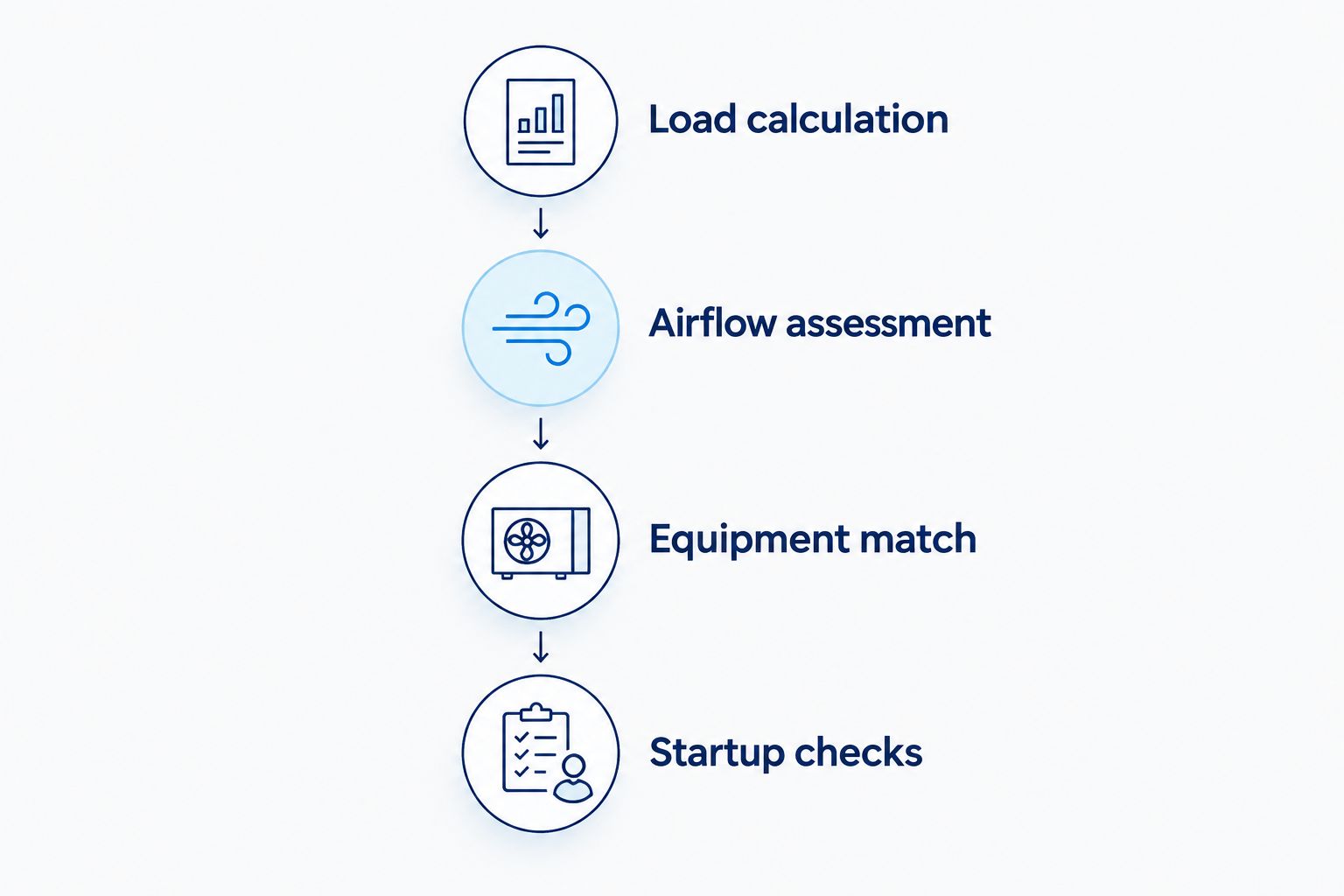
A useful proposal connects the house assessment to the equipment recommendation. Ask for these steps in order:
- Load calculation: Establish the home's cooling requirement rather than copying the old equipment size.
- Airflow assessment: Identify return restrictions, supply problems, and duct repairs before installation.
- Equipment match: Record the exact outdoor model, indoor equipment, and required controls.
- Startup checks: Confirm how airflow, refrigerant setup, drainage, and thermostat operation will be checked.
The proposal should also explain permit responsibilities and inspection requirements for your jurisdiction. Don't assume a neighbor's installation process applies to your property.
For efficiency comparisons, request the SEER2 rating for the matched system. SEER2 is a standardized measure of seasonal cooling efficiency, not a prediction of your household electricity use. Don't accept a promised bill reduction without a clear basis for that estimate.
A.R. Williams Air Conditioning provides residential AC installation, replacement, and maintenance. Technicians explain their findings and lay out the options before work starts, so you can separate a necessary correction from an optional equipment upgrade.
How the recommendations are ranked
This 2026 ranking puts humidity-focused comfort first, followed by output flexibility and suitability for the house. It compares operating configurations, not laboratory results, repair records, or model-specific performance claims.
Variable-speed ranks first because adjustable output gives a properly configured system more flexibility during changing cooling demand. Two-stage takes the staged-operation slot. Single-stage remains a fit for straightforward cooling where sizing and airflow are right.
Which Bryant AC system should you choose?
Start with Bryant variable-speed central AC if you're undecided and moisture control is your main concern. Compare it with a properly matched two-stage proposal if your comfort needs don't require finer output adjustment.
Choose single-stage only when the assessment supports it. If upstairs bedrooms remain warm or the house feels damp, require an explanation of those problems before approving any configuration.
For a 2026 replacement decision, A.R. Williams Air Conditioning can help you assess whether the existing system needs repair or replacement. Talk with a technician about the symptoms you want solved, then request an estimate based on the home's actual needs.
FAQ
What’s the best Bryant AC system for a humid South Florida home?
Bryant variable-speed central AC is the strongest starting point when humidity-focused comfort is the priority. Correct sizing, compatible indoor equipment, and airflow setup determine whether the installation supports that goal.
Is Bryant two-stage AC better than single-stage AC?
Bryant two-stage AC offers more output flexibility than single-stage equipment. That makes it useful during lighter cooling demand, but both configurations need correct sizing and adequate airflow.
Will a bigger Bryant AC cool my house better?
A bigger Bryant AC isn’t automatically a better choice. Excess capacity can shorten cooling cycles and leave moisture problems unresolved, so use a load calculation rather than increasing size by assumption.
Can I keep my existing indoor air handler with a new Bryant outdoor unit?
Keep an existing air handler only if the proposed combination is compatible and appropriate for the installation. Ask the contractor to document the equipment match, control requirements, and performance rating.
Does a higher SEER2 rating mean better humidity control?
A higher SEER2 rating doesn’t establish better humidity control by itself. Compressor operation, airflow, runtime, and control settings also affect moisture removal.
Does a coastal house need different AC maintenance?
A coastal house needs maintenance that accounts for salt exposure and corrosion. Follow the equipment manufacturer’s instructions and have the outdoor coil, cabinet, and connections inspected for deterioration.
One last thing
Before comparing 2026 proposals, write down when your house feels uncomfortable: after a shower, with bedroom doors closed, or during mild but humid weather. Those details help distinguish a capacity problem from an airflow or moisture problem. The right replacement should answer that problem, not simply replace the old cabinet.
Related guides
- Best variable-speed AC systems for South Florida humidity control
- How to choose the right SEER2 rating for your Florida home
- How to read your AC installation contract before signing
