

There is no fixed number of hours a Florida home can go without AC before mold becomes a concern. Moisture, not the outage clock, determines the risk: EPA guidance recommends drying water-damaged materials within 24 to 48 hours to help prevent mold growth. That window applies to wet materials, not every home with a broken AC, so check indoor humidity and look for leaks while you arrange repairs.
- How long can a home go without AC before mold risk? There is no universal safe deadline.
- EPA guidance recommends drying water-damaged materials within 24 to 48 hours to help prevent mold growth.
- Keep indoor relative humidity below 60 percent, ideally between 30 and 50 percent, following EPA guidance.
- A.R. Williams Air Conditioning provides AC repair with findings explained and flat-rate pricing quoted before work starts.
How long before no AC in Florida heat leads to mold risk?
A dry home without AC and a home with wet drywall do not have the same mold risk. Losing cooling removes a source of moisture control, but it does not prove that mold has started growing. A leaking air handler, roof leak, or damp carpet changes the situation because water is already present.
For your 2026 household plan, use the EPA's moisture-control guidance as a reference, not a countdown. Its homeowner guidance recommends indoor relative humidity below 60 percent, ideally between 30 and 50 percent. It also recommends drying water-damaged areas and materials within 24 to 48 hours.
| Condition in the home | What it means | Your next move |
|---|---|---|
| Cooling has stopped, surfaces remain dry | The outage alone does not establish mold growth | Measure humidity and arrange diagnosis |
| Indoor humidity stays above 60 percent | Moisture control needs attention | Reduce moisture entry and use dehumidification if power is available |
| Carpet, drywall, or insulation is wet | Materials need drying, regardless of outage length | Stop the water source and arrange appropriate drying |
| Musty odor or visible growth is present | The problem needs investigation, not a timer | Identify the moisture source and seek qualified assessment |
If the equipment still runs but the house feels warm, start with the distinction explained in why an AC runs without cooling. A running fan does not confirm that the system is cooling or removing moisture.
Why this matters
A thermostat tells you the temperature. It does not tell you whether carpet backing is wet or moisture is collecting behind a cabinet. You can have an uncomfortable but dry room, or a cooler room with a hidden leak.
Along the coast, opening windows during humid weather introduces outdoor moisture. In a seasonal home sitting empty, a stopped AC or leaking drain can go unnoticed because nobody is there to see the change. Those details matter more than a promise that every house stays safe for a certain number of hours.
The practical goal is to keep people comfortable, stop active water damage, and restore moisture control. Do not wait for visible mold before addressing wet materials.
What should you check when the AC stops?
You do not need to open equipment panels or diagnose a refrigerant problem. Gather information that helps a technician separate a cooling failure from a water problem.
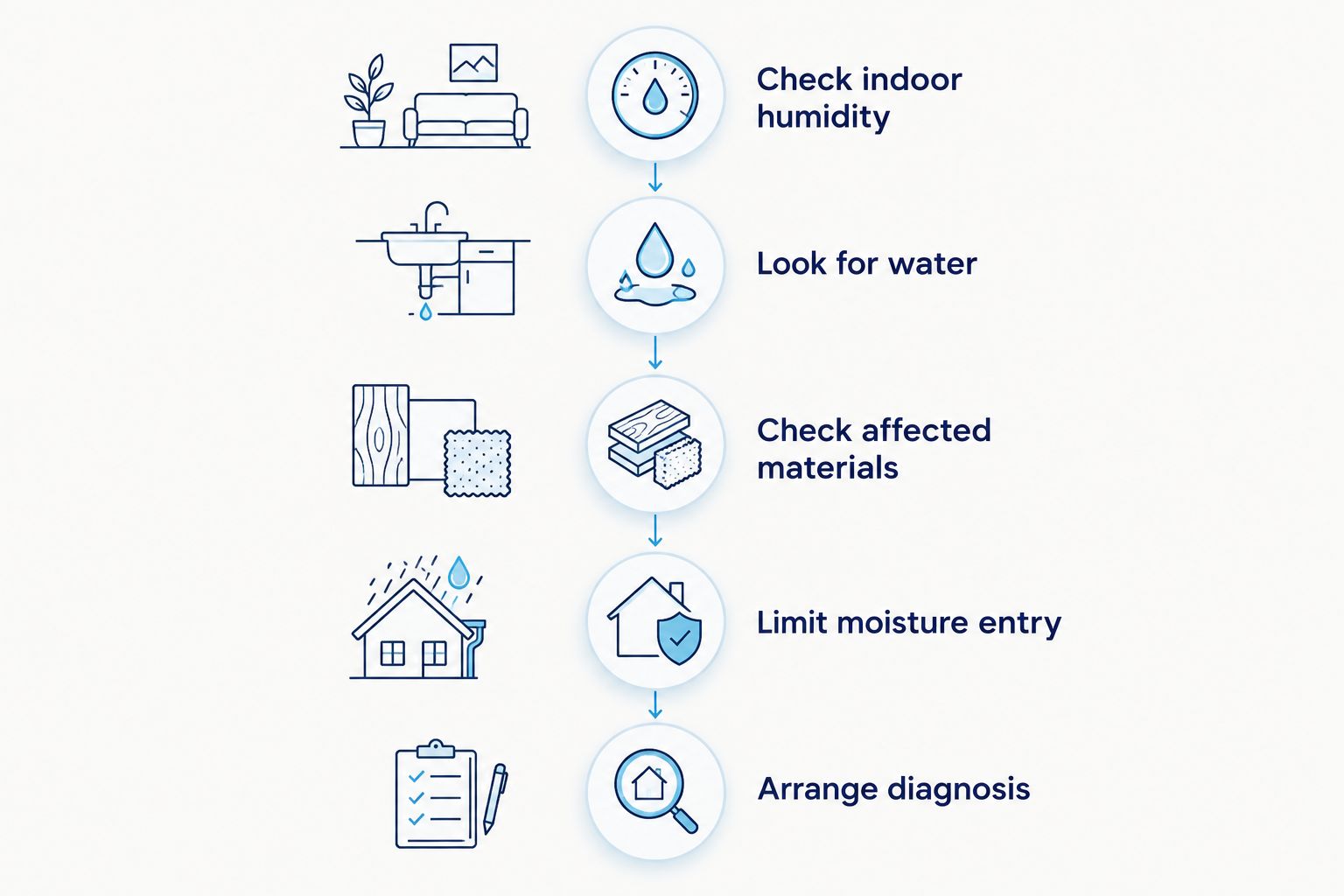
- Check indoor humidity. Use a hygrometer, a small meter that measures relative humidity. Take readings in the main living area and any room that feels damp, away from direct sunlight or a bathroom shower.
- Look for water. From a safe, accessible position, inspect around the indoor air handler and nearby ceilings or floors. Do not climb into an unsafe attic or touch wet electrical equipment.
- Check affected materials. Note damp carpet, swollen baseboards, stained ceilings, or condensation. Photograph what you see without disturbing suspected growth.
- Limit moisture entry. Keep exterior doors and windows closed when outdoor air is humid. Avoid hanging wet laundry indoors, and use bathroom ventilation during showers.
- Arrange diagnosis and drying. Tell the technician whether the AC stopped completely, runs without cooling, or leaks. Wet building materials can require a drying professional as well as an HVAC repair.
Write down the time, temperature, humidity reading, and any water you find. That record is more useful than guessing when mold might appear.
Why mold risk varies between homes
Your home's starting condition affects what happens after cooling stops. These factors explain why a single deadline does not work:
- Existing water damage. A roof leak or overflowing AC drain wets materials directly. Repairing the AC does not automatically dry those materials.
- Starting humidity. A home that was already damp has a different starting point from one with controlled humidity and dry surfaces.
- Outdoor air entry. Open windows, frequently opened doors, and building leaks let humid outdoor air enter.
- Indoor moisture sources. Showers, cooking, and wet laundry add moisture while the AC is unable to remove it.
- Affected materials. Carpet backing, drywall, and insulation can hold moisture that is not obvious from the room.
- Monitoring and access. Someone checking a vacant home can find a leak that a thermostat notification alone would miss.
For 2026 outage planning, focus on these conditions rather than assigning every home the same safe waiting period. A humidity reading and a check for water give you a clearer starting point.
Will a dehumidifier, window AC, or fan help?
A dehumidifier removes moisture; a fan only moves air. A working window AC can cool and remove moisture in the space it serves, but it does not establish that the rest of the house is dry.
These are temporary tools, not substitutes for fixing the failed central system or an active leak. Use electrical equipment only where power and surrounding conditions are safe, and follow the manufacturer's instructions.
| Temporary option | Best for | Benefit | Limitation |
|---|---|---|---|
| Portable dehumidifier | Moisture control in an enclosed space with power | Removes water from indoor air | Adds heat and needs proper drainage or tank emptying |
| Window AC | Cooling an occupied room during central AC repairs | Provides room cooling and moisture removal | Does not control every room; installation must be secure |
| Fan | Personal comfort in conditions suitable for fan use | Moves air across your skin | Does not remove indoor moisture or make dangerous heat safe |
If you use a dehumidifier, check that it is collecting water and that the humidity reading is responding. Close the space as directed by the manufacturer. Do not assume one unit is treating closed bedrooms or wet cavities inside walls.
Avoid directing fans across visible mold. EPA guidance cautions against running an HVAC system when you know or suspect it is contaminated with mold because it can spread contamination. Ask for assessment before using suspected contaminated equipment to circulate air.
Should you open windows when the AC is out?
Opening windows is not a reliable mold-prevention method in humid Florida weather. Outdoor air can add moisture even when a breeze makes the room feel more comfortable.
Compare indoor and outdoor moisture conditions rather than temperature alone. Cooler air is not automatically drier air. If you cannot judge those conditions, opening the entire house is not a substitute for measured humidity control.
Your 2026 power-outage plan should also address heat exposure. If the home becomes unsafe for anyone inside, move to a cooled location rather than staying to monitor humidity. Protecting the building does not take priority over people.
Never operate a fuel-burning generator indoors or in a garage. Follow CDC generator safety guidance, including keeping it outdoors at least 20 feet from doors, windows, and vents.
What if the AC failure also causes a water leak?
Treat the water source and the cooling failure as separate problems until both are resolved. A clogged condensate drain, for example, can leave water around the indoor unit even though the original complaint was that the house felt hot.
If water is leaking from the equipment, turn cooling off at the thermostat and arrange service. Stay away from wet wiring, outlets, and electrical panels. Do not repeatedly restart a system that is leaking or tripping a breaker.
Tell the technician where the water appeared and whether nearby materials are wet. Ask what caused the leak and how the repair will be checked. If drywall, insulation, or carpet backing is affected, ask a qualified drying professional to assess the materials rather than assuming a dry-looking surface means the job is finished.
The EPA's 24-to-48-hour drying guidance concerns wet materials. It is not permission to leave a leak untreated until that period ends.
Does a musty smell mean mold has already started?
A musty smell warrants investigation, but smell alone does not identify the source or confirm the extent of a problem. Damp materials, an AC drain issue, or contamination elsewhere in the home require different responses.
Note whether the odor occurs throughout the house, near the air handler, or only when the blower starts. Share that pattern with the technician. Do not spray fragrance into returns or cover the smell and treat that as a repair.
If you see suspected growth, avoid disturbing it. An HVAC diagnosis addresses equipment operation; assessment and treatment of contaminated building materials can require a separate qualified professional. Restoring cooling does not remove existing growth.
What should you expect from an AC repair visit?
Ask the technician to explain what failed, whether the system is removing moisture, and whether any water escaped into the home. You should understand the finding before approving the repair.
A.R. Williams Air Conditioning is best for South Florida homeowners who want AC repair options explained before work starts. Technicians explain their findings and provide transparent flat-rate pricing before the work begins.
That service addresses the HVAC problem. It does not replace a separate assessment of wet walls or suspected mold. Ask which findings concern the equipment and which need another professional.
If your 2026 repair discussion turns into a replacement recommendation, ask what evidence supports it. A hot, humid house alone does not establish that the central system needs replacement. A.R. Williams Air Conditioning provides AC repair, installation, and maintenance, so the discussion should stay focused on the diagnosed condition and your options.
FAQ
Can mold grow after just one day without AC?
An AC outage alone does not establish that mold will grow in one day. EPA guidance recommends drying water-damaged materials within 24 to 48 hours, so check for wet materials rather than relying on elapsed time.
What humidity level should I watch for when my AC stops?
Keep indoor relative humidity below 60 percent, ideally between 30 and 50 percent, following EPA guidance. Sustained high readings call for moisture control, but a humidity meter does not detect hidden mold.
Will a fan prevent mold while the AC is broken?
A fan does not remove moisture from indoor air. It can help with comfort in suitable conditions, but it does not replace dehumidification or drying wet materials.
Does turning the AC back on get rid of mold?
Turning the AC back on does not remove existing mold. Restored cooling can help control humidity, but contaminated materials and the original moisture source still need attention.
Should I leave windows open to dry the house?
Open windows only when outdoor conditions support drying. Humid outdoor air can add moisture, so a breeze alone is not proof that ventilation is helping.
Can a cool house still have a moisture problem?
A cool house can still have a moisture problem. Check humidity and investigate leaks, condensation, damp materials, or persistent musty odors even when the thermostat reaches its setting.
What should someone check at my seasonal home after an AC failure?
Ask them to check indoor humidity, accessible areas around the air handler, and signs of water damage. A thermostat reading alone cannot show whether carpet or drywall is wet.
One last thing
Relative humidity changes with temperature. A warming room can show a lower relative humidity reading even when no moisture has been removed, so one improving number does not prove the house is drying.
For your 2026 home-care notes, record temperature alongside humidity and check the materials themselves. Cooling restored, moisture controlled, and wet materials addressed are separate checkpoints. If your AC has stopped, talk with a technician at A.R. Williams Air Conditioning about the symptoms and any water you have found.
Related guides
- How to reduce indoor humidity without overworking your AC
- Can you use a window AC unit while your AC is repaired?
- How to stop your AC unit from leaking water
- AC maintenance for snowbirds and seasonal residents
