

Yes, salt air corrosion can make an AC repair ineligible for warranty coverage if the applicable warranty excludes corrosion or environmental damage. That is different from automatically voiding coverage for every part of the system. Before accepting a denial, ask for the failed component, the diagnosed cause, and the specific warranty language behind the decision.
- Can salt air corrosion void an AC warranty? Yes, if applicable exclusions cover the diagnosed damage.
- A denied corrosion claim does not automatically mean every component has lost warranty coverage.
- Save the warranty, maintenance records, and photographs before authorizing work that removes evidence.
- A.R. Williams Air Conditioning explains AC repair findings and options before work starts.
Why this matters
A corroded outdoor cabinet and a leaking refrigerant coil are different findings. Neither appearance alone tells you whether a particular repair qualifies for coverage. You need a diagnosis tied to the actual warranty, not a blanket statement that living near the ocean cancels it.
Salt carried by coastal air can promote metal corrosion, especially where moisture remains on exposed surfaces. For homeowners along the Atlantic coast and Treasure Coast, AC maintenance for coastal homes with salt air exposure deserves attention alongside the paperwork. Maintenance helps you care for the equipment, but it does not rewrite an exclusion.
The useful question is whether the diagnosed failure is covered, not whether the unit has any rust. That distinction keeps the conversation focused on evidence instead of pressure to replace the system.
Can salt air corrosion void an AC warranty?
Yes, when the warranty terms make corrosion-related damage ineligible. However, a rejected claim for a corroded component and cancellation of the entire warranty are separate conclusions. Ask the warranty administrator to explain which conclusion applies and why.
For a claim submitted in 2026, start with the documents applicable to your installed equipment. A current sales brochure is not a substitute for the warranty issued for your model and installation.
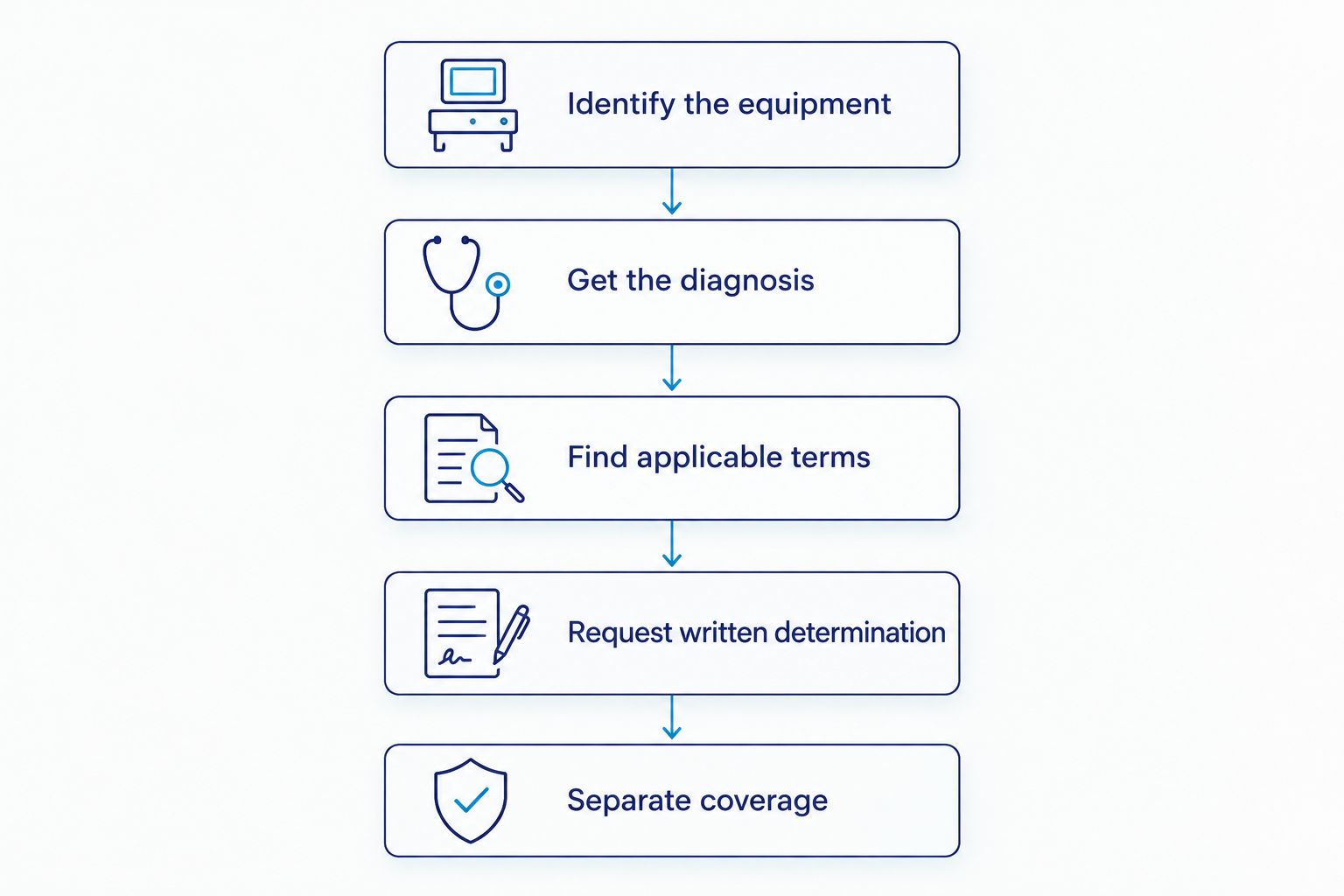
Follow the claim from diagnosis to decision
- Identify the equipment. Collect the outdoor unit's model and serial number, installation invoice, and registration confirmation if available. Check the indoor equipment separately if it is part of the repair.
- Get the diagnosis. Ask what failed, where the damage is, and what evidence connects corrosion to the failure. A photograph of cabinet rust alone does not establish why a compressor stopped operating.
- Find the applicable terms. Read the coverage section, exclusions, maintenance requirements, and claim procedure. Look for wording about corrosion, salt exposure, environmental conditions, or damage from cleaning chemicals.
- Request a written determination. Ask which clause applies to which component. Clarify whether the decision concerns this repair or a broader loss of coverage.
- Separate coverage from repair authorization. Get a written scope of work that distinguishes covered items from work you would authorize separately. You can understand your options before choosing a repair.
Keep these documents together. A service invoice that names the failed part is more useful than a note that simply says the system is corroded.
Separate the different coverage questions
Before comparing coverage, identify who issued each document. A manufacturer warranty, an installation agreement, and a separately purchased home service contract are not interchangeable. Each has its own scope and claim process.
| Document to check | Best for answering | Useful feature | Limitation to check |
|---|---|---|---|
| Manufacturer warranty | Whether the failed equipment component qualifies | Defines the manufacturer's obligations | Exclusions and covered expenses depend on its terms |
| Installation agreement | Whether the issue concerns the installer's work | Documents the agreed installation scope | Does not establish manufacturer coverage |
| Separate home service contract, if purchased | Whether that contract accepts the repair | Provides another agreement to review | Has its own exclusions and authorization process |
For your 2026 claim file, label each document by issuer and equipment covered. That prevents an answer from one company from being mistaken for a decision under a different agreement.
Do not authorize work on the assumption that another agreement will reimburse it. Check any required approval process first. If cooling needs attention while coverage is reviewed, ask the technician to explain how the proposed work affects the claim documentation.
Why corrosion coverage varies
The equipment's location matters to exposure, but the warranty language determines the coverage question. Use these factors to organize your review rather than assuming every coastal installation receives the same answer.
- Applicable exclusions. Determine whether the document excludes corrosion generally, identifies environmental causes, or treats particular components differently. Read the exact wording.
- Cause of failure. Visible surface corrosion is not the same diagnosis as corrosion that creates a refrigerant leak or damages an electrical connection.
- Maintenance requirements. Check what care the manufacturer requires and whether the records show that work. A maintenance requirement and a corrosion exclusion are separate provisions.
- Installation and modifications. Review requirements for placement, installation, and any protective treatment. An added coating needs manufacturer approval rather than an assumption that protection is always acceptable.
- Coverage status. Confirm installation information, registration requirements, and any ownership-transfer conditions in the applicable documents. Being within a stated coverage period does not resolve exclusions.
No single factor replaces the others. Registration cannot establish that corrosion is covered, and visible corrosion cannot establish that every unrelated failure is excluded.
What evidence helps explain a corrosion claim?
Ask for photographs that show both the overall equipment and the specific damaged area. A close-up without context can be hard to interpret, while a distant photo can hide the actual failure point. You should be able to connect the service report to what the photographs show.
Useful documentation includes:
- The model and serial number of the affected equipment.
- The failed component and its location.
- The technician's explanation of the failure cause.
- Photographs taken before cleaning or removing damaged material.
- Maintenance invoices and any earlier corrosion findings.
- The claim reference and written coverage decision.
If a technician finds a leak, ask where it is and how it was confirmed. Refrigerant circulates in a closed system; it is not a fuel that gets used up. A low refrigerant finding needs an explanation beyond simply adding more.
For documentation created in 2026, keep the service date with each report and photo set. Ask whether removed parts need to be retained for the claim before they are discarded. Follow the administrator's instructions rather than storing or handling damaged components yourself.
Does regular maintenance guarantee corrosion coverage?
No, regular maintenance does not guarantee corrosion coverage. It supports equipment care and creates a record, but it does not override an applicable exclusion. Ask separately whether the maintenance requirements were met and whether the diagnosed failure is covered.
For a seasonal home that sits empty, arrange access for the care the equipment requires. A problem can remain unnoticed while nobody is there to see deteriorating fins or changes in cooling. Keep inspection records somewhere you can access while away.
Do not invent a rinse schedule from general coastal advice. Follow the equipment manufacturer's instructions for cleaning methods, frequency, and electrical safety. Ask a technician to show you which homeowner tasks are appropriate and which require professional service.
Does a protective coating guarantee warranty coverage?
No, a protective coating does not guarantee warranty coverage. A corrosion-resistant finish and a warranty promise are different things. You need written confirmation of the treatment's compatibility and any effect on the equipment warranty.
Before approving a treatment, ask who makes it, which surfaces it is intended for, and whether the equipment manufacturer permits its application. Also ask what inspection or upkeep it requires. Do not assume a product sold for outdoor metal is suitable for an AC coil.
For a replacement considered in 2026, request the model-specific corrosion information before signing. Compare the written care requirements with the conditions around your home, including salt exposure and irrigation spray. Protective features do not eliminate the need to inspect the warranty.
What should you do if a corrosion claim is denied?
Request a written denial tied to the failed component and the applicable clause. Then check whether the diagnosis supports that clause. You are asking for a clear explanation, not a promise that every claim can be reversed.
If the paperwork only says corrosion, ask for clarification. Does the finding refer to the cabinet, coil, wiring, or another component? Does the report explain how that condition caused the failure being repaired?
Use the issuer's review process if the explanation does not match the evidence. Keep correspondence with your claim documents. A second technical opinion can address the diagnosis, but it does not replace the warranty administrator's coverage decision.
Avoid treating a denial as proof that replacement is the only sensible repair decision. The condition of the remaining equipment and the proposed repair scope still matter. Ask the technician to explain both without assuming the answer in advance.
Get a diagnosis you can use
A.R. Williams Air Conditioning is best for homeowners who want AC repair findings explained before choosing a fix. The company provides residential AC repair, installation, and maintenance across South Florida and the Treasure Coast. Technicians explain what they found and lay out the options.
A.R. Williams Air Conditioning quotes transparent flat-rate pricing before work starts. That helps you understand the proposed work, but a contractor's estimate is not approval from a warranty issuer. Keep the repair decision and coverage decision distinct.
When scheduling an inspection, describe the cooling problem and mention any visible corrosion. Have the warranty documents ready if you want to discuss a claim. Ask for the failed component and recommended next step in writing.
FAQ
Does living near the ocean automatically void my AC warranty?
Living near the ocean does not, by itself, establish that your AC warranty is void. Check the applicable terms and whether an exclusion applies to the diagnosed failure.
Can rust on the outdoor cabinet cause a coil claim to be denied?
Cabinet rust alone does not establish the cause of a coil failure. Ask for the coil diagnosis and the warranty clause used to evaluate that damage.
Will registering my AC make salt corrosion covered?
Registration does not establish that salt corrosion is covered. Registration requirements and damage exclusions answer different questions, so check both in your warranty documents.
Should I clean the corrosion before a warranty inspection?
Document the condition and ask for instructions before cleaning it. Cleaning can change what the technician or claim reviewer is able to inspect, and the equipment requires approved cleaning methods.
Does a covered replacement part mean the whole repair is covered?
A covered part does not establish that every expense associated with the repair is covered. Ask for a written breakdown of what the warranty accepts and what remains outside that approval.
Can a second opinion help with a denied corrosion claim?
A second opinion can help clarify the technical diagnosis behind a denied corrosion claim. It does not guarantee a different coverage decision, which still depends on the applicable terms and evidence.
Do I need to replace my AC if salt corrosion is excluded?
A corrosion exclusion does not establish that replacement is necessary. Ask a technician to explain the damaged component, the condition of the remaining equipment, and the repair options before deciding.
One last thing
Before a 2026 repair removes the damaged component, ask what evidence the warranty administrator needs. A clear report and photographs preserve information that can be difficult to reconstruct after the work is finished.
If you want help understanding the equipment's condition, talk with a technician at A.R. Williams Air Conditioning. Bring the warranty documents and ask for an explanation of the findings before choosing the next step.
Related guides
- How to register your new AC system's warranty
- How to check if your AC warranty covers storm damage
- How to get a second opinion on an AC replacement quote
