

South Florida homeowners need heat pump repair when their central system stops cooling, struggles to heat, or develops an airflow, electrical, or refrigerant problem. A careful diagnosis separates a repairable fault from a larger equipment issue, so you can choose a lasting fix without feeling pushed toward replacement.
- Heat pump repair in South Florida starts with diagnosis, not an automatic recommendation to replace the system.
- A.R. Williams Air Conditioning explains repair options and quotes flat-rate pricing before work starts.
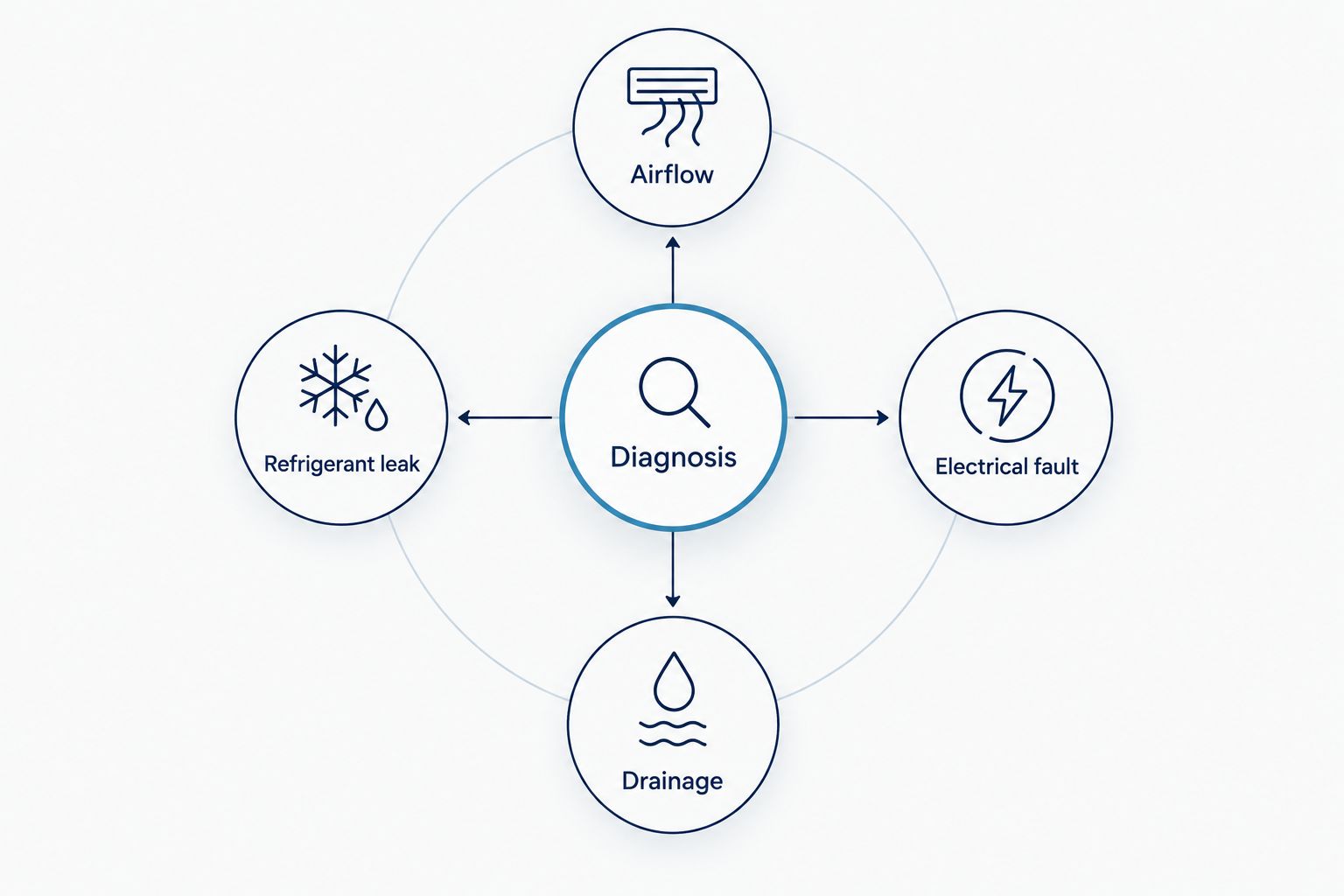
- Coastal corrosion, restricted airflow, and drain problems deserve attention alongside refrigerant and electrical faults.
- Compare repair and replacement using documented equipment condition, not age alone.
Why heat pump repair matters for South Florida homeowners
A heat pump moves heat outdoors to cool your home and reverses that process to provide heat. One system handles both jobs. A fault in a shared component can affect both modes, while a thermostat or reversing-valve problem can affect how the system switches between them.
That distinction matters when your home is warm and someone suggests a major repair. Warm air alone doesn't identify the failed part. You need findings that connect the symptom to the proposed work.
A.R. Williams Air Conditioning provides residential repair, installation, and maintenance. You can review the company's HVAC services before deciding which type of visit fits your concern.
A.R. Williams Air Conditioning is best for homeowners who want heat pump repair options explained before authorizing work. Diagnosis still comes first; a service description cannot establish which repair your home needs.
What makes local heat pump problems different
Near the coast, salt exposure can corrode outdoor coils and electrical connections. In older homes, restricted return ducts can limit the air moving through an otherwise working system. Neither condition is solved simply by lowering the thermostat.
Seasonal occupancy adds another concern. A home that sits empty for months needs attention to drainage and humidity, even when nobody is there to notice a change in comfort.
For your 2026 service visit, describe the property as well as the symptom. Coastal exposure, recent remodeling, and long periods without occupancy give a technician useful context. These details guide inspection; they don't prove that a particular part has failed.
How to get the right heat pump repair
1. Record what the system is doing
Start with observations you can make without tools or removing equipment panels. Note whether the problem affects the entire house or only certain rooms. Record whether the indoor fan and outdoor unit appear to operate when the thermostat requests cooling.
A brief symptom record is more useful than repeatedly changing settings. If the problem comes and goes, a photo of the thermostat display or a recording of the sound helps explain what happened.
Record these details before your appointment:
- Note the selected mode and displayed room temperature.
- Describe weak airflow, unusual sounds, ice, or visible water.
- Write down when the problem began and whether it followed an outage.
- Identify rooms that feel different from the rest of the house.
2. Check accessible settings without attempting repairs
Check that the thermostat is in the intended mode and that furniture isn't blocking return grilles. Inspect an accessible filter according to the equipment instructions. These are observations and routine homeowner tasks, not a substitute for diagnosis.
Leave electrical testing and refrigerant work to a qualified technician. Don't remove service panels, touch wiring, or bypass a drain safety switch. If you see ice, stop cooling operation rather than trying to force the system to keep cooling through it.
Keep the checks limited:
- Confirm the thermostat mode and schedule.
- Check the accessible filter for visible buildup.
- Keep supply registers and return grilles unobstructed.
- Report a tripped breaker without repeatedly resetting it.
- Stop operating equipment that produces smoke or a burning odor.
3. Request findings that explain the failure
A professional diagnosis should connect what you noticed to what the technician found. An airflow problem calls for different work than a refrigerant leak. A failed outdoor fan does not automatically mean the compressor has failed.
A.R. Williams Air Conditioning technicians explain their findings and lay out the options, with flat-rate pricing quoted before work starts. That gives you a defined decision rather than an open-ended approval. Testing is still necessary before anyone can identify the repair.
For a 2026 heat pump repair, ask the technician to explain which checks apply to your system and symptoms. Not every fault requires every test, but the recommended work should have a clear reason.
Ask for these points in plain language:
- Identify the failed component or operating condition.
- Explain how the finding accounts for the symptom.
- Distinguish the necessary repair from optional improvements.
- Describe any additional damage or unresolved concerns.
- Explain how operation will be checked afterward.
4. Match the repair to the underlying cause
Heat pumps share many components with central air conditioners, but the ability to switch between heating and cooling adds diagnostic questions. The reversing valve changes the direction of refrigerant flow. A control problem or valve fault can interfere with that change, but the symptom alone doesn't establish which one is responsible.
Likewise, low refrigerant needs an explanation. Refrigerant circulates in a closed system; it isn't fuel that gets used up during normal operation. If a leak is suspected, discuss how it will be located and addressed. The guide to refrigerant leak repair explains that part of the decision.
Match the proposed work to the finding:
- Ask how airflow restrictions will be corrected.
- Ask where a confirmed refrigerant leak is located.
- Ask what electrical testing supports a component replacement.
- Ask whether a mode-switching fault involves controls or the valve itself.
- Ask how a drainage repair restores safe condensate removal.
5. Compare repair with replacement using condition
A failed part does not automatically make the entire system a replacement candidate. A targeted repair fits equipment with an isolated fault and otherwise sound components. Repeated failures, extensive corrosion, or several major problems justify a broader discussion.
Ask what remains after the proposed repair. Restoring a compressor won't correct an undersized return duct, and replacing equipment without reviewing airflow can leave comfort problems unresolved.
Your 2026 comparison should describe the work, equipment condition, and expected operating result. Avoid a decision based only on age or on a general promise that newer equipment will solve everything.
Compare these items:
- Review the confirmed failure and overall equipment condition.
- List previous repairs and recurring symptoms.
- Check existing warranty documents for applicable coverage.
- Ask whether duct or drainage problems need separate work.
- Request a written scope for either repair or replacement.
6. Confirm performance before closing the visit
A running outdoor unit doesn't prove the repair is complete. Ask how the technician confirmed that the original problem is resolved. Depending on the repair, that can include checking airflow, drainage, electrical operation, or refrigerant performance.
Humidity deserves attention too. The EPA recommends keeping indoor relative humidity below 60%, ideally between 30% and 50%. Those are general moisture-control guidelines, not a promise that one repair will achieve a particular reading in every home.
For your 2026 maintenance record, save the invoice and diagnosis alongside any follow-up instructions. A simple history helps the next technician distinguish a new problem from a recurring one.
Close the visit with these checks:
- Confirm that the original symptom has been addressed.
- Ask which operating checks were completed.
- Review any remaining concerns separately from completed work.
- Save the written repair description and warranty information.
- Confirm the recommended maintenance tasks for your equipment.
Compare your repair and service options
Choose the option that addresses the documented condition. Maintenance helps care for equipment, but it doesn't replace a failed component. Replacement changes the equipment, but it doesn't automatically correct every duct or drainage issue in the home.
Use this comparison to organize the discussion, rather than treating every comfort complaint as a replacement decision.
| Option | Best for | Main benefit | Key limitation |
|---|---|---|---|
| Homeowner observations | Describing a new or intermittent symptom | Gives the technician useful context | Cannot confirm electrical or refrigerant faults |
| Targeted professional repair | A confirmed, isolated failure | Addresses the identified problem | Other aging components remain in service |
| Professional maintenance | Routine care of operating equipment | Checks condition and addresses service needs | Does not replace necessary corrective repairs |
| Central ducted heat pump replacement | Equipment with extensive damage or recurring major failures | Replaces equipment with documented condition concerns | Requires installation planning and review of connected systems |
For a coastal home, ask how corrosion affects the remaining equipment, not just the visibly damaged part. For an older home with weak room airflow, ask whether the return ducts need evaluation before you approve larger equipment.
A.R. Williams Air Conditioning focuses on long-term fixes and explaining the available options. The company is open 7 days a week, from 7 AM to 10 PM. Scheduling remains a separate question from diagnosis; an appointment does not establish what repair is needed.
Talk with a technician
Describe the symptoms and request a visit to understand your repair options.
Common mistakes South Florida homeowners make
Treating every warm-air complaint as low refrigerant
Warm air can result from several different faults, including airflow, controls, or outdoor-unit problems. Ask for the diagnosis before approving refrigerant work. Adding refrigerant doesn't resolve an unaddressed leak.
Ignoring coastal corrosion during a part replacement
A new component doesn't reverse corrosion elsewhere in the outdoor unit. Ask the technician to explain whether the remaining coil and connections are sound enough to support the proposed repair.
Assuming a colder setting fixes poor cooling
Lowering the thermostat doesn't correct restricted airflow or restore a failed component. Keep a record of the temperature and operating behavior instead of repeatedly adjusting the controls.
Approving larger equipment without checking ducts
More cooling capacity isn't a repair for an undersized return or damaged ductwork. If the conversation moves toward replacement, ask for a sizing assessment and a review of the existing air distribution system.
Leaving a seasonal home without a moisture plan
Temperature alone doesn't describe indoor moisture conditions. Before leaving for an extended period, discuss thermostat settings, drainage condition, and a way to notice equipment trouble while the home is unoccupied.
FAQ
Why is my heat pump running but not cooling the house?
A running heat pump can fail to cool because of restricted airflow, a refrigerant problem, an electrical fault, or a control issue. Check accessible thermostat settings and the filter, then have a technician identify the cause rather than assuming it needs refrigerant.
Why does my heat pump cool properly but not heat?
A heat pump that cools but doesn’t heat needs checks of its heating controls and mode-switching operation. Thermostat configuration, reversing-valve operation, or auxiliary heat components can require attention, depending on the equipment.
Should I keep running my heat pump if there is ice on it?
Stop cooling operation if the indoor coil or refrigerant line is iced over. Restricted airflow and refrigerant problems are possible causes, and a technician needs to determine why the ice formed before normal cooling resumes.
Does a heat pump need refrigerant added every year?
No, a heat pump does not normally consume refrigerant. If the charge is low, ask about a leak or a previous charging problem instead of treating repeated additions as routine maintenance.
Does salt air mean I have to replace my heat pump?
Salt exposure alone does not establish that a heat pump needs replacement. The decision depends on the extent of corrosion, the affected components, and the condition of the rest of the equipment.
Should I repair my heat pump or replace it?
Repair fits a confirmed fault in otherwise sound equipment, while replacement deserves consideration when damage is extensive or major failures recur. Compare written findings, repair history, warranty coverage, and any ductwork concerns before deciding.
What should a heat pump repair estimate explain?
A heat pump repair estimate should identify the diagnosed problem and the proposed work before you authorize it. Ask what is included, what remains unresolved, and how the technician will confirm the repair corrected the symptom.
One last thing
Your heat pump's heating mode deserves a check even when cooling seems normal. Because the system must change how it moves heat, successful cooling doesn't prove that every heating control works correctly.
When planning your 2026 service visit, mention a heating problem even if it happened during a brief cool spell and disappeared from your daily routine. That detail belongs in the diagnosis, not in a separate decision made after the same symptom returns.
Related guides
- How to tell if your AC needs repair or replacement
- AC maintenance for coastal homes with salt air exposure
- How to winterize your heating system in Florida
