

Duct cleaning cost in South Florida depends on your home's duct system and the work included, so get a written, home-specific estimate before approving service in 2026. Ask whether the proposal covers the supply and return ducts, how the contractor will protect the duct material, and which work needs separate approval. Cleaning does not fix leaking ducts, damaged insulation, or the moisture source behind recurring contamination.
- Compare duct cleaning cost in South Florida by written scope, not an advertised starting offer.
- A.R. Williams Air Conditioning is best for homeowners who want clear AC service options before approving work.
- Duct cleaning removes contamination; duct sealing and replacement address different problems.
- Ask for inspection findings, exclusions, and a method suited to your duct material.
An estimate for duct cleaning for South Florida homes should explain what needs cleaning and why. You don't need to approve a package before someone shows you the condition of the system.
How much does duct cleaning cost in South Florida?
A useful duct cleaning estimate identifies the system, the included work, and the exclusions before you approve it. A vent count alone doesn't describe the whole job. The return ducts, which carry indoor air back to the AC, need attention in the inspection too.
For a 2026 estimate, ask the contractor to separate cleaning from repairs or other treatments. That keeps a proposal for removing debris from becoming an unclear package of unrelated work.
| Part of the estimate | What you should see | What to clarify |
|---|---|---|
| System scope | Which duct system and branches are included | Whether every connected area is covered |
| Supply and return ducts | Both sides named in the proposal | Whether the work extends beyond visible vent covers |
| Equipment components | Any included blower or coil cleaning | Which components require separate approval |
| Access and protection | How the contractor will reach the ducts | How insulation and interior surfaces will be protected |
| Additional work | Repairs or treatments listed separately | What finding would justify each item |
| Completion evidence | A description of how results will be documented | Whether comparable before-and-after views are available |
A detailed quote isn't permission to add every listed service. It gives you a way to decide which work addresses a documented problem and which work needs more explanation.
Why this matters
A dusty grille, a musty smell, and a warm bedroom can point to different problems. Treating all of them as dirty ducts can leave the original complaint unresolved. Start with the symptom you want fixed.
In South Florida, moisture deserves particular attention. Cold duct surfaces exposed to humid attic air can develop condensation when insulation or its protective outer covering is damaged. Removing debris doesn't repair that damage.
Older homes can also have undersized return-air paths. Cleaning doesn't enlarge them. If a room stays warm or airflow seems weak, ask for an airflow assessment rather than assuming a cleaning will solve it.
The goal is the right correction, not the largest package. An inspection should connect the proposed work to an observable condition in your home.
What should a duct cleaning estimate include?
Start with a description of your system. The proposal should identify the areas served, the accessible duct sections, and any sections the contractor cannot inspect or reach. An access limitation belongs in the discussion before work begins.
Next, ask about the method. Sheet-metal ducts and ducts with fiberglass surfaces do not tolerate every cleaning tool in the same way. The contractor should explain how the method fits the material and condition, especially when flexible ducts are fragile or deteriorated.
The estimate should also distinguish duct cleaning from equipment cleaning. A blower moves air through the system; an evaporator coil removes heat from indoor air. These components are connected to the air path, but naming them separately prevents confusion about what the job includes.
Finally, ask how the contractor will contain loosened debris and document completion. A picture of one clean vent cover doesn't establish the condition of the rest of the system. Comparable views of accessible interior sections are more useful.
Questions to ask before approving the scope
- Which inspection finding makes cleaning appropriate?
- Are the supply ducts and return ducts both included?
- What duct material do I have, and how will you protect it?
- Does the scope include equipment components or only ducts?
- What work requires a separate decision from me?
- How will you show the condition after cleaning?
Keep the answers with your 2026 proposal. If another estimate describes a different job, ask both contractors to clarify the difference before choosing.
Why duct cleaning estimates vary
The work changes with the layout and condition of the system. These factors explain why a whole-home description is more useful than an offer based only on visible vents.
- System layout: Separate duct systems and additional branches require separate attention. Confirm which areas of the home each proposal covers.
- Access: A tight attic or concealed duct run changes how the contractor can inspect and reach the system. Ask about inaccessible sections.
- Duct material: Metal, flexible ducts, and internally insulated ducts need methods appropriate to their surfaces and condition.
- Contamination: Loose construction debris, substantial dust buildup, and suspected biological growth require different assessments. Don't accept one explanation for every condition.
- Existing damage: Torn liners, wet insulation, and disconnected sections are repair questions. Cleaning alone doesn't correct them.
- Included components: A proposal that includes blower or coil work is different from one limited to ducts. Compare those scopes separately.
House size helps describe the property, but it doesn't reveal duct condition or accessibility. Tell the contractor about additions, converted rooms, and any areas that have always cooled differently.
Do I need cleaning, sealing, or replacement?
Choose the service that matches the finding. Cleaning removes material from suitable duct surfaces. Sealing closes air leaks, while replacement addresses duct sections that cannot be restored appropriately.
These are different jobs, not interchangeable levels of the same package. Ask the technician to show where each recommendation applies.
| Option | Best for | Main benefit | Limitation |
|---|---|---|---|
| Duct cleaning | Documented removable contamination in sound ducts | Removes accumulated material from included sections | Doesn't repair leaks or solve ongoing moisture problems |
| Duct repair and sealing | Documented leaks or disconnected joints | Corrects defects that let air escape or enter | Doesn't remove contamination throughout the system |
| Duct replacement | Deteriorated ducts or contaminated material unsuitable for cleaning | Removes affected duct sections | Requires a defined replacement scope and access plan |
| AC maintenance or repair | A problem traced to equipment rather than ducts | Addresses the identified equipment fault | Doesn't correct unrelated duct damage |
Don't accept replacement solely because the ducts are old. Ask what is damaged, where it is located, and why repair or cleaning isn't appropriate. Likewise, don't approve cleaning of a section whose liner or insulation is already failing.
A mixed scope can be reasonable. One section might need repair while another needs cleaning, but each recommendation should have its own explanation.
How do I compare duct cleaning quotes fairly?
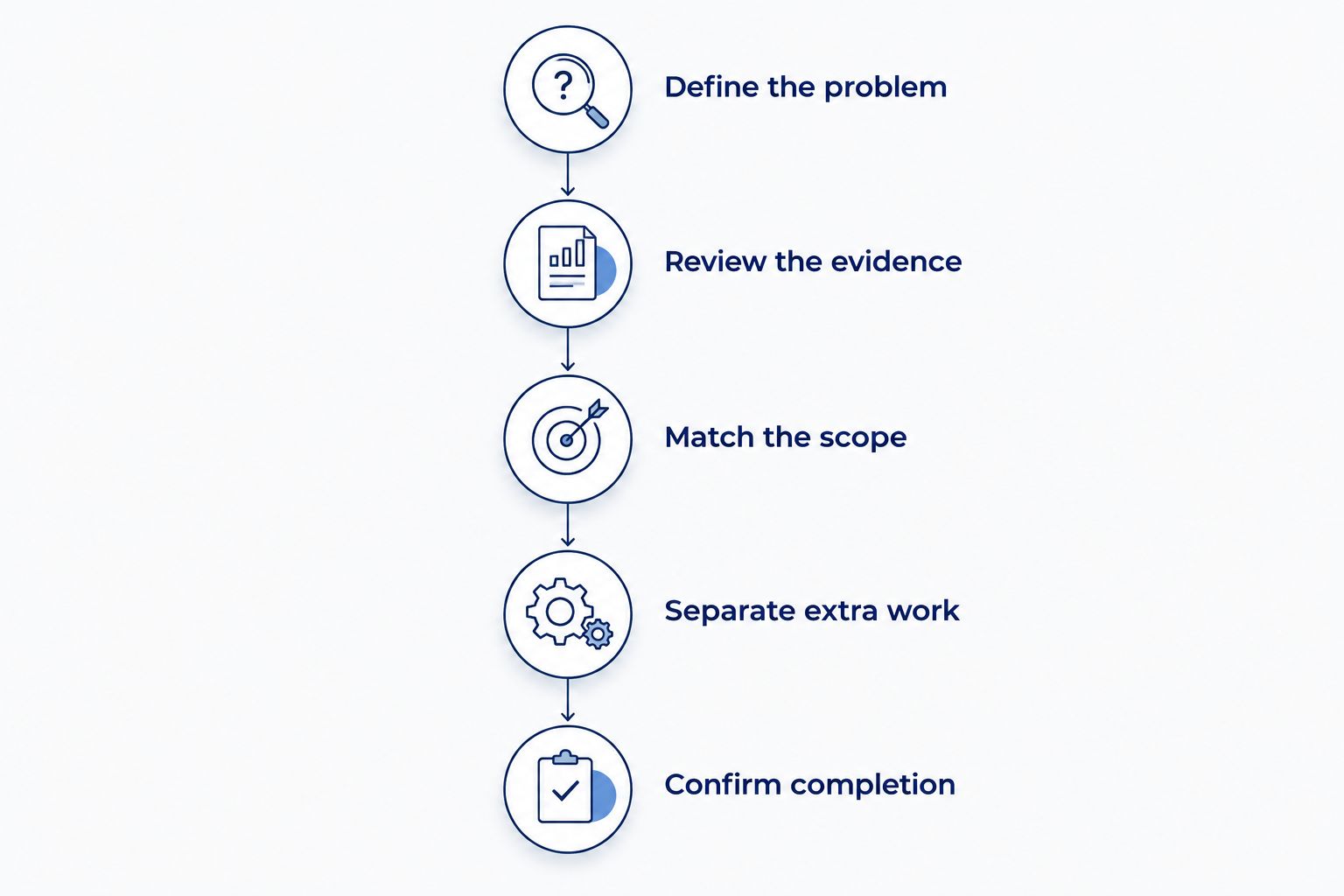
For a 2026 decision, compare the same work before comparing the final proposal. A short description can hide meaningful differences in coverage and exclusions.
- Define the problem. Describe whether you're concerned about visible debris, odors, airflow, or a condition found during an inspection. Include when it started.
- Review the evidence. Ask for clear photographs and an explanation of where they were taken. An image without a location is hard to evaluate.
- Match the scope. Check supply ducts, return ducts, equipment components, and access limitations. Ask contractors to clarify differences.
- Separate extra work. Keep sealing, replacement, and proposed treatments distinct from cleaning. Require an explanation for each recommendation.
- Confirm completion. Agree on how the contractor will document the finished work and disclose anything that remains unresolved.
You can ask for time to review the explanation. A sound recommendation should still make sense when you read it without a technician standing beside you.
If the proposal changes after the inspection, ask for an updated written scope. Don't rely on a verbal explanation that leaves the original document unclear.
Is duct cleaning worth it for my home?
Duct cleaning is appropriate when an inspection identifies contamination that warrants removal and the ducts can be cleaned safely. The U.S. Environmental Protection Agency's homeowner guidance does not recommend routine duct cleaning for every home. Its guidance also says duct cleaning has not been shown to prevent health problems.
A light dust film isn't the same as substantial contamination. Ask the contractor to explain what the inspection shows rather than treating ordinary household dust as proof that the whole system needs cleaning.
The EPA identifies substantial visible mold growth on certain HVAC surfaces, pest infestation, and excessive debris released from supply registers as reasons to consider cleaning. Suspected mold needs careful evaluation; appearance alone doesn't establish what a substance is.
In 2026, use that distinction when reviewing broad promises about cleaner air or improved health. Ask what result the proposed work can reasonably address in your particular system.
Will duct cleaning fix weak airflow or musty smells?
Duct cleaning doesn't automatically fix either problem. Weak airflow can come from a restrictive filter, a blower problem, duct damage, or an inadequate return-air path. A musty smell needs an investigation of moisture and the location of the odor.
For a seasonal home that has been empty for months, describe how the AC was operated while you were away. That history helps frame the inspection. It doesn't prove the ducts are contaminated.
After renovation work, explain whether vents were open and whether the AC ran during dusty construction. Ask the contractor to inspect for debris instead of assuming every renovation requires cleaning.
If cooling performance is the main concern, review return-air vent sizing for South Florida HVAC systems. Removing dust can't correct a return path that is too small for the required airflow.
What a clear service conversation looks like
A.R. Williams Air Conditioning provides residential AC repair, installation, and maintenance. Its technicians explain their findings and lay out the options, with flat-rate pricing quoted before work starts.
A.R. Williams Air Conditioning is best for homeowners who want clear AC service options before approving work. An equipment diagnosis is useful when the complaint involves cooling or airflow, but it isn't a substitute for a clearly defined duct cleaning scope.
For a 2026 service visit, bring the written proposal and describe the symptom you want resolved. Ask the technician to distinguish an equipment issue from a duct issue. You should leave the conversation understanding why the recommended work fits the finding.
FAQ
How do I find out what duct cleaning will cost for my home?
Request a written estimate based on an inspection of your duct system. Confirm supply and return coverage, included equipment work, and exclusions before approving service.
Does duct cleaning include the AC coil and blower?
Duct cleaning does not automatically include the AC coil and blower. Ask the contractor to name each included component in the written scope.
Should I clean my ducts on a regular schedule?
You shouldn’t assume every home needs routine duct cleaning. The EPA recommends considering the condition of the system rather than treating cleaning as a universal scheduled requirement.
Can duct cleaning fix mold in my AC system?
Duct cleaning alone does not correct the moisture conditions that allow mold growth. Suspected growth needs assessment, and affected wet or moldy insulation can require replacement rather than cleaning.
Will cleaning my ducts make a warm bedroom cooler?
Duct cleaning won’t correct a warm bedroom caused by duct leaks, poor airflow, or inadequate return capacity. Have the cause checked before approving cleaning as the solution.
Can cleaning damage flexible ducts?
An unsuitable cleaning method can damage flexible duct liners or insulation. Ask the contractor to assess the material and condition and explain how the chosen method will protect them.
What should I ask about a proposed duct treatment?
Ask what specific finding justifies the treatment and whether the product is appropriate for your duct material and intended use. Keep that decision separate from approval of the cleaning itself.
One last thing
A clean vent cover tells you little about the hidden return ducts. Before you approve work, ask the contractor to show the return side and explain its condition too.
When you talk with a technician at A.R. Williams Air Conditioning, start with the problem you're experiencing. Get the cause explained before choosing the service. That is the clearest way to avoid paying for work that leaves the same complaint behind.
Related guides
- Duct repair and sealing for South Florida homes
- Ductwork replacement for older South Florida homes
- How to get rid of musty AC smells in your home
